Author: Isabelle Imbert

  • Islamic Week, spring 2019: overview of the results

    Islamic Week, spring 2019: overview of the results

    The London Islamic Week came and went like a dream this spring! I had planned a lot around it but in the end, life held me hostage and I had to cancel everything, being finally able to go though the catalogues only two days before the first auction.
    While being hopeful that the Fall Islamic Week will go differently, I still have the delight of untangling the results of the three main houses. For the first time, I will also discuss Chiswick Auction’s results, as their Islamic & Indian Art sale was held during the Islamic week and offered numerous lots valued between £100 and £15.000.

    All results discussed below include Premium.

    Bonhams opened the week with 216 lots, including a section of 73 items produced in Qajar Iran. 56.49% of the catalogue was sold for a total of £2.012.679. The next day, Sotheby’s presented 311 lots, of which 57.3% found buyer for £9.914.625. Christie’s broke their own record by achieving £16.031.375, with 58.94% of the 302 lots sold. Finally, Chiswick closed the week with a massive catalogue of 421 lots, of which 61.8% were sold for a total of £44.211. Though this last result doesn’t exceed the million, the success of the auction demonstrates once more the weigh of less prestigious items on the overall market.

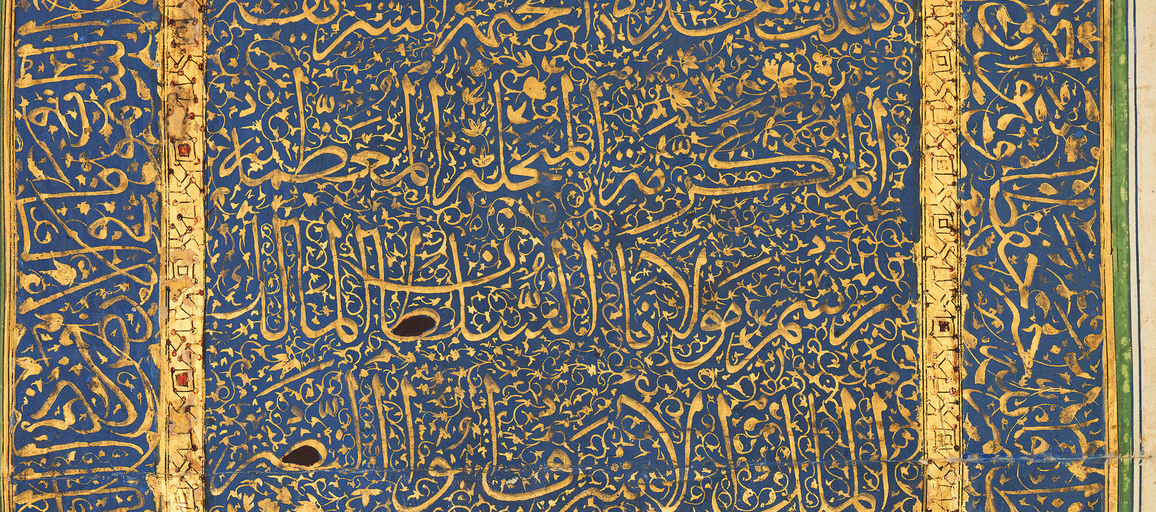
    Bonhams had some interesting lots and unexpected results, including a selection of Surah copied by the Ottoman calligrapher Isma’il al-Zuhdi in 1217 / 1802-3, valued £3.000/5.000 and sold at £52.562.50. Both calligraphy and illuminations are of exceptional quality and we can only conclude that Bonhams experts doubted their own material by giving a valuation that low. Quick note to whoever put the manuscript reproduction on line: the colophon is upside down.

    Bo_12
    Selected surah from the Qur’an, copied by Isma’il al-Zuhdi, Ottoman Turkey, 1217/ 1802-03. Sold £52.562.50

    The same way, an incredibly delicate tulwar hilt and two matching sword belt fittings went for £125.062.50 against an initial pricing at £10.000/15.000. Though the catalogue doesn’t particularly elaborate on it, the provenance of the item, going back to the late 18th century East India Company and its direct transmission to the seller, contributed to romanticise the lot and probably increase its price.
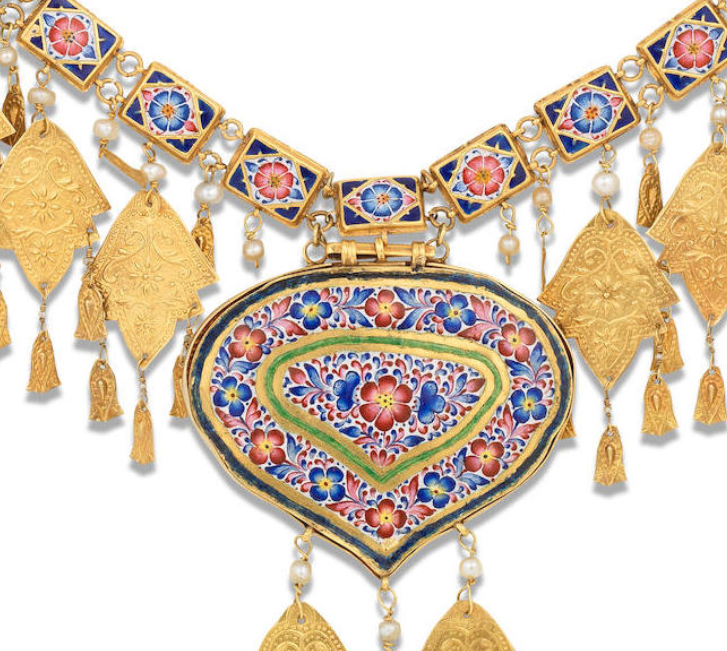
    Bo_101
    A Qajar enameled gold necklace, Iran, 19th c. Sold £10.062

    However, Bonhams seemed to have suffered from overconfidence by focusing on the Qajar era. If past auctions have told us anything, is that late productions, namely Qajar Iran and late Ottoman fluctuate greatly. Despite a diversified and interesting selection validated by an introduction written by Robert Hillenbrand, only 30 lots over the 73 presented were sold, most of them within their price ranges or barely above. More importantly, the star item of the auction, an anonymous portrait of Fath ‘Ali Shah Qajar dated 1251/1835-6, remained unsold. The estimate was upon request, which is a good way for the department to gather interests, however, it can scare away potential buyer and, let’s be honest, it is not particularly justified. Though portraits of Fath ‘Ali Shah are indeed rare on the market, Qajar portraiture itself is not exceptional. Most of the other full-length portraits from the 19th century remained unsold, while early 20th century paintings did a bit better. Maybe we are seeing here a shift of emphasis toward more recent productions, but the interest for Qajar art remains mixed.

    Each Islamic Week, the excitement lies in the competition between Sotheby’s and Christie’s. Last season, the battle was won by Sotheby’s who exploded records by selling the Debbane Charger for more than £5 millions but this spring, Christie’s had not one but three not that secret weapons: an extraordinary Mamluk Qur’an dated 894/1489, sold £3.724.750 and two rare 17th c. “Polonaise” carpets, respectively sold £3.895.000 and £3.724.750. Between the three lots, already more than £11 millions were assured.
    Qur'an signed and dated 894/1489, Mamluk, Christie's lot 11
    An impressive Qur’an signed and dated 894/1489, Mamluk Egypt. Christie’s, sold £3.754.750

    A few surprises occurred on top of that, for instance with a “Kubatchi” pottery dish, valued £10.000/15.000 and sold £40.000. While Iznik potteries are numerous in every auctions, Kubatchi wares are more rare, and usually of secondary quality or more or less heavily restored. This lot seems to be whole, despite a chip visible on the back, with a colorful and characteristic decoration that definitely seduced buyers.
    Special mention for a very rare gold and silver-inlaid window grill bross produced in Ilkhanid Iran during the 14th c.. Valued £12.000/18.000, it went at £47.500, a price relatively humble considering the rarity and exceptional preservation of the piece. Though this one in particular doesn’t bare any inscription, it can be linked to others in the Museum of Islamic Art, Cairo, and inscribed in the name of the Ilkhanid Sultan Uljeitu (1304-1317) whose summer capital was Sultaniyya.

    A gold and silver-inlaid window grill boss, Ilkhanid, 14th c. Christie's lot 17
    A gold and silver-inlaid window grill boss, Ilkhanid Iran, 14th c. Christie’s lot 17, sold £47.500

    The price achieved by this last piece illustrates the difference between Christie’s and Sotheby’s catalogues. Comparatively, Sotheby’s sold less than Christie’s, but the house took more risks in their offer by introducing different types of items, some normally less represented on the market, other not currently in favour of buyers. This is for instance the case with early Qur’anic leaves. Except for a pink North African leave written in maghribi during the 12/13th c., other leaves and bifolio from this category remained unsold.
    Some items were also more difficult to apprehend. It is particularly the case of two pages of an Indian Falnamah (book of omens) painted on cloth around 1580. I had good expectations for these two paintings, early Mughal painting on cloth usually doing well, but this series of paintings is actually not popular. This could be due to the fact that documentation on this dismembered manuscript is virtually inexistent, or perhaps the preservation state of some of the pages (I haven’t seen any de visu and Sotheby’s condition reports are famously vague), but the fact is that the house has presented other pages from the same ensemble in the past and buyers never showed a high interest.
    Early glassworks timidly reappeared on the market, but where Christie’s priced very cautiously the glass flask and the two marvered glass domed game pieces, Sotheby’s went all the way with a Fatimid carved glass or obsidian chess piece priced at £30.000/40.000. Despite the quality of the item, it did not convince the buyers.
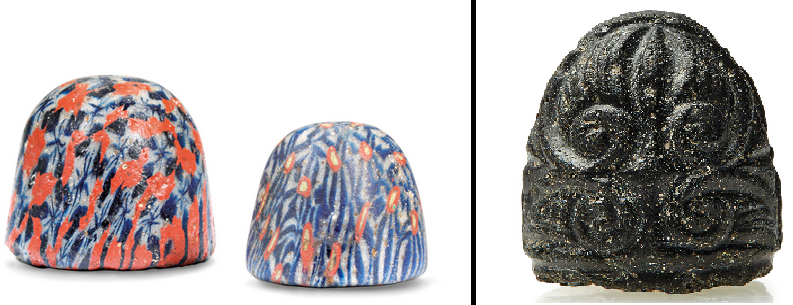
    glassworks
    On the left: marvered glass game pieces, Egypt/ Syria, 12th/13th c. Christie’s, £2.000/3.000, sold £1.375. On the right: carved glass or obsidian chest piece, Fatimid Egypt, 10th/11th Sotheby’s, £30.000/40.000, unsold

    Luckily for Sotheby’s, some lots retained the attention of collectors. One of the most anticipated lot was the portrait of Suleyman the Magnificent by a follower of Gentile Bellini. This painting holds a particular historical importance and though it is unlikely that it was executed by Bellini himself, its aesthetic and technique are very close from the master style. Valued £250.000/350.000, it achieved without surprise £5.323.500.

    durer
    On the left: anonymous painting, Mughal India, c. 1500-35. Sotheby’s, sold £102.500. On the right: portrait of Frederick the Wise by Albrecht Durer, 1524.

    Another expected result was the Mughal copy of Albrech Durer engraving of Frederick the Wise. Indian reproductions of European designs are usually appealing for their immediate reference, while remaining firmly anchored as “other”. More often, as in the present case, the copy is not completely faithful to the original and the alterations made increase the interest and intrinsic value of the painting. Here, the frame was increased to add a hand holding a book, while the inscription beneath the painting was changed to S. Bernardus, maybe in relation to a saint, maybe to something else. As a result, the lot was sold £105.500, more than four time its valuation.

    Ottoman figurative painting never ceases to baffle me these days. While Christie’s, Bonham’s and Chiswick decided to skip this section altogether due to an understandable caution after the last Islamic week, Sotheby’s took the calculated risk to present one painting with a low estimation, £10.000/15.000, sold for £43.750.

    “Bahram killing Shervan in battle”, Shahnama, Injuid Iran late 14th c., Chiswick Auction, sold £3.500

    Chiswick finished the week with a strong and interesting offer. Despite showing cautions in the valuation, early Qur’anic leaves poorly sold, while other early items did surprisingly well, for instance an Abbasid blue and white ceramic dish, broken and put back together but with an elegant design. Valued £200-300, it went for £4.375.
    More impressive is the price achieved by a Moroccan pilgrimage scroll dated 1191/1777. Valued only £500/700, it was sold for £18.125. The same way, an Ottoman talismanic jama from the late 19th century was presented for £400/600 and ended up at £11.250.

    Detail of a Moroccan Pilgrimage Scroll, dated 1191/1777. Chiswick
    Detail of a Moroccan Pilgrimage Scroll, dated 1191/1777. Cheswick Auction, sold £18.125

    Overall, Chiswick selection was more diversified than the three other houses and somehow more adventurous, but risk is more easily permitted with low price items. Paintings produced under the Injuid dynasty are for instance rare on the market, coming from this historically grey area between the Ilkhanid and the Timurid rules, not particularly well documented. Two pages from an Injuid Shahnama were offered for £800/1.000 and achieved £3.500, a price easily justified by the aesthetic quality of the painting and the historical interest of the folios.
    Also noticeable was the selection of blue and white Safavid and post-Safavid ceramics. After the fall of the Ming dynasty in 1644, Iran took over the production of blue and white ceramics bound for the European market. Nevermind that China produced porcelain while Iran could only make siliceous potteries due to the absence of kaolin, the production knows a great success in Europe and the preserved pieces are numerous. However, they are not particularly popular on the market these days, the focus being on blue and white Iznik. Seven of the twelve lots presented found a buyer, mostly within their range but with a few noticeable exceptions like a highly decorative 18th century inkwell, sold £4.000 against a valuation at £800/1.200.

    I already look forward the next Islamic week. First because I hope to be able to actually attend, but also because I am curious to see how things will evolve. For instance, the inclusion of early glassworks in Christie’s and Sotheby’s catalogues might be an interest sign, though time will tell.

  • Tracing the Modern in Post-Modern: The dilemma of Contemporary “Islamic” Art

    Tracing the Modern in Post-Modern: The dilemma of Contemporary “Islamic” Art

    While pre-modern Islamic art continues to grow as an academic field and as a profitable investment for collectors, the attention given to contemporary Islamic art has been increasing significantly among art dealers, academics and curators.

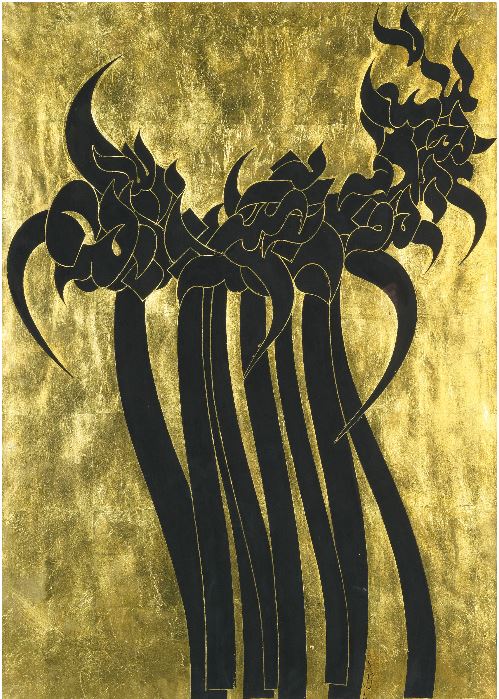
    Muhammad Ehsai Daffodils Christie's
    Muhammad Ehsai, “Daffodils”. Christie’s 24.10.18 lot 55, sold £137.500

    Starting this article, the intend was to create a focus on a few living artists well represented on the market. However, writing about contemporary Middle-Eastern art is like going trough the rabbit hole of a blurry and confusing terminology. In short, how to introduce a field that struggles to define itself?

    When does “Post modern” start?

    In 2006, Kader Attia, French artist from Algerian origin wrote: “To the question “is there a contemporary Islamic art?”, I would answer, we are currently building it, re-appropriating our culture and its influences in our own way“.
    Through this quote, the impact of French colonisation on Algerian culture emerges from the subtext. However, one cannot generalize, as Islamic culture was never unified and contexts are very different. In Turkey for instance, there is no gap in artistic production between the end of the pre-modern era, marked with the fall of the Ottoman empire in 1924, and what occurred right after, though the emphasis shifted slowly and quietly throughout the 20th century toward a more diversified and fragmented artistic production.

    It is only since the recent years, roughly the 90’s, that collectors, curators and academics have started to turn the spotlight on Middle-Eastern artistic creation.
    The task of defining Islamic art has already shown its complexity for the pre-modern era, as I wrote in a previous article, but while pre-modern art is mostly based on the repetition of a defined artistic syntax, post-modern Islamic art follow the concept of artist individuality – as most of post-modern art forms do – making it even more difficult to quantify.
    Artistic productions from Qajar Iran (1789-1925) are considered as modern, especially from the second half of the 19th century. This definition continues throughout the reign of the Pahlavi, until the revolution of 1979, when it switches to Post-modern or Contemporary.

    Mahmoud Mokhtar, Sotheby's Oct. 2018
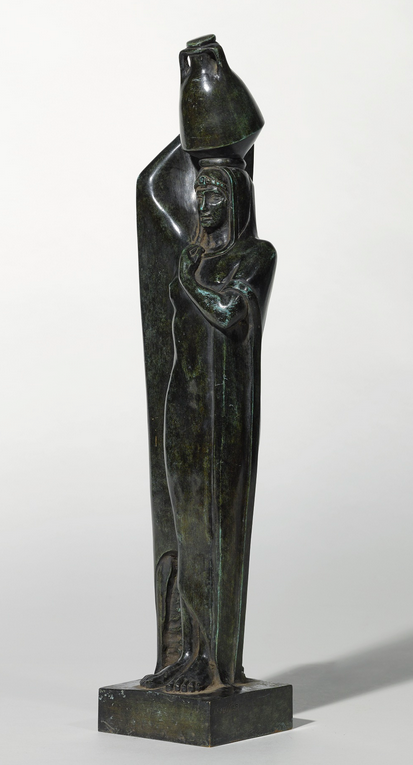
    Mahmoud Mokhtar, Au bord du Nil, 1931-48. Sotheby’s Oct. 2018, sold £75.000

    In Ottoman territories, things are more complicated and less linear. The vocabulary of Art History shifts from pre-modern, referring to art productions before 1924, to post-modern, embodied by 20th centuries artist. The “Modern” in between has very little representation on the market and in academia, and reflects a historiography gap that pains to be filed. For this reason, it is not rare to find artists from Turkey, Egypt, Bilal al-sham and Maghreb in Orientalist or Pre-modern Islamic arts auction catalogues. This confusion is due to the fact that no one knows how to label such creations, as they fall right within a semantic grey area.

    The Egytian artist Mahmoud Mokhtar (1891-1934) illustrates perfectly the problem. His life put him right on the border between premodern and modern but his work is unmistakably modern and reflects the impact of Art Nouveau and the Vienne Secession. “Au bord du Nil” statuette was sold at Sotheby’s London in October 2018 during the “20th Century Art / Middle East” auction, but was previously sold during the “vente Orientalisme” auction at Artcurial in 2016 (18th May, auction 3002, lot 76, sold 39.000€). It seems difficult to justify classifying an Egyptian artist as “Orientalist” but it is simply due to the fact that the French auction house hasn’t devoted an auction to contemporary Middle-Eastern art since 2009, and Mokhtar dates are too recent to insert his work in an “Islamic Art” auction.

    Islamic, Middle-Eastern, or else?

    The same way, Mokhtar work highlights the difficulty of putting the “Islamic” label on a Middle-Eastern artist. The Au bord du Nil statuette shows a clear inspiration of pre-Roman Egyptian art in the overall design, proportions and monumental rendering, while influence from Ottoman or medieval Islamic art is mostly absent from his artistic palette. Other Mokhtar works reflect his battle against British protectorate and his political engagement, a common characteristic of several artists labeled as “Islamic”.

    This conundrum is not restricted to Mokhtar but applies to numerous artists. Following Kader Attia definition, contemporary Islamic arts would only apply to creation openly influenced by traditional media and forms such as calligraphy or geometric designs. While artists such as Shirin Neshat (b. 1957) or Muhammad Ehsai (b. 1940) would both fit the description for their extensive work with calligraphy, an artist such Manoucher Yektai (b. 1921), largely influenced by French modern painting, would struggle to find his place in such a restrictive field.

    Shirin Neshat
    Shirin Neshat, “Unveilling”. Christie’s 24.10.18, lot 76, sold £27.500

    It seems indeed that contemporary art of the Middle-East falls under an unspoken double standard. While contemporary art has prided itself on transcending borders and vernacular political issues, it is a requirement for Middle-Eastern artists to be tied in some way to their country of origin, regardless the fact that some of them were born in diasporas. The same way, the market of Middle-Eastern contemporary art is mostly in demand for transgressive creation, pieces linked to a more or less obvious underlining statement, either political, religious or cultural.

    Culture and influence play a major role in the definition of contemporary Islamic art. It implies a timelessness of Islamic arts that is difficult to justify, but it is mostly based on a series of pre-established criteria of what Islamic art should be, emphasized by ethnocultural makers used as nationalist motifs: Islamic calligraphy, Persian painting… The Jamal Prize delivered every year by the Victoria and Albert Museum illustrates the dilemma. Described as “an international award for contemporary art and design inspired by Islamic tradition”, it can be won by all artists without distinction of cultural background, localisation or religion, as long as as they display some type of “Islamicity”. Most of the awarded artists use calligraphy as an identifying characteristic. Though Arabic calligraphy is immediately recognized by all crowds as an Islamic art form, it does restrict the field to a form of expression focused on religion, leaving aside the countless secular art forms developed through the ages in Muslim country, and today gathered under the Islamic label.

    Auction houses have found a way to get round the problem: they removed all reference to an Islamic culture from catalogues to focus on geographical criteria.

    Middle-Eastern Art on today Market

    Manoucher Yektai Sotheby's
    Manoucher Yektai, “Untitled”, Sotheby’s 25.04.2017, sold £81.250

    While this is a convenient way to include more artists, it doesn’t solve the issue. It does, however, target the audience in a steadily increasing market. The criteria described above fully apply to the market, and the most represented artists display strong links to either their native country, their cultural roots or their religion. Mostly represented by Christie’s, Sotheby’s and Bonhams in London and Dubai, as well as Tehran Auction, fully focused on modern and contemporary Iranian art, auctions gather 20th century artists under titles such as “Middle Eastern, Modern and Contemporary”, or “20th Century / Middle East”. This excludes Pakistani and Indian arts – at least partly – that fall under “Modern and Contemporary South-Asian Art”, showing once more the impossible task that is defining and circling Islamic arts.

    Regardless the title, modern and contemporary Middle-Eastern art is taking more and more space on the market and is gaining an international recognition with bidders from the region, but also from the US, Canada and Europe. This growth is also due to an increasing number of governments and institutions local initiatives to popularize contemporary artistic creation, taking the form of museums (Le Louvre Abu Dhabi is the most famous example), art fairs, temporary exhibitions in galleries and so on. These projects overall contribute to sales in the Middle-East, particularly in Iran and Egypt, holding the most market shares.
    Christie’s was the pioneer for Middle-Eastern and Contemporary art, starting in 2007. However, the house profits have dropped these past years in favor of Sotheby’s that shows an agressive growth since 2013, reflecting by a more ambitious selection. Bonham’s always appear as the third player in Islamic arts, but in this specific case it falls behind Tehran Auctions that yet shows uneven results through the years.

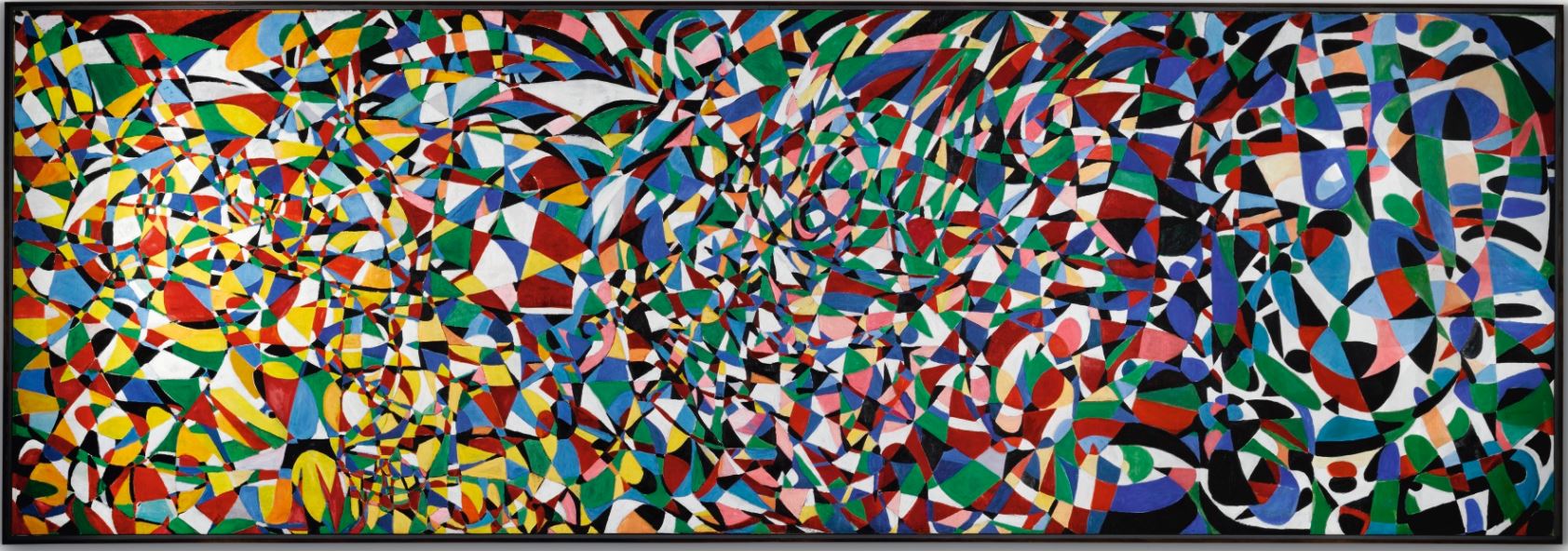
    Modern art seems to do better than Contemporary, the top prices these past years being achieved by modern artists such as Fahrelnissa Zeid (1901-1991). Her painting Toward a Sky broke record at Sotheby’s in 2017 by achieving £992.750.

    Fahrelnissa Zeid Towards a Sky Sotheby's
    Fahrelnissa Zeid, “Towards a Sky”, Sotheby’s 25.04.2017 lot 15, sold £992.750

    Though the proportion of Modern artists is superior, some living creators have become regulars in auctions. It would be quite superfluous to enumarate them all, I will have the opportunity to introduce more when I write about auction news. However I will conclude with Monir Shahroudy Farmanfarmaian, who illustrates perfectly the dilemma of contemporary Islamic art and the way it is mostly perceived by the market.

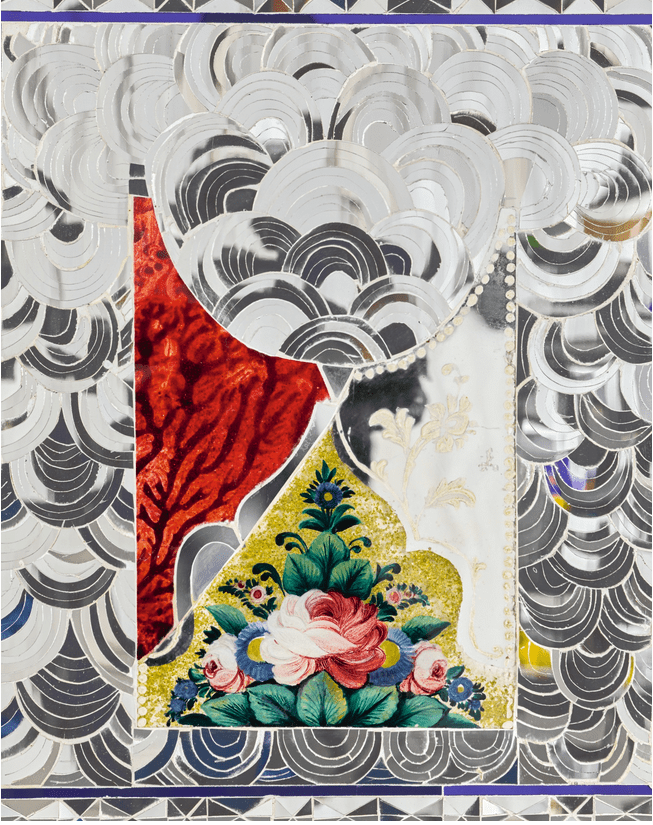
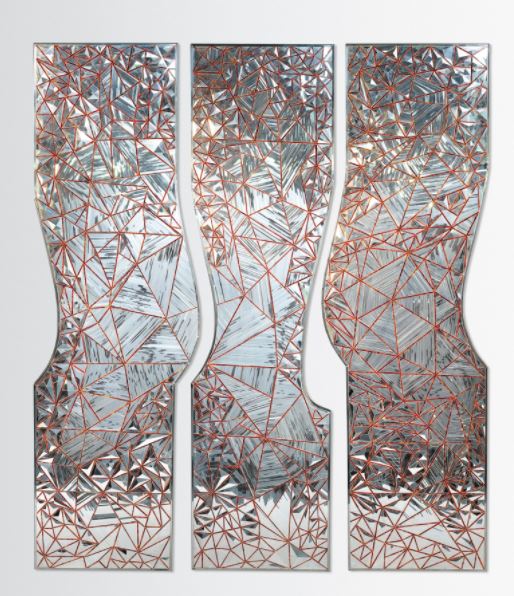
    Born in 1922 in Qazvin, Farmanfarmaian possesses one of the strongest visual identity on the current market. Her works, mainly made of glass treated and cutted, performs as a reinterpretation of pre-modern (18th-19th c.) glasswork displayed in Safavid and Zand palaces and pavillons. The craftmanship that characterizes her work transcends cultural borders, while it also emphasized her Iranian origins. The aesthetic appeal of her glassworks, as well as her origin and the influences visible through her work put her on the list of the most profitable artist on the market.

  • Happy New Year 2019!

    Happy New Year 2019!

    This is with some disbelief that I wish you all a very happy new year 2019. Disbelief that 2018 is already passed and that we are already turning the page. What a year it has been!

    For me, 2018 meant the starting point of my freelance activities, and of course the creation of this website. Coming at the end of a two years break after getting my PhD, 2018 seemed like the right time for returning to what I know and love: writing about Islamic Arts.

    I did not think that I would be able to find people ready to share their passion with me this quickly but sometime the stars just align the right way. For this I wish to thank, among others, Millon & Associés and lot-art.com for giving me opportunities to collaborate on several occasions, but also the numerous collectors, merchants, art historians and enthusiasts who encouraged the launch of my activities.

    If you are ready these lines, thank you.

    I do not know yet what 2019 will precisely be made of, but I am excited to discover it. My biggest project will be to rework and publish my doctoral dissertation. Though it was recognized as a work of high quality by the eminent scholars who composed my jury, it will still need some in-depth work to be actualized and synthesized in a (readable) book.
    As well, I wish to develop my writing activities further with new projects and hopefully I’ll be able to communicate more on that soon.

    So I wish you all a very happy new year, I hope it will be full of joys and discoveries for you and your loved ones, and I hope to see you back on this blog very soon!

    Women celebrating holi, detail of a painting from the Gentil collection. Lucknow or Faizabad, 18th c. BNF (OD44fol, fol. 44)
  • The Autumn continues in Paris

    The Autumn continues in Paris

    It is always difficult to predict the fluctuations of the art market, as tendencies can vary over a few months. In the case of the Islamic arts market, the excercise is even more difficult due to its diversified nature: all medium, a chronology of 14 centuries, more than half the world with no less than a douzen dedicated auctions a year. However, prices resulting from this heterogeneity also depend on the global economy and political context, even more than other markets like contemporary art or modern masters that see less variations in short periods of time.

    This Autumn, two major auctions were held in Paris: Ader Nordmann on the 27th November, Millon et Associés on the 3rd December. Both were really interesting to monitor, as they were the direct continuity of the London Islamic Week. I have commented in my previous article the results achieved by Bonham’s, Sotheby’s and Christie’s and whether some of them could be the start of new trends. Though London and Paris markets are very different in term of lots presented, valuations and overall prices, some tendencies tend to be confirmed. Others, not so much!

    All prices quoted below include VAT.

    Safavid Qur’an, 17th c., sold 5,120€

    Both auctions had a very different selection, reflected in the results. Ader Nordmann presented 326 lots, including 49 lots of archeological artifacts and an amazing gathering of 53 drawings of André Maire. Overall, 65.3% of lots were sold for a total amount of 79,111€. Millon auctioned 402 lots and sold 47.5% for a total of 1,099,397€. This result places Millon directly behind London (for reminder Sotheby’s made almost £8 millions, Christie’s £5 millions and Bonham’s £2.5 millions). Millon has still a bit of a way to go to dethrone London houses but the result is still very impressive for a French auction house and congratulations are in order for this achievement.  

    So how to explain this result, but also the important difference between Millon and Ader? Let’s take a look closer.
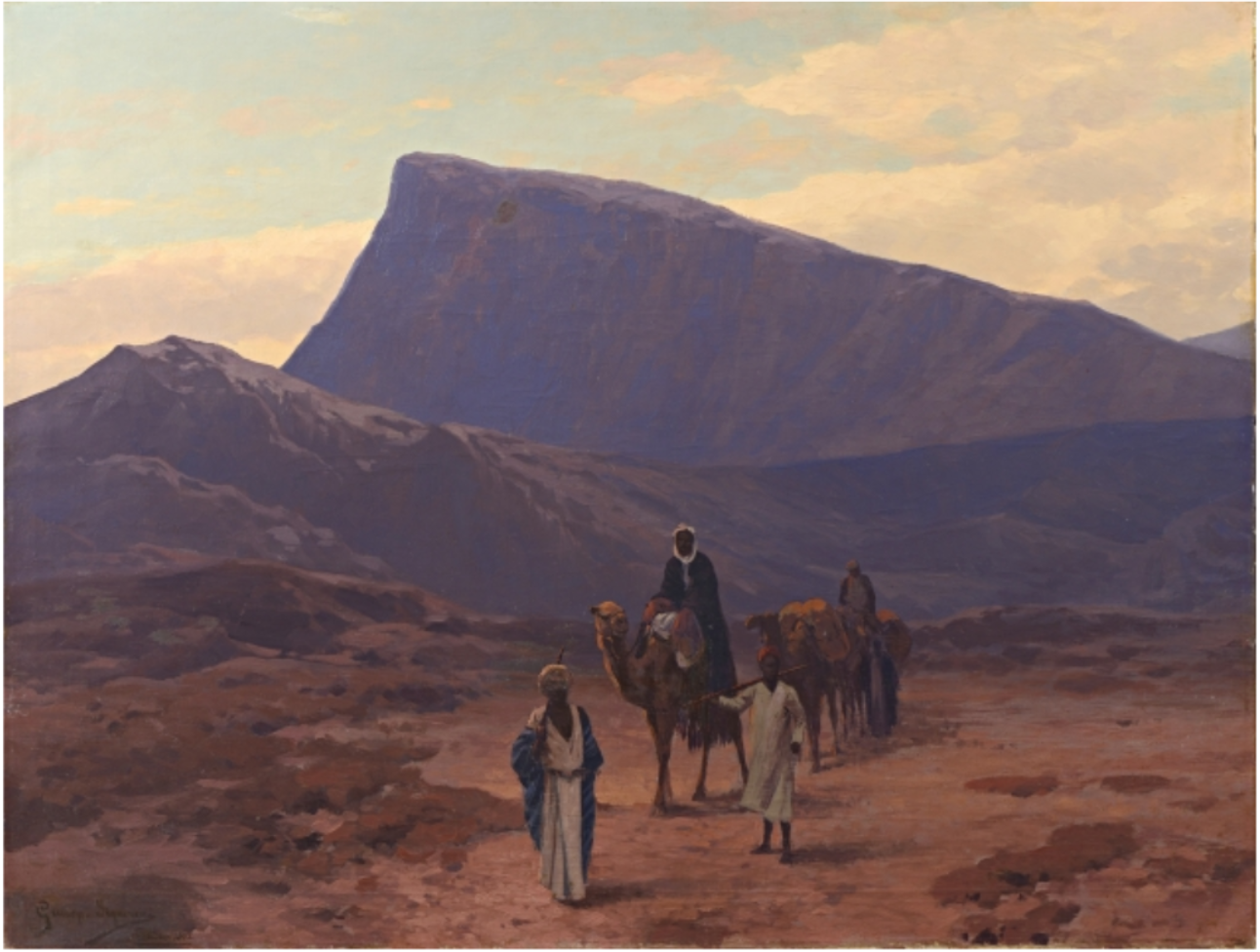
    As per tradition, Millon opened with 119 lots of Orientalist and Modern paintings and 15 lots of books, photographs and lithographs. This section did pretty well with some very impressive results, including a painting of Etienne Dinet (1861 – 1929) showing men praying (37,5 x 29cm), valued 6,000-8,000€ and sold 37,700€, as well as a colorful view of Rabat (64,5 x 99 cm) by Edy-Legrand (1892-1970), valued 6,000-8,000€ and sold 23,400€. Unsurprisingly, my personal favorite remained unsold, as Orientalist painting buyers are usually more attracted by signature and date and this view of the Atlas plateau (probably) is not signed. 

    Despite some restorations, the painting still holds a very interesting monumentality and sense of sublime that are not so common in Orientalist painting

    Ader presented 17 lots of Orientalist paintings, 26 lots of books and hajj certificates, but more importantly 53 drawings of André Maire (1898-1984), a French artist who fought in the two World Wars before leaving for Africa and then Asia where he spent 10 years. He left an immense production of drawings, as demonstrated by Ader selection of views of Egypt, India, Cambogia, Vietnam etc. All the lots were valued 400-600€ and I was expecting higher results. Most of them were sold between 700 and 2,000€, the highest price being achieved by a representation of Buddha and Ganesh.

    Drawing of André Maire are particularly interesting for the proportions of figure and the contrast between humans and environment. 

    The big surprise was the prices achieved in both auctions by Medieval North Africa and al-Andalus objects. For reminder, the last London Islamic week had left most of these lots unsold and I was expected similar results in Paris. Ader presented only one lot, a 12th-13th c. travel Qur’an (only 8.9×6.8cm). Valued at only 1,000-1,500€ due to a poor state of preservation, it reached an unexpected 37,120€, thus breaking the auction record. Millon presented five lots from 10th to 16th c. and five Modern revivals. The large Almohad water jar with an elegant tooled decoration took everybody by surprise by going at 54,600€ (against an estimation at 6,000-8,000€). The two Umayyad carbed marble capitals valued at 10,000-15,000€ reached 21,450€ and all the other lots went within their range. 

    To explain the success of North African and Andalusian items in Paris compared to London is not easy, but the most obvious explanation would be that buyers in Paris are not looking for the same kind of objects than London’s. The long lasting relationship between France and North Africa, and by historical extension south of Spain, has played a central role in the diffusion of art, in the constitution of private collections, but also in the elaboration of tast. The latter is demonstrated by the interest for Orientalist paintings, mainly focused on North Africa and Egypt, as well as the selection of books offered for auction, for instance Ader. The existence of documentation is, of course, a reassurance for buyers, as seen by the fact that Ader small Qur’an and Millon water jar both documented the provenance.

    Detail of Ader small Qur’an showing an interesting “proto-maghribi” script, golden surah title and reading mark

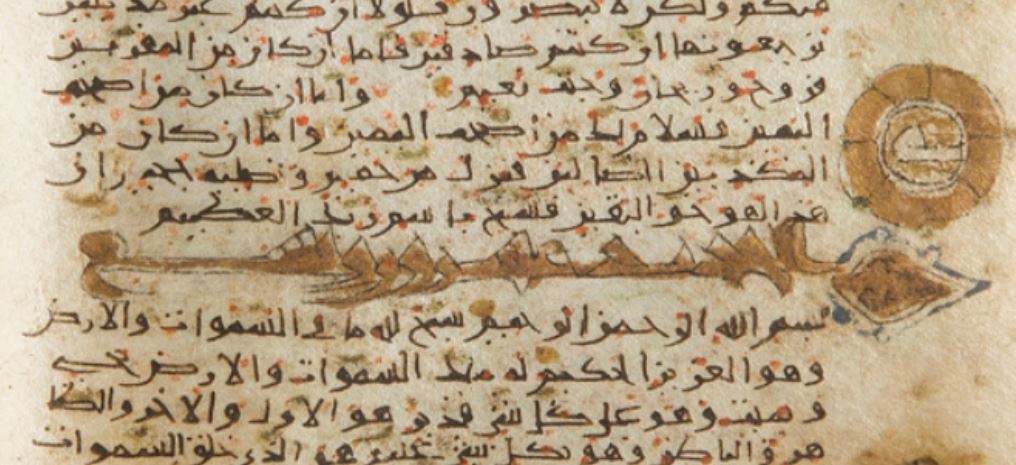
    What really made a difference for Millon lies in the manuscript section. 57 lots were presented and though some were left unsold, buyers displayed a rare enthousiasm for others. I was wondering prior to the Islamic week if isolated Qur’anic leaves on parchimen would still sell but after seeing the results, I had no doubt that the leaf with golden Kufic script and red diacritical dots would do well, and it did. The result went way above the range of 8,000-12,000€ with a total of 71,500€, a price comparable to those achieved by the Blue Qur’an bifolio sold by Christie’s in October, given the difference of valuation.

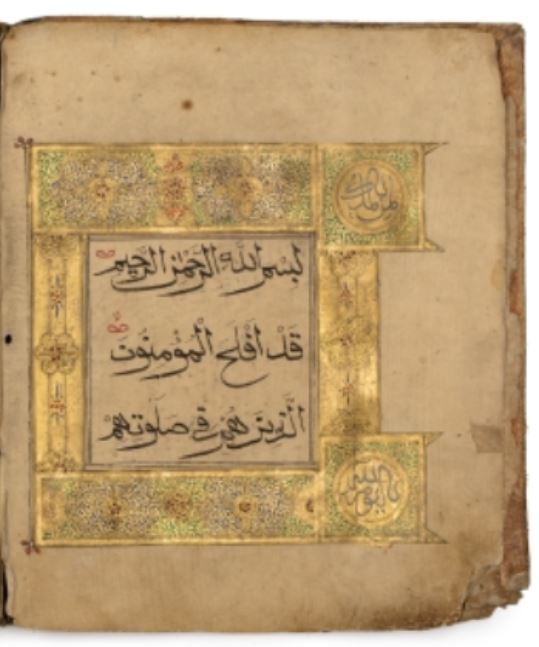
    If this Qur’an golden leaf was a given success, it was not the case for others whose results came as a complete surprise. A North African treatise of Maliki justice copied before 1692 (date of the waqf) was sold 39,000€, another one on sufism in Lybia copied around 1707 went at 13,000€. In other category, a Chinese Qur’an in 30 volumes from the 18th-19th c. and another 18th c. Chinese Qur’anic juz exceeded its range of 800-1,500€ by going at 5,850€. Usually these two kinds of manuscripts never break records, so I am wandering if we are seeing here a new trend developing in French auctions, or is it just a happy coincidence. Another Modern large Qur’an copied in the Arabic Peninsula in 1865 was sold at 52,000€ but this price is explained by the renown of its patron, the Sheikh Qasem b. Muhammad b. Thani (r. 1878-1913), second sheikh of the al-Thani family, considered like the funder of Qatar.

    A 18th c. Chinese Qur’an page, characterized by its golden illumination and script

    Qajar manuscripts and paintings are mostly stable without breaking any records. Two honorable mentions were sold at Ader, a Divan of Sa’adi from the beginning of the 19th c. including 10 paintings of high quality, for 9,216€, and an interesting litograph copy of the Shah Nama dated 1846, sold 12,800€.

    Finally, the category of Indian paintings was uneventful but both selections were not particularly remarkable. Parisian buyers don’t seem to be looking for secondary Indian paintings, while all Mughal high profile pieces are sent directly to London or to private merchants (see for instance Simon Ray current catalogue).

    In conclusion, the large difference of results between the two auction houses came mainly from their selection and what appears to be a shift on the Parisian market towards more high end art events. It will be interesting to see what the spring auctions will offer, and before that what the Carnet de Voyage auction will do in January. Will buyers be still interested in low value items? Time will tell.

    My favorite piece from the Millon auction, sold 3,380€. Click here to read the full catalogue entry written by yours trully