Author: Isabelle Imbert

  • Autumn 2018 London Islamic week: results overview

    Autumn 2018 London Islamic week: results overview

    This Autumn Islamic week is over, and what a week it has been! The selection of Bonham’s, Sotheby’s and Christie’s included some breathtaking treasures but also some interesting novelties that I have been really happy to follow. For my predictions prior to the week, you can read my article on this site, or the one I wrote for Lot-Art.com.

    Overall, the three auction houses did pretty well considering the increasing limitations of the market. Bonham’s sold 77% of their 220 lots for a total of £2,513,750; Sotheby’s sold only 53% of the 256 lots presented in the catalogue (three being removed from the auction) but achieved £8,988,25 and broke its own record with the sale of the Debbane Charger for £5,359,950; finally Christie’s achieved £5,075,250 by selling 56% of the 382 lots presented.

    The Debbane Charger bid, a great moment for the Islamic Arts market

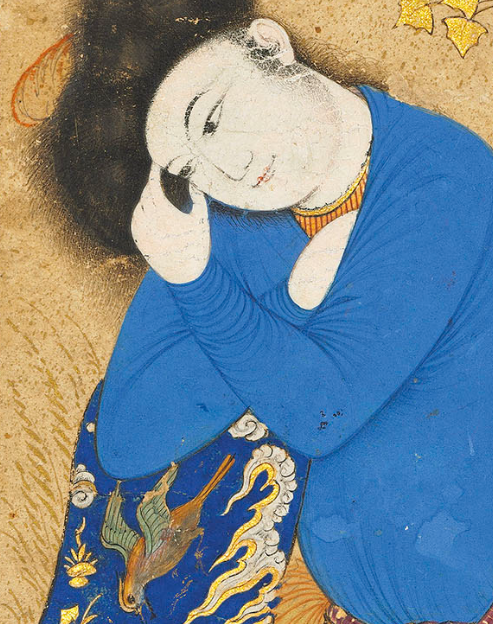
    Beside the Debbane Charger, other lots were expected. The emerald seal bearing the name of Marian Hastings, wife of Warren Hastings, Governor General of India from 1773 to 1785 was presented by Bonham’s for only £20,000/30,000, almost nothing when we know the historical importance of the piece, not to mention its intrinsic value (the stone itself is 21.6 x 16.7 x 3.43 mm approx.). Without surprise, it reached £181,250. The gorgeous Reclining Man signed by Riza ‘Abbasi and presented by Chritie’s for £100,000/150,000 achieved £512,750, but not before I could ask the staff to unframe the painting for me to see it up close!*

    The three Samanid bowls from the Soudavar collection I discussed in my article for Lot-Art did exceptionally well, better than I was expecting, selling at £65,000 (estim. £15,000/20,000),£12,500 (estim. £12,000/15,000) and £68,700 (estim. £30,000/50,000). The second one was lower and didn’t do very well because of its restored state, but especially because of its non-calligraphic decoration, less valued by collectors. The third plate is comparatively the best preserved, and though it was obviously broken, the repairs are not too important and clearly visible.
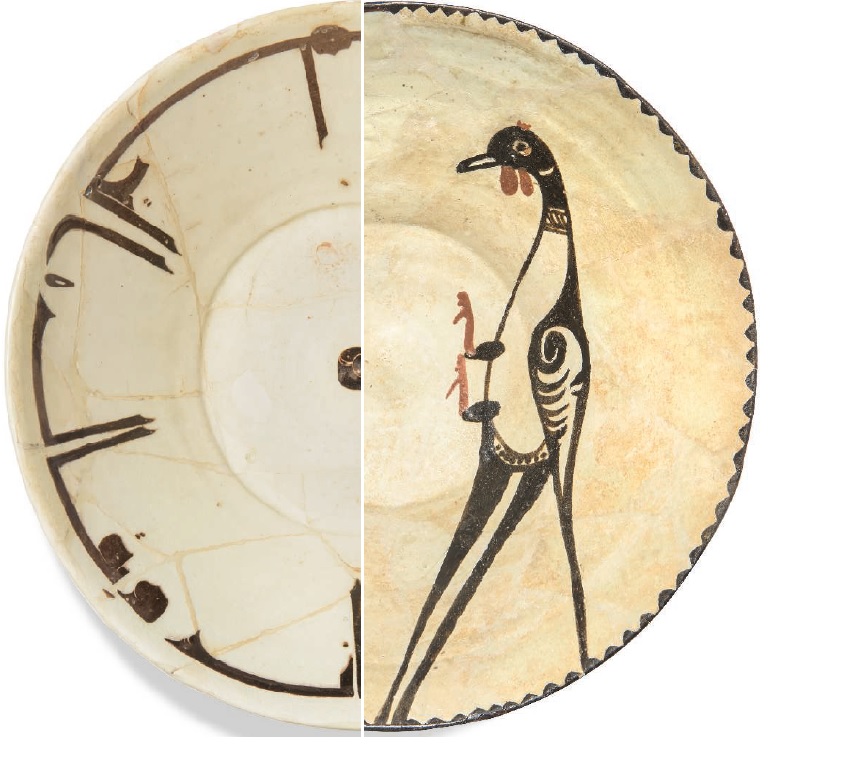
    Left: lot 46 sold £68,750. Right: lot 45 sold £12,500

    The last 20 lots presented by Bonham’s were exclusively dedicated to Sikh art. I am happy to see that collectors have indeed followed after the Toor collection exhibition last September and most of the artifacts were sold for good prices.For instance, a 19th century metal-thread embroidered velvet panel depicting Guru Nanak with Bala and Mardana valued at £2,000/3,000 achieved £10,625, and a gold Koftgari steel helmet produced in Lahore around 1840 surpassed its estimation of £5,000/7,000 to achieve £27,500.

    Bonham’s lot 2016, sold £27,500

    There were also many surprises during these auctions, reflecting how difficult it can be to foresee the fluctuations of the market.

    The Diyarbakir mihrab tile panel presented by Sotheby’s for £300,000/500,000 didn’t do as good as I was expecting, reaching only £250,000. More importantly, sale of Ottoman figurative paintings, which I thought would be a “done deal” after the success of the previous Islamic week, completely crumbled. Sotheby’s presented two important lots, an album of costumes attributed to Fenerci Mehmed, valued £200,000/300,000, and the painting of the audience of the Polish Ambassador in the Topkapi Palace, dated 13 August 1707 and valued at £18,000/25,000, both remained unsold. Christie’s offered three lots: a page from the story of Miqdaq bin Aswad, signed and dated from the 16th century, valued at £80,000-120,000, a Qisas al-Anbiya from the 17th c. for £60,000/80,000 and a genealogical tree of the Ottoman dynasty, probably produced in France for the Turkish market at the beginning of the 19th c., valued at £20,000/30,000. Though the last one is not technically Turkish, the style of the portraits is closer to Ottoman painting than French portraiture. Only the Qisas al-Anbiya was sold for £68,750, not particularly high considering its valuation. Were the experts too confident after the success in the Spring? Maybe. Whatever it be, Ottoman figurative painting is visibly not there yet, while illuminated manuscripts and prayer books including views of sacred sites continue to do relatively well without breaking records.
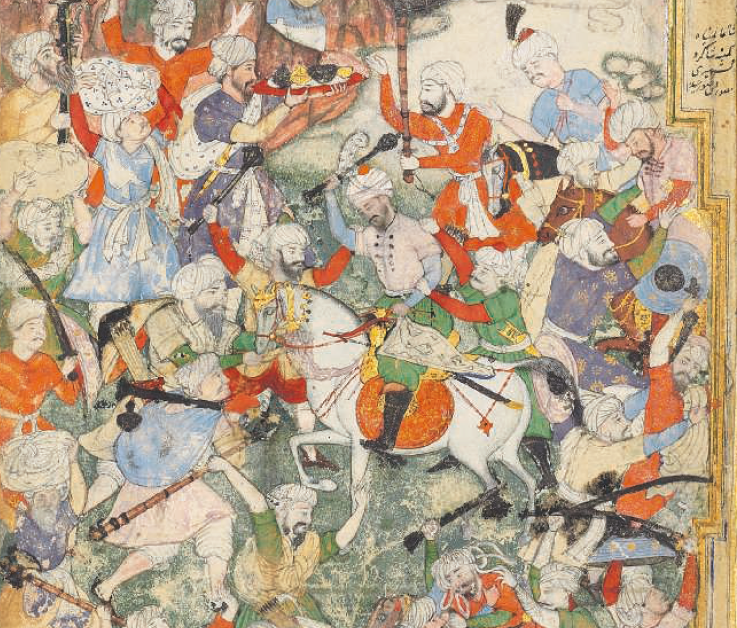
    A detail of the Baburnama page showing pigment deterioration

    Christie’s was presenting a page of the first Baburnama produced under the patronage of the emperor Akbar and presented to him in 1589. This manuscript is extremely important for the history of Mughal arts of the book but the page remained unsold. This can maybe explained by the pigments poor state of preservation, or by the fact that the emphasis was put on the next lot, a gorgeous representation of the goddess Bagalamukhi enthroned in a golden temple, valued at £80,000/120,000 and sold £137,500, that maybe distracted the buyers. There is no doubt in my mind that this
    Baburnama page will reappear in the near future, but maybe with a less enthusiastic estimation.

    Bonham’s and Christie’s both presented Safavid pottery tiles of different qualities and pricing. Both did relatively well, Christie’s sold four of their eight lots (not six as announced in my previous article) and Bonham’s six of their eight, mostly within the valuation ranges. We will see what happens during the next auctions and if the number of Safavid tiles continues to increase but we might have to wait a while before Safavid tiles become the new Iznik. As always, the three auction houses presented a large quantity of Iznik dishes, Bonham’s just one and one 19th century copy, Christie’s twelve lots and three copies, Sotheby’s twenty-four lots including the Debbane Charger, and three copies. The market is literally saturated with Iznik potteries and I’d be tempted to say that enough is enough, but most lots find a buyer, sometimes for insane prices as demonstrated by one Çintamani tile circa 1580 presented by Christie’s for £30,000/50,000 and sold at £218,750. Given, it is a very nice tile and the leopard spot motif always adds value to a piece, but in the sea of Iznik potteries, I am starting to fail seeing the value.
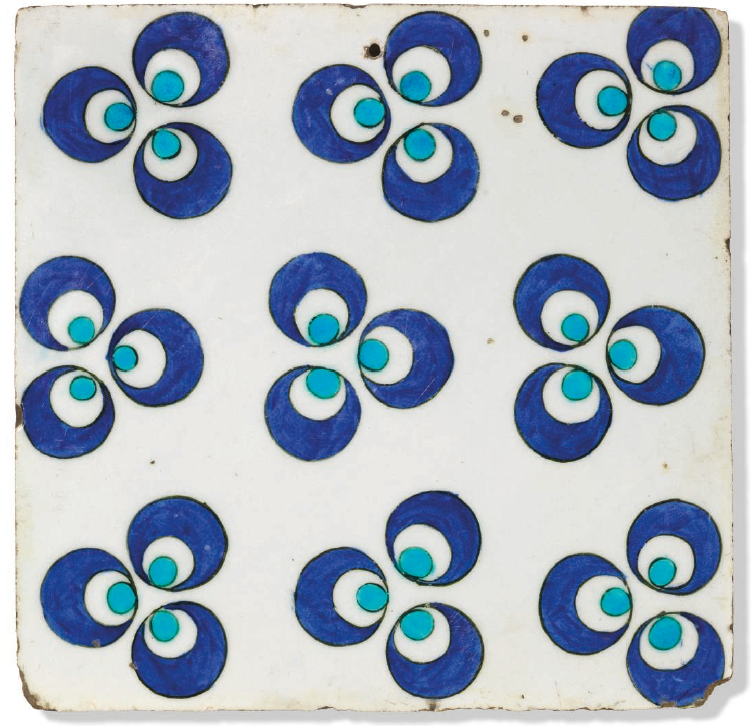
    Christie’s lot 217, sold £218,750

    There are many things that could be discussed but I will finish on two. Firstly, Medieval Spain and North African artifacts beside manuscripts do not have the wind in their sails. Bonham’s had one Almoravid lot unsold, Sotheby’s had four Omeyyad,  Merinid, Nasrid and Nasrid revival, three unsold and Christie’s had six lots, all unsold. Medieval Spain and North Africa are never a big success except for manuscripts, as demonstrated by the £512,750 achieved by the blue Qur’an page sold by Christie’s. However, this Islamic week was surprising by the number of lots and I was expecting better results, especially considering the valuation of certain lots. These results will constitute an interesting point of comparison between the English and French markets, as some similar lots will be presented at Millon the 3rd December. Let’s whish the French house more success in this field.
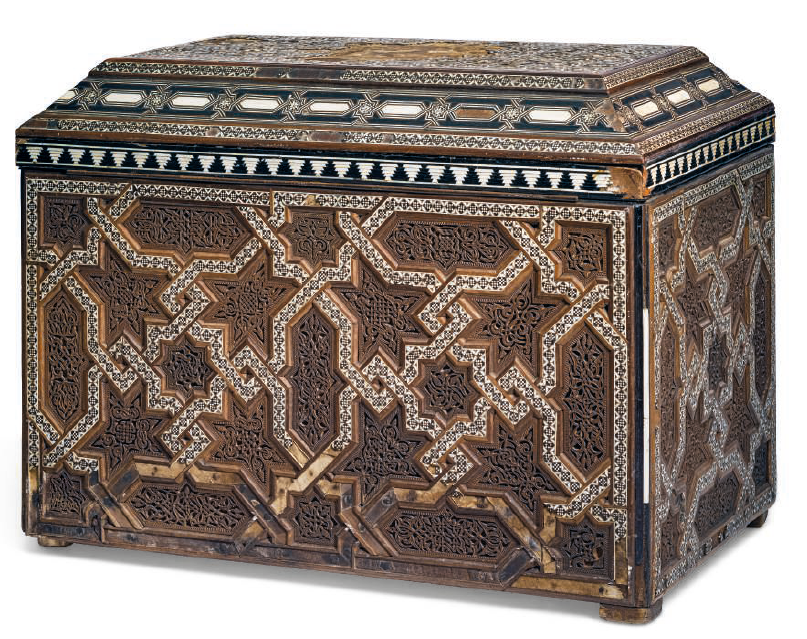
    Merenid Style casket, Marocco 19th c., Christie’s lot 18, £50,000/70,000 – unsold

    Secondly and finally, I have to mention Sotheby’s album page presented as being from the Leningrad album, attribution that I challenged in my previous article. I like to think that someone read my article because the auctioneer himself questioned the attribution just before the bid, mentioning that the page was “probably” from the Leningrad album (but it’s not). The lot was sold within its range, £25,000, which is not surprising given the overall quality of the page but should have been way more the provenance had been confirmed.

    The next stop before the end of the year will be Paris, Ader-Nordmann on the 27th November and Millon et Associés the 3rd December.

    WordPress has changed its text editor and decided to remove the “justify” option. My text is now aligned left, which differs from my previous publications. I hope you won’t be too bothered by this!
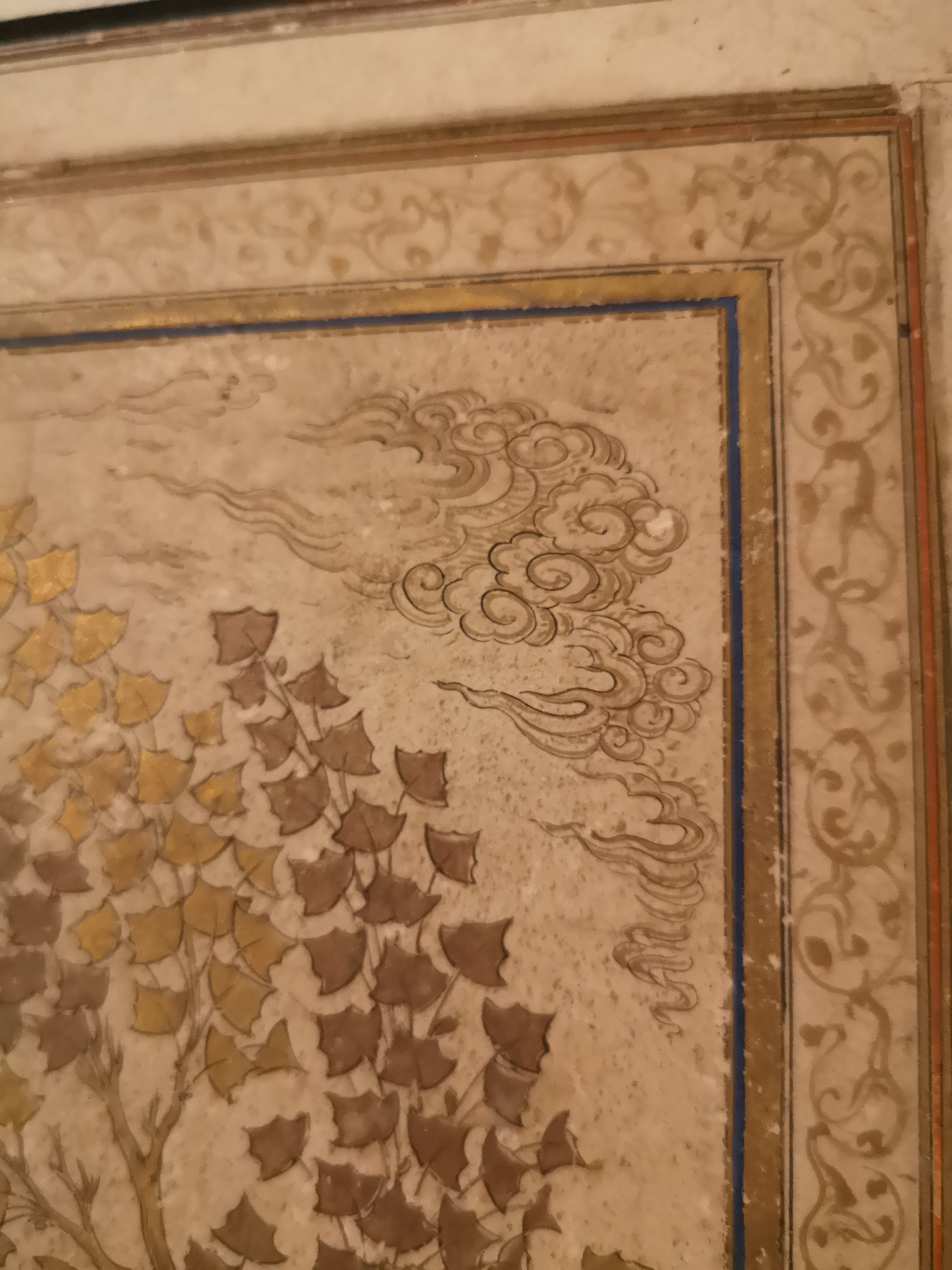
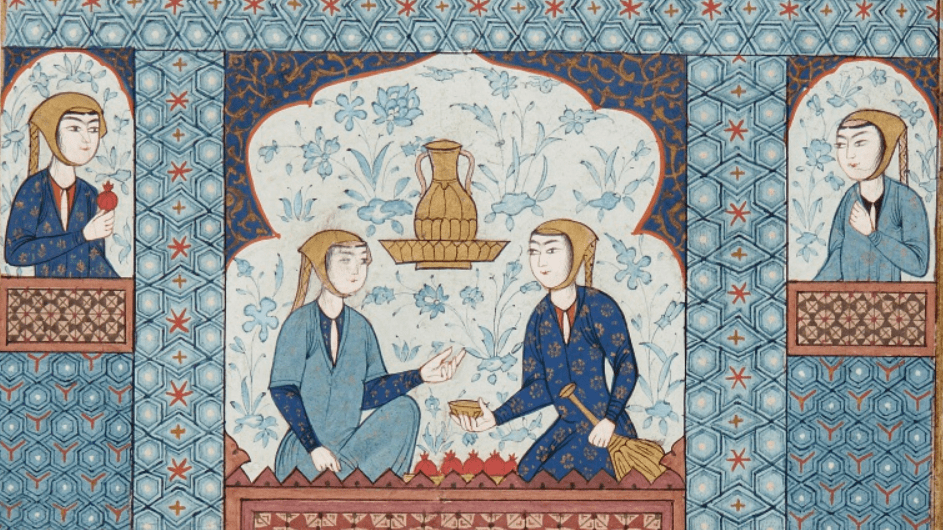
    * I wish to thank Christie’s and Behnaz Atighi Moghaddam for their warm welcome and kind assistance. 
  • Time to speculate: London Islamic Week, October 2018

    Time to speculate: London Islamic Week, October 2018

    Autumn is always an exciting time. Business starts again after a well-deserved break, calendars are getting busier and attention gets directed towards the next big event: the second Islamic Week in London. Finally, the catalogues are out and we get to speculate on what will sell the most.

    This fall, I found that Bonham’s, Sotheby’s and Christie’s selections are full of surprise. They confirm tendencies that were already visible in the spring auctions but also seem to announce new trends; let’s jump in!

    Bonham’s opens on the 23rd by skipping altogether the traditional section of 8th-9th centuries Qur’an leaves on parchment. Sotheby’s, on the 24th, heavily reduces this section as well. We find ourselves wondering if this change is due to the material running dry or if we are witnessing an increased disinterest from merchants and collectors. No noticeable breakthrough has occurred in the field since François Déroche published his study in the 90’s and collectors might be getting cold, especially considering the enormous mass of material which looks exactly the same. That being said, Christie’s, on the 25th, opens its auction by a page from the blue Qur’an, this enigmatic manuscript probably made in Tunisia around the 9th century. Pages from the Blue Qur’an are sold very frequently, the last one just last year, but valuation never seems to drop, this one reaching £200,000-300,000. Three other lots of the same sort are presented at Christie’s, including one of 67 consecutive folios, previously presented at Sotheby’s in 2007 for £60,000-80,000 and sold £60,500. Christie’s shows caution and give an estimation of £40,000-60,000. The result might disappoint the seller, but future will tell us more about this possible disavow.

    Bo23.10_40
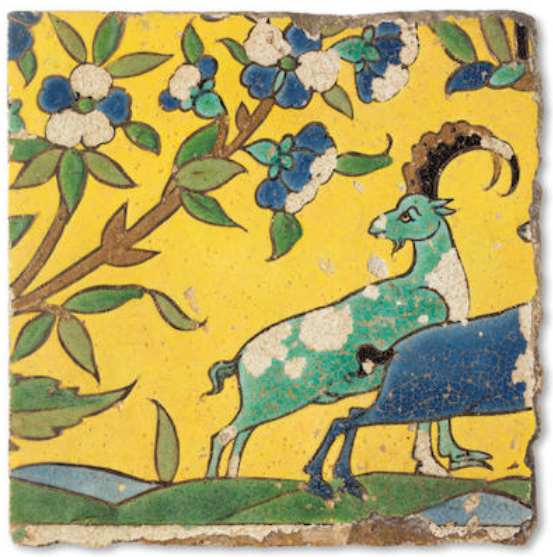
    Bonham’s, lot 40. £3,000-5,000

    Other interesting tendency shared by Bonham’s and Christie’s, the quantity of Safavid tiles. Bonham’s has 8 lots, Christie’s has 6 including one of 19 pieces presented together, another one of 2. The items chronology covers mostly the 17th century, with a few later additions. London auctions often present this kind of Safavid tiles, but the quantity is unprecedented. Safavid ceramics is generally less represented than its Ottoman counterpart, but we might see here the beginning of a fluctuation. To be confirmed next spring.

    Sth24.10_134
    The central arabesque of rumi split-palmettes. Sotheby’s lot 134

    Speaking about Ottoman ceramic, it is impossible not to talk about Sotheby’s main event: a blue and white Iznik pottery charger, produced circa 1480. I am not particularly fond of Izinik ceramics, I admit it freely, but this one seems to be an absolute beauty and I look forward seeing it “in the flesh”. Though Izinik blue and white were designed to emulated Chinese porcelains (as seen by the hatayi flower arabesque on the rim and the reverse), their decoration have rapidly evolved toward a characteristic “Ottoman style”. This plate shines by the perfect balance of the rumi motifs interlacing and the subtle yet definite palette of white and blue shades. Yes, I am in absolute awe. Unfortunately for me, with its valuation at £300,000-500,000, I will have to settle for a brief admiration before the piece goes to someone else.

    Sotheby’s presents quite a lot of Iznik pieces – the kind I don’t like – and I wonder if the current state of the Lira will have an impact on sales.

    Ch.25.10_56-1.PNG

    While Sotheby’s focuses on ceramics (another Ottoman ceramic ensemble reaches £300,000-500,000), Christie’s clearly put the emphasis on manuscripts and paintings. I will start with the obvious: Reza ‘Abbasi Seated Youth. I wrote my first year Master degree on Reza ‘Abbasi and developed a real admiration for this painter, known for his bad temper and love of street fights as much as his undeniable talent. For those who may ask (no one, they reply), I worked on the impact of Armenian art on Safavid painting during the reign of Shah ‘Abbas Ier, starting with Reza ‘Abbasi and this curious piece of archive kept in the Holy-Saviour cathedral in the New Julfa (Isfahan). Written in an elegant naskhi, it states that Reza ‘Abbasi received a training from the famous Armenian painter Minas but that the Shah should never know. Though this memoir wasn’t particularly successful, it taught me how to appreciate these delicate representations of an insouciant youth (and humility, also).

    Valued £100,000-150,000, the painting is signed but not dated. I am always careful with dates when it comes to Reza’s work, but this painting can be compared to the one of A young Portuguese dated 1634, in particular in the depiction of embroider textiles. As well, the painting bears the mention to the patron, Mirza Muhammad Shafi’, mentioned on other paintings by Reza’.

    Christie’s shows a very interesting range of manuscripts and paintings and it would me take me days to comment them all. Instead, I will give a few honourable mentions. The first one is a page from the Chester Beatty Tutti Nama, produced in Mughal India around 1580-85, during the reign of Akbar (lot 172). Its estimation is surprisingly low, only £8,000-12,000, though the page seems to be in good condition considering its turbulent history.

    Ch.25.10_100-2.PNG

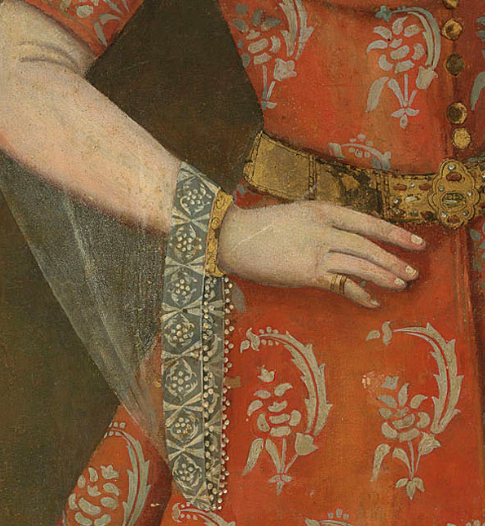
    The second one is a Safavid oil painting, valued £40,000-60,000 (lot 100). Part of a group of panel first published by Eleanor Sims in 1976 (Persian and Mughal Art, 1976), the format is still quite unusual and surprising for the 17th century. These life-size panels (1,66m with the frame) were probably destined to decorate one of Isfahan palaces, but beside a few European primary sources and engravings, we really don’t know much about them. None of them being signed, my guess is that these paintings were produced either by Armenian painters or by Persian painters under Armenian patronage. The rendering of fabrics on this panel is particularly clever and reveals a clear impact of European pictorial practices.

    The last honourable mention goes to an elegant Qisas al-Anbiya produced in Ottoman Turkey during the 17th century (lot 238). Ottoman painting has finally started to get some recognition these past few years in academia, but also on the art market as we’ve seen last spring with the erotic manuscript sold at Sotheby’s for £561,000. The present manuscript was written in Farsi in an elegant nasta’liq but the 23 illustrations were undoubtly produced by a Turkish painter. It has already been sold at Christie’s in 2008 for £102,500 so it will be interesting to see what value it achieve ten years later.

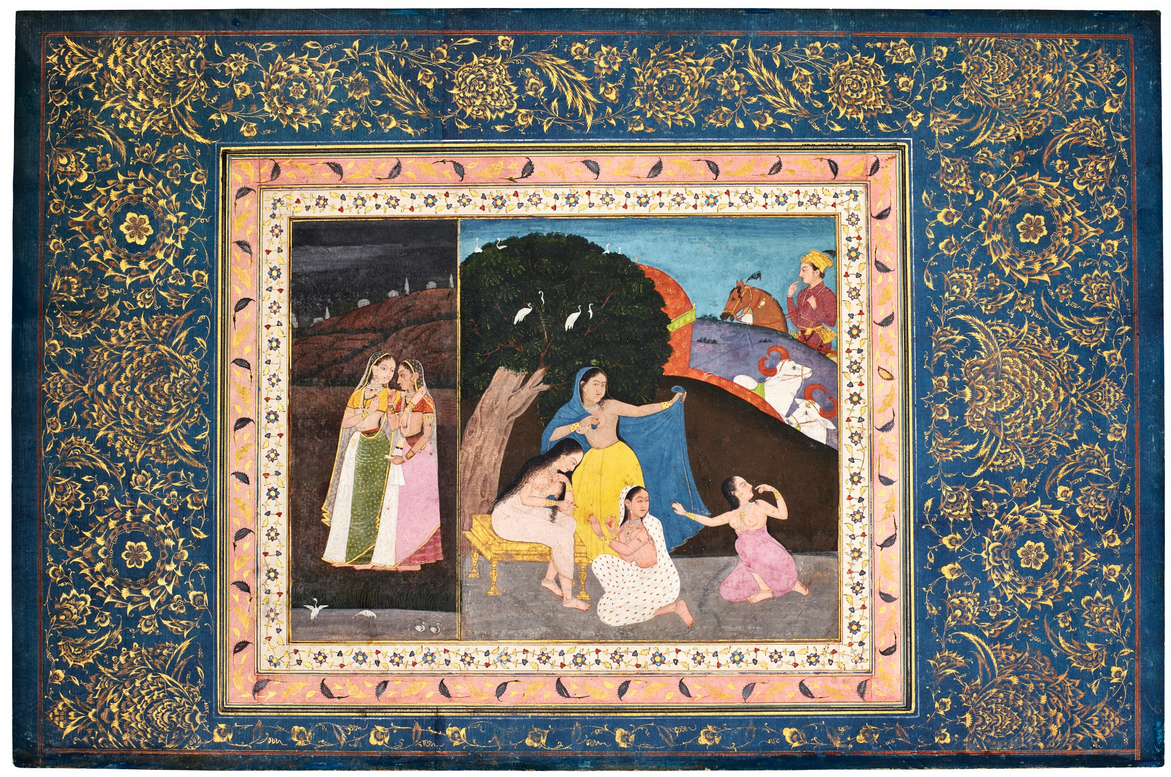
    Sotheby’s presents a few interesting manuscripts and paintings, including one that left my baffled. The lot 94 is presented as a page of the St Petersburg album (also called Leningrad album) and is valued at £20,000-25,000. The central field shows a 17th century Mughal depiction of Farhad spies Shirin bathing on the centre right and two women conversing on the right. The assemblage is mounted in large blue borders decorated with a golden floral arabesque. In theory, it looks like it, but I strongly disagree with this attribution for three reasons:

    – The sizes don’t match: The St Petersbourg pages are 47,5x33cm, the Sotheby’s page is 46,8×30,8cm for a ratio margins/central field that seems similar. The Sotheby’s page doesn’t seem to have been trimmed, it still shows the outer line delimiting the border decoration. If the page was separated after 1910, as the catalogue suggests, then there is no reason for it to have been trimmed. This discrepancy can only be explained by a different origin.

    – The decoration doesn’t match other pages from the album. Given, the page ornementation could be unique, it happens elsewhere in the album. That being said, all the pages with blue margins show consistence in their layout, especially the use of a golden line delimiting the ornamented field. On this page, the delimitation is a thick red band framed by golden line that doesn’t appear anywhere in the album. As well, the density of the arabesque design and its palette – two types of gold or gold and orange (to be confirmed de visu) doesn’t fit the rest of the album. The inner borders decoration doesn’t correspond neither, especially the colour theme of their background: pink and white, where the album shows a dominant of bright red, deep blue or gold.

    – Finally, in the St Petersbourg album, all pages with blue margins are calligraphic sides, not figurative. This is an absolute constant and there is no way this page could have fit in this album with these margins, as it would have broken the internal balance of the volume.

    Persian muraqqa’ can sometimes appear like a random gathering but in most volumes, especially those produced for an influential patron, there is always a logic in their layout, content or decoration. David Roxburgh has already demonstrated this for Timurid and early Safavid albums (The Persian Album, 2005), while Adel Adamova has worked on the Leningrad album (Medieval Persian Painting, 2008). Shamelessly promoting myself, I have also worked extensively on the album for my doctoral dissertation, especially its flower paintings and floral decoration. In my opinion, Sotheby’s experts got a little bit too excited with this page. It might have been produced for a slightly more recent album in Zand or Qajar Iran, but certainly not for the Leningrad’s.

    Sth24.10_94.png
    An album page NOT from the Leningrad album. Sotheby’s, lot 94, £20,000-25,000

    I will finish this long article by mentioning the very interesting selection of Sikh artefacts offered by Bonhams from lot 200 to 220. The exhibition of the Toor collection, In Pursuit of Empire, held in London from July to September this year, along with the incredibly beautiful and rich exhibition catalogue, have shed a refreshed light on Sikh art, and it will be interesting to see if collectors follow.

    A lot will need to be discussed after the auctions, and for those who would fancy a direct chat prior the auctions, I’ll be in London from the 23rd to the 26th. Feel free to get in touch!

  • Why does Islamic Arts History matter?

    Why does Islamic Arts History matter?

    When I started studying Islamic Arts History, many years ago, many people asked me the same question: Why are you studying Islamic Arts? Are you a Muslim?

    I always replied the same thing, being Muslim is not a requirement to appreciate the unalterable beauty of Cordoba Mosque, not more than being Christian to be moved by Michelangelo Pieta.

    Islamic Arts history is an important and still underated branch of arts history, and a lot of misconceptions are still floating around, especially in the West, about what it is, what it intails and how we can talk about it.

    For this reason, I’ve decided to introduce a new section on this blog, dedicated to this particularly facinating field of inquiry. To do so, I will focus on specific artifacts or groups of artifacts that present a historical or theoretical interest, thus retracing the history of Islamic arts. I can’t guarantee that articles will be in chronological order, I am letting myself being led by inspiration, but hopefully, it will make sense in the end.

    Without any further due, let’s get cracking, we have a long way to go!

    • First thing first, what are Islamic arts?

    The short answer is pretty simple: are called Islamic all forms of arts created either in lands where Islam is the predominant religion or as a religious art. The distinction between the two is important, because not all Islamic art was created by Muslim, and not all Islamic artifacts were linked to religion. Roughly, the expression emcompass all art produced since the 7th century to this day, from Spain to India.

    Pentateuque__btv1b84192173KCEBGLG6
    Manuscript produced in Egypt in 1353. This is not a Qur’an but a Christian Pentateuch containing the 5 first books of the Bible. BnF, arabe 12

    The expression “Islamic art” was invented in the early 20th century by European and American scholars and collectors to define a bulk of unfamiliar art forms. From there was created a specific field of inquiry, very soon to be questionned.

    Indeed, with the rise of nationalisms in the first half of the 20th century, scholars from the Islamic lands opted to use more nationalistic names to define their field, for example Turkish art or Persian art. These terms are misleading on their own, Persian, for instance, can refer to a 15th century Timurid Qur’an or to the bas-relief of Persepolis, one of the capital city of the Achemenid dynasty dating back to the 6th century B.C.. The lengh of Islamic arts chronology, as well as the multiculturalism of Islam make these national distinctions really uneasy.

    More recently, academics have questionned the term of Islamic arts as too general, since it doesn’t refer to a particular era, region, or even culture nor medium. To facilitate discussions, they have started to use regional or dynastic categories. For instance, the Mamluk of Egypt, the Safavid of Iran, the Umayyad of Spain etc. Though this fragmentation is very usefull, it doesn’t reflect the similarities and common features running through the Islamic lands like the use of Arabic language and the importance of calligraphy, or shared devorative patterns.

    Ch.23042015-38
    Chinese Qur’an, Qing dynasty, 17th century.
    Christie’s 2015

    This division can be problematic because transmission is at the base of Islamic arts and this is what I will try to demonstrate in my next posts. Islam as a religion was born in a land crossed by many cultures and religions, either polytheist Arab tribes from the Nejd desert, Persians, Ethiopians coming through the Red Sea, Byzantians etc. When a new form of art, linked to the new power established after the Hegira, came to be needed, Arabs just had to look around and adapt existing forms to their needs. For this reason, we find today coins from the Umeyyad dynasty, the first Islamic power in the Middle-East (664-750) looking rather similar to Byzantine money.

    standing_califh
    Umeyyad dinar showing the caliph as a Basileus and a simplified cross design

    Cultural transfers didn’t stop there, of course, and continued to define the core of Islamic arts through the centuries. Though its definition is still fluctuent, we could say that the main characteristic of creation in Islamic lands is the mastery of transition. It would be very easy to talk about “classical” eras of Persian painting or Mamluk architecture, but I do not believe them to be a truthful reflection of the constant artistic turmoil, the artists neverending quest for innovation, nor the genuine open mindness to the rest of the world.

    These are some of the main features flowing through Islamic lands. For this reason, and others that I will have the opportunity to mention, Islamic arts bear a special importance for the understanding of past and present cultures and forms of expression, as they have touched so many of them.

    Djam-4-opt
    Jam Minaret, Afghanistan. c. 1190
  • Carnets de Voyage IV on the 6th July with Millon et Associés

    Carnets de Voyage IV on the 6th July with Millon et Associés

    While I didn’t find the time to write about last week Ader-Nordman Islamic art auction, I figured I had to right my wrong by presenting the next one, at least briefly. It is the last auction before summer break and I find its focus particularly interesting.

    Islamic art can be a scary thing for the new comer. After all, we are talking about forms of expression on all imaginable medium, since the 6th century to this day, from Spain to the Philippines. The aesthetic value of objects, paintings and manuscripts produced in Islamic lands can attract new buyers but hight estimations, especially in London auctions, can also cool down a lot bourgeoning passions.

    For this reason, the next Millon et Associés auction constitutes a tremendous opportunity for new collectors to get involved. Lots rarely exceed 1500€ and show a variety that allow everybody to find their affordable treasure. I will just present a few lots here but feel free to contact me for more information on others.

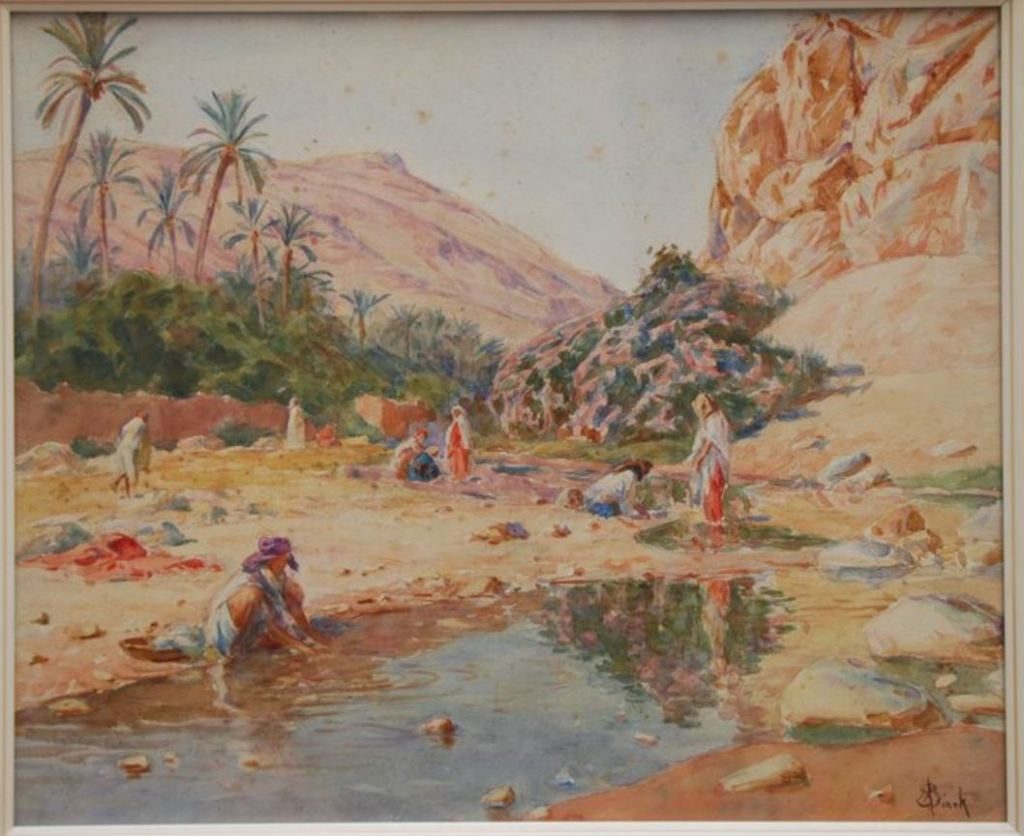
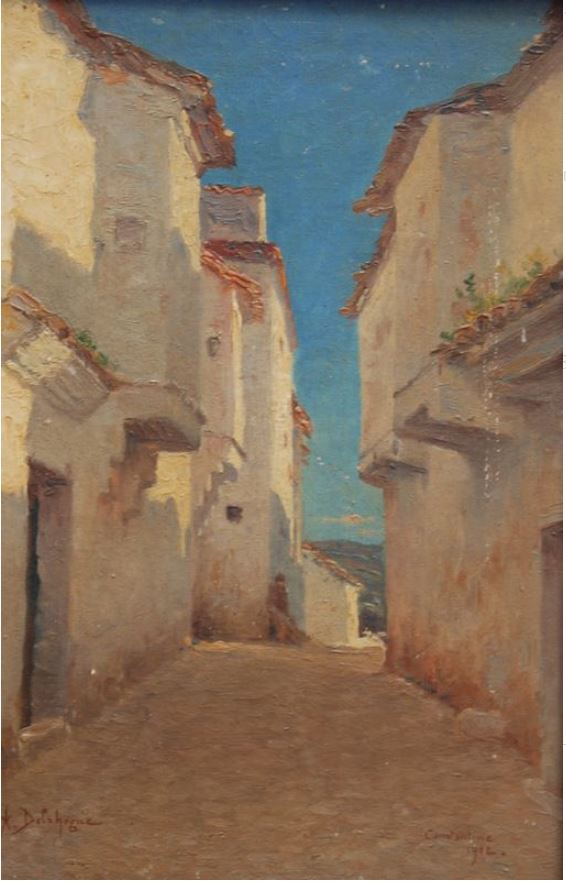
    I always have a weakness for Orientalist landscapes and outside scenes, maybe because of my Southern origins, but I’m always impress with the painters’ ability to capture the Mediterranean bright light blue sky depth. For this reason, a few paintings caught my eyes, including a view of the Oued of el-Kantara signed Alphonse Brick (1859-1942) for 500-700€, a view of Constantine dated 1902 by Alexis-Auguste Delahogue (1857-1963) for 500-700€ and a very peaceful landscape at sunset by Hasam Saim estimated 300-400€.

    Reading through the catalogue, I was really impressed by the quality of several of the items presented. Temptation is high to talk about all of them but I am simply going to encourage you to go on Millon et Associés’s website. My eyes stopped on a few in particular and if I were in Paris on Friday, you would definitely find me with at Drouot raising my hand to bid !

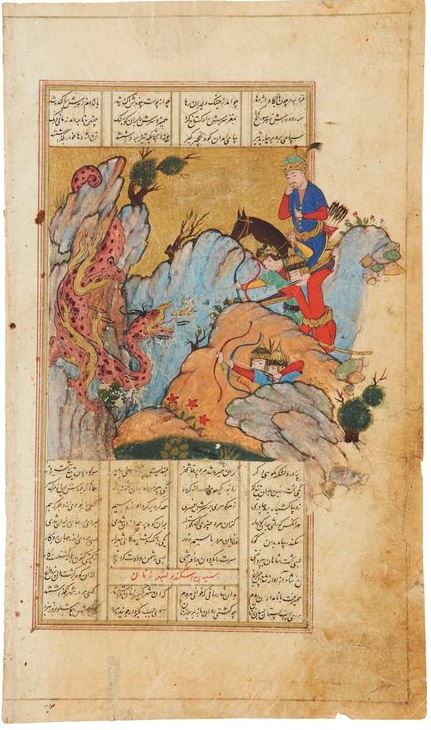
    lot_109
    Lot 109 – 30 x 17.5cm – 500/700€

    I mean, look at this attractive depiction of Iskandar fighting the Dragon from Nezami Khamsa (500/700€). This isolated page was most probably produced in Shiraz as what we call the “commercial production”. This terminology doesn’t really mean anything but refers to a range of anonymous illustrated manuscripts, mostly datable from the 16th century (this page is slightly later) and displaying a range of quality from “not good” to “okay”. These are not scientific terms, please do not reproduce this at home! This painting is “pretty nice” despite being slightly damaged. The scene is depicted in a common way,  with Iskandar bitting his index to signify his surprise while the archers do all the work fighting the dragon.

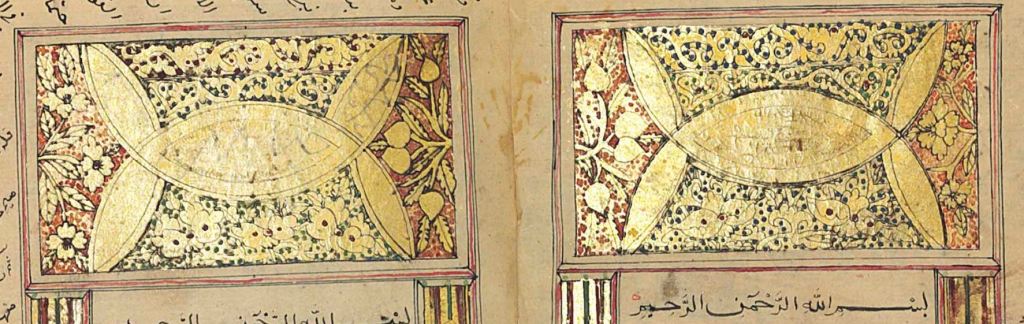
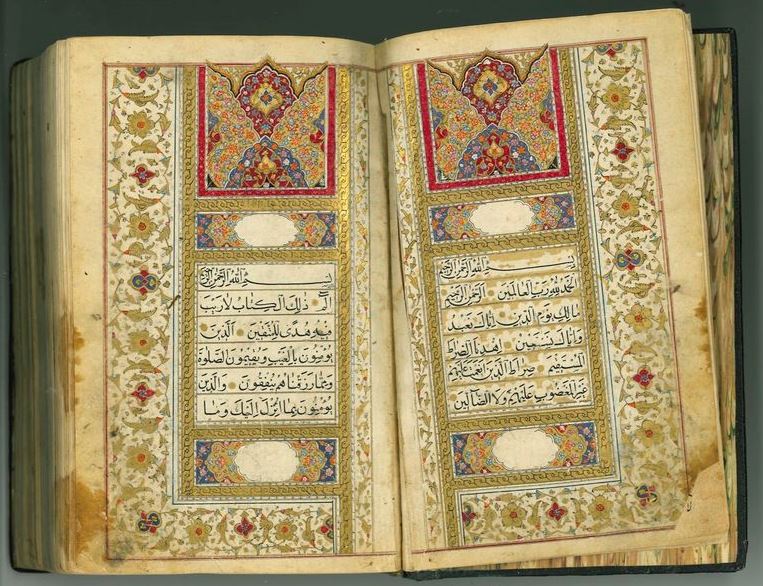
    Also produced under Safavid rule, this attractive Qur’an of 19 x 11.5cm, copied in 1105 H./1693 by Reza b. Kasem al-Husseini al-Djilani (1500/2000€). The naskh script is harmonious, as well as the golden sura heads in ruqqa’. The manuscript has been slightly damaged but most of the illuminated double frontispiece and the rest of the pages are still in good condition.

    lot_136
    Lot 136 – 19 x 11,5 cm – 1500/2000€

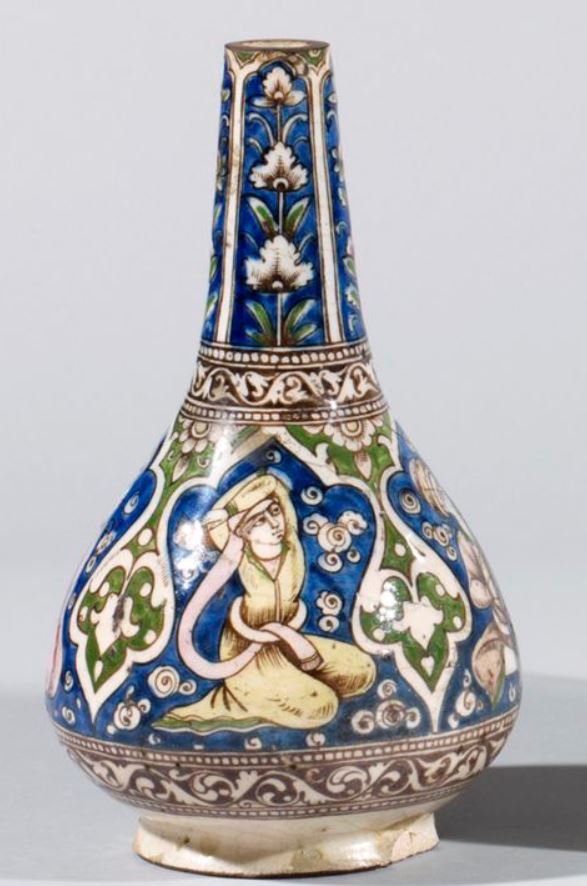
    I always find Qajar ceramic a bit risky. There are, of course, many beautiful examples of this late production, but we also see in auctions mediocre pieces that are nothing more than a failed imitation of Safavid figurative representation. What a nice surprise then to see in this auction nice Qajar lots: first, a vase of 22cm figuring two musicians and a decor of vegetal motives. The design is regular and the colors have held the firing, including the interesting shadow work on the neck. This vase is estimated 200/300€. The second lot is a pair of Qajar vases, one decorated with a wine-bearer figure, the other one animals, both covered in floral designs. The overall decoration imitates Safavid ceramics and figurative representation, nevertheless the line is harmonious despite the pigments having ran during baking. Estimation is 400/600€ for the two.

    This short selection doesn’t completely reflect the variety of the catalogue but gives you a brief overview of its quality. It will be interesting to see what is being sold and for how much. I expect a few surprises, for example with this carved lintel from North Africa, reading Al-yumn wal-iqbâl wa boulough al amâl wa jami’ al-ahwâ in an elegant Maghribi script, only estimated 120/150€. Absolutely perfect to decorate an interior!

    lot_314
    Lot 314 – 23 x 119cm – 120/150€