Category: art history

  • Islamic Week, Autumn 2021 or An Unexpected Number of Bats

    Islamic Week, Autumn 2021 or An Unexpected Number of Bats

    I admit it, this title might be a bit dramatic, but it is still an accurate depiction of the upcoming Islamic week, as, yes, there are bats.

    This year, Bonhams opens on the 25th October with a large catalogue of 342 lots, more than double since last Spring auction;
    Roseberys presents on the next day with a head-turning catalogue of 557 lots, though not all are Islamic. Going through the selection is not easy, as there is such a thing as too much of a good thing, especially when the internal organisation of the catalogue makes no sense and the online navigation only allows keyword searches. That being said, a large part of Oliver Hoare’s collection is offered for sale and kept as a cohesive whole within the catalogue.1
    Sotheby’s holds two auctions on the 27th, in the morning with 29 Company School paintings, in the afternoon with 184 lots, including three going over the million.
    Christie’s presents a single catalogue of 207 lots on the 28th. Only one item goes over one million, and the catalogue gives the impression that the auction house has struggled to get a high-quality selection. There are still some pretty amazing and unpublished artefacts, so all is not lost.
    Finally, Chiswick closes the week on the 29th with two catalogues, a single-owner sale of 162 lots in the morning entirely dedicated to 19th and early 20th Qajar Iran, and a larger catalogue of 236 lots in the afternoon.

    All previous auction results include premium.
    You can click on any image below to get to the corresponding catalogue entry.
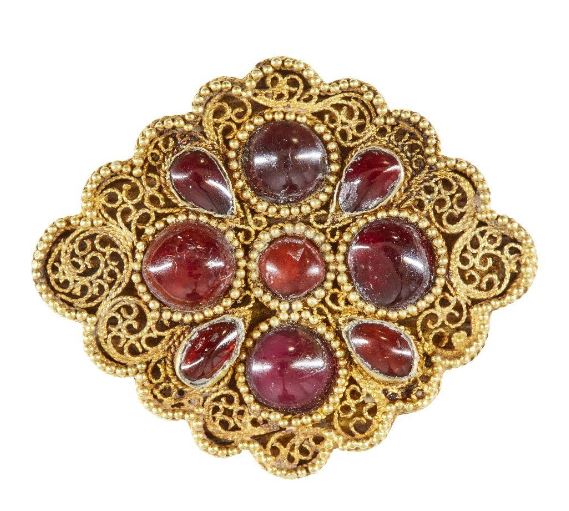
    Garnet set gold elements, Roseberys, lot 314, £6-800

    The commodity of Indian art

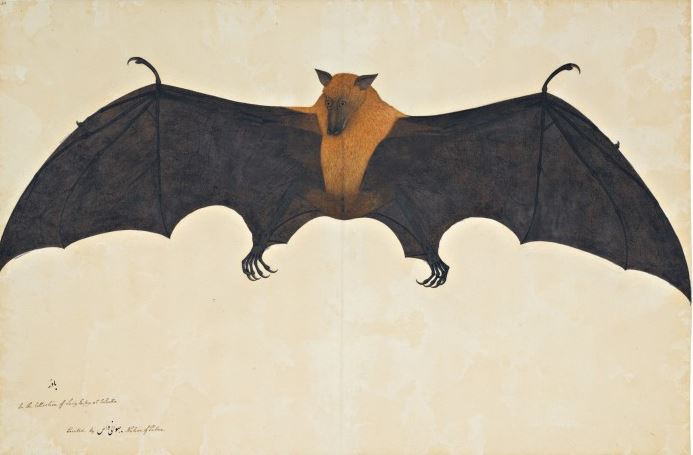
    Let’s start with the bats. Sotheby’s first auction is exclusively made of Company School paintings, coming from the collection of the New-York gallery Carlton Rochell. Prices go from £8.000-12.000 to an astonishing £300.000-400.000 for a Great Indian Fruit Bat signed Bhawani Das, produced for Sir and Lady Impey. Elijah Impey was Chief Justice of Bengal from 1774 to 1787 and settled in Calcutta with his wife Mary, where they took a particular interest in hiring local artists to depict Indian natural history. They are today the most famous patrons of “Company School” painting, reflected here in the price of Sotheby’s bat. The flying fox was already famous on the market, having most recently been sold for £458.500 at Bonhams in 2014, before that for £168.500 at Christie’s in 2008 as part of the Niall Hobhouse Collection sale.
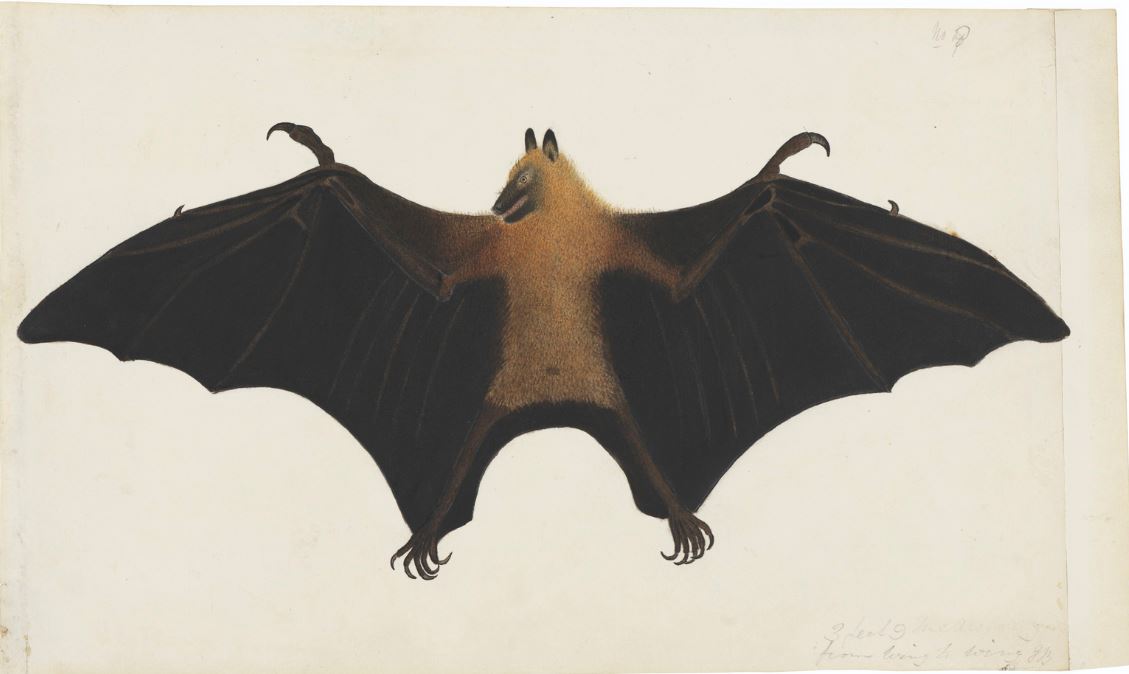
    The second flying fox, presented at Christie’s for £20.000-30.000, appears a bit pale in comparison to the first one. Unsigned, it lacks the endearing realism that characterises Sotheby’s bat. As well, the catalogue only mentions one previous provenance and nothing prior to 2018.

    Company School paintings haven’t moved crowds in a few years, and estimations rarely exceed £40.000. Sotheby’s is taking a risk by presenting a catalogue exclusively composed of Company School paintings, hence the clever marketing, betting on a foreword of William Dalrymple, famous author and curator of the exhibition Forgotten Masters: Indian Painting for the East India Company, held at The Wallace Collection in 2019-2020. It will be interested to see if the announcement effect bring new buyers, but we can at least expect the Flying Fox to do well.

    Sotheby’s details the provenance of most of the paintings, which is always laudable, but was not particularly difficult in this case, the majority having been sold in the past 10 years on the London market, either in public auctions or in galleries such as Simon Ray and Francesca Galloway. Stuck in the close loop of increasing values, this leads to suspect that Sotheby’s Bat and Crimson Horned Pheasant are not collected for their artistic merits, but instead the safety their investment represents. It would be naive to think this is not the case for other, even any, high-value artefacts, but this is particularly obvious in this case.

    What is also obvious in this auction, is the unofficial agreement between Sotheby’s and Carlton Rochell. Browsing through the afternoon auction catalogue, many Indian paintings rang a bell. With reason, as they were published not long ago in Carlton Rochell’s 2020 and 2021 catalogue, for instance lots 141, 146 and 147 (as I’m finishing this article, Carlton Rochell’s website has been down for two days, and I didn’t get the chance to download the catalogues to compare with Sotheby’s any further. The site was working on the 5th October when I started writing. As we say in French, mystère et boule de gomme).

    Indian glasses?

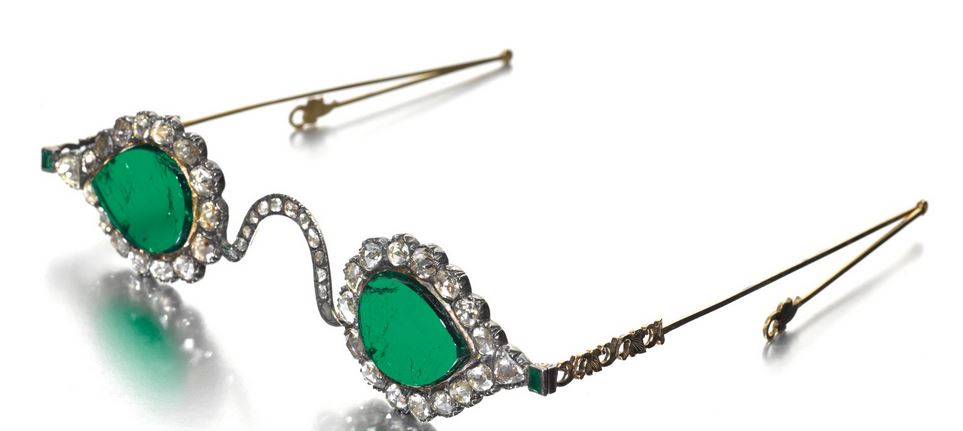
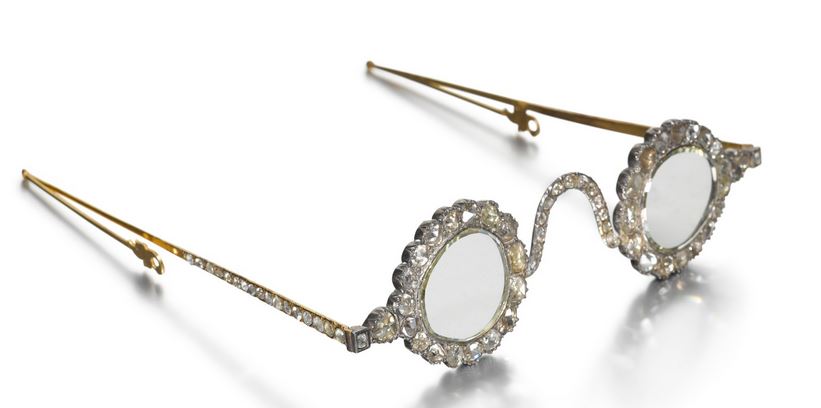
    Moving from bats to elephants (the ones in the room), Sotheby’s presents two pairs of 19th century spectacles set with emerald and diamond lenses, each valued at £1.500-2.500.000. I am not a lapidary specialist, so my opinion is solely based on the catalogue, and let’s say I’m confused by these objects. The emeralds originate from a mine in Colombia discovered in 1560, and it is stated in the text that large quantities of emeralds were subsequently acquired by the Mughals. This seems to contradict the fact that emerald deposits can be found in Afghanistan and India. The diamonds “most probably” came from Golconda, but this is not confirmed. Aside from the stone’s origins, the main issue is that the frames are described as European. Indian stone-setting techniques are mentioned in the text, but it is specified that “they incorporate a European ‘open claw’ design”. Examples of figurative paintings showing Pince-nez glasses are also given, such as a portrait of Aurangzeb2, but these spectacles are not pince-nez. The valuation is probably justified by the stones, but the catalogue is extremely misleading, as these beautiful spectacles might very well not be Indian at all. Golconda diamonds and Colombian emeralds on a European frame raise a lot of questions, but I let the reader forms their own opinion.
    Metalwork in the Place of Honour

    The debatable spectacles are not Sotheby’s high-value lots, the first place goes to a gold and silver inlaid brass candlestick attributed to Mosul circa 1275, offered for £2-3.000.000. Previously sold in Paris in 2003 for a price I was unfortunately not able to retrieve, it was exhibited in the MET from 2017 to 2021. The inscriptions do not give any information on the production context, but the subtle iconography suggests a court commission.
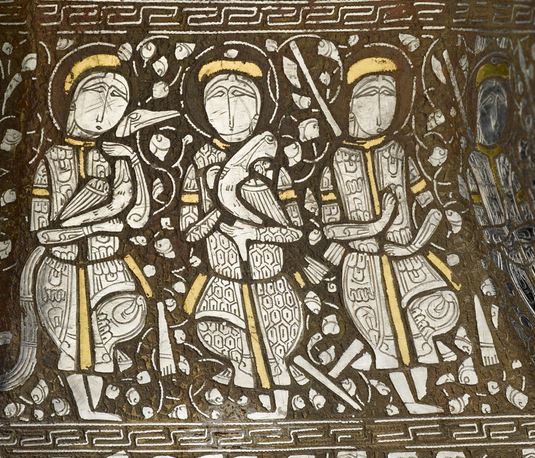
    Mosul brass candlestick Sotheby’s lot 170, £2-3.000.000

    The same way, Christie’s second-biggest lot is an elegant brass ewer attributed to the Khorassan region c. 1200-1210, valued at £ 300-500.000. Bonhams presents a few early bronzes, including a horse-shaped censer. The piece had previously been presented by Christie’s in 2006 as Byzantine and sold for €20.050, but is rebranded here as Umayyad and valued at £100-120.000. The line between Byzantine and Umayyad is often so thin, deciding on one over the other becomes a marketing question. Early Islamic usually sells better than late Byzantine, but it also involves more risks. Clearly, Bonhams feels confident enough to give a 6 figures’ valuation.

    Umayyad bronze burner, Bonham’s lot 23, £100-120.000

    Not to be outdone, Roseberys and Chiswick offer a large selection of metalworks. Roseberys presents 12 lots composed of gold elements set with garnets and two similar rings, attributed to 12th century Iran and valued between £2-300 and £2-4.000 (lots 309-320). My guess would be that the gold elements come from two different ensembles, but the 10 pieces would deserve to remain together.
    From what I could see (again, navigation is really uneasy), their most expensive metal artefact is a 12th century Seljuq bronze incense burner in the shape of a bird, valued £20-30.000. It is close to another burner in the MET, though Roseberys’ is better preserved.

    My personal favourite presented at Chiswick is an engraved brass casket attributed to 12th century Sicily with later modifications, offered for £4-6.000. The complex history of the Sicily kingdom makes attributions particularly tricky, and art market professionals tend to stay away from the region, complex to brand and sell. It will then be particularly interesting to see if buyers are willing to invest.
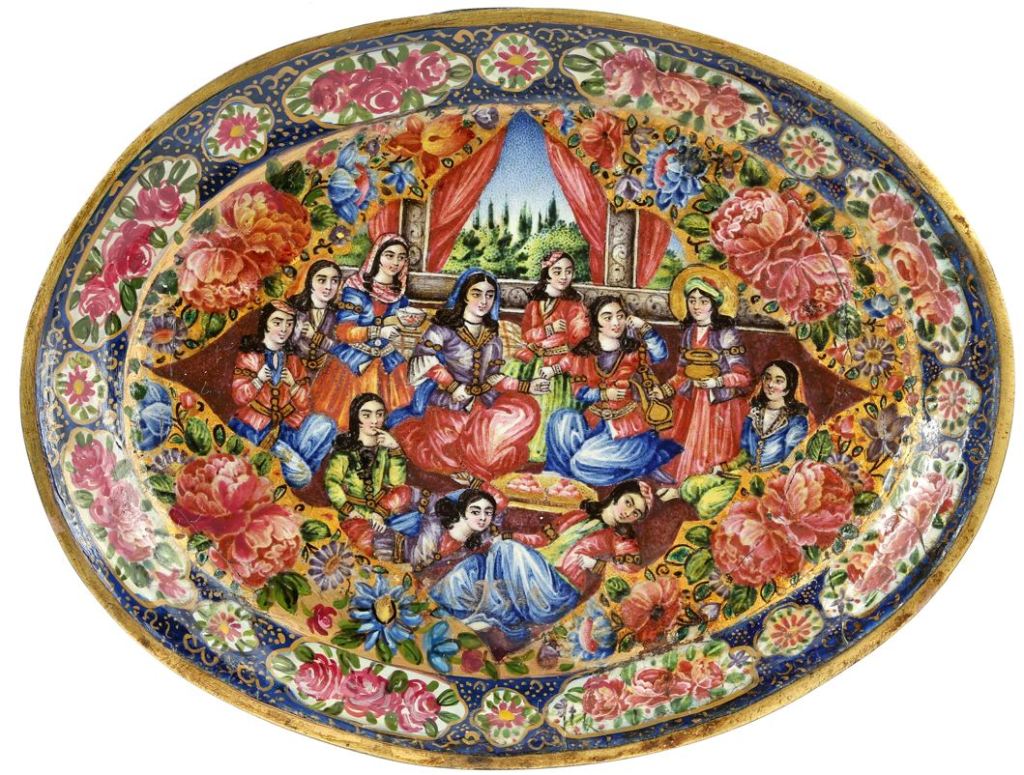
    Qajar enamelled copper, Chiswick, lot 201, £6-800

    Historical Figures, Historical Manuscripts

    Chiswick main attraction in their afternoon auction is a group of 11 ivory figures depicting the Maharaja Ranjit Singh and his court, probably produced in Delhi in the first half of the 19th century. The central figure is identifiable, which is quite rare for this type of artefacts, but not unique in the case of Maharaja Ranjit Singh, as demonstrated by another ivory figure in the Victoria and Albert museum. The identification and the overall quality of the ensemble easily justifies the valuation at £25-30.000. To be noted that a second group of ivory figures is presented by Chiswick in the same auction, 13 anonymous palanquin bearers and attendants, valued only £6-800.

    The same way, Bonhams most valuable artefact is a gold-koftgari steel repeating flintlock from the personal armoury of Tipu Sultan, signed by Sayyid Dawud and dated 1785-86. The provenance is no less prestigious, the weapon was acquired by Major Thomas Hart of the East India Company, following the siege of Seringapatam, and kept in the family until March 2019. I would not be surprised if a museum decided to acquire this piece, while Bonhams continues to establish their authority on historical artefacts.

    Portrait of Sultan Orhan, Christie’s lot 76, £800-1.200.000

    Christie’s is betting big on historical figures this season, with their highest valued lot being six portraits of Ottoman sultans produced in Venice around 1600 for the Grand Vizier Sokollu Mehmed Pasha. The ensemble is very interesting, both for its historical value, but also for the inherent dynamism and quality of each portrait. It seems risky to put European paintings as showrunner of an Islamic art auction, but I believe these will do well.

    My favourite item of this entire Islamic Week is a Qur’an produced in Sultanate India, both signed and dated 838/1435, which is extremely rare. Offered by Christie’s for £30-50.000, the valuation doesn’t seem to fit the quality of the manuscript. That being said, Sultanate manuscripts rarely fly, so it will be interesting to see what this one will achieve. The gorgeous illuminations are characteristic of Sultanate Qur’ans, an odd mix of Egyptian and Persian influences, interpreted through then Indian lens.3

    To finish, and speaking of rare, Sotheby’s present a complete Chinese Qur’an in 30 volumes, signed and dated 1103/1691. This is a huge event, and I hope the specialists of the field will have the opportunity to rush to London to see it before it is sold. Chinese Qur’ans are almost always dismembered, juz being sold separately, while dates and signatures are art history unicorns. The manuscript is sold without provenance, which is highly problematic, and I sincerely hope Christie’s will open their archive to scholars (which they usually do).

    So much more could be said about this Islamic week, but I’ll stop there before rewriting all the catalogues. What do you think about Bonhams, Roseberys, Sotheby’s, Christie’s and Chiswick selections? Please share in the comments below!

    Complete Chinese Qur’an, Sotheby’s, lot 119, £40-60.000
    1. Oliver Hoare (1945-2018) was an influential Islamic art dealer, to whom we owe the creation of the first Islamic art department at Christie’s. More info on his Wikipedia page.
    2. Museum für Islamische Kunst, Berlin, inv. I4594 fol.5.
    3. The lot essay finally quotes Pr Brac de la Perriere’s work, one of the few specialists of Sultanate India and who has been mostly ignored in previous auctions. It was about time!
  • A short guide for new collectors

    A short guide for new collectors

    While the world is diligently practising self-isolation and social distancing during the global outbreak of covid-19, Islamic arts experts and aficionados are mourning the spring Islamic week. All the London auctions have been postponed until June with the hope that the pandemic will be gone by then, but in reality, there is no guarantee.

    I am one the lucky few who can work from anywhere in the world, so my schedule during confinement has not changed much, only the size of my desk. For this reason, I have not be able to post more, nor to catch-up on my readings, but overall I am very grateful to be in this situation.
    For the others who have more time on their hands that they know what to do with, I’ve just started a Resources page dedicated to Islamic arts. Hopefully, it will give you a solid base to occupy your days.

    The content I publish is extremely niche and can be of little interest to those who aren’t familiar with Islamic Arts history. I’ve talked in other articles about some challenges linked to Islamic arts, especially what it is and how it is showed to the public, but I am yet to write about the very basis of Islamic Arts History in the West: collecting.

    Gwalior40b
    The Gwalior Qur’an, Aga Khan collection (Toronto), bought at Sotheby’s in 1974 for £2.600

    Through the diversity of the field, Islamic arts constitute a great object of curiosity and collection. Whether you focus on ceramic, painting, metalwork, textile or glass, and regardless of your budget, productions from Islamic lands represent a solid investment for buyers.

    There are three branches on the Islamic art market, leading to different auctions and different pricing:

    • Pre-modern: artefacts mostly produced before 1900 in Muslim lands, or more rarely in Europe for the Muslim market
    • Orientalist: mostly paintings and statuettes produced in Europe around the 1900’s (roughly)
    • Modern and Contemporary: Islamic creation after the 1900, about which I write here.

    In the present article, I will focus on the Pre-Modern category. In general, branches of Islamic arts are represented in dedicated auctions but some cross-overs are also possible, especially between Pre-Modern and Orientalist, or Orientalist and Contemporary.

    Where to buy 

    In short, it all depends on your budget, even more than what you’re looking for. As a rule, better stay away from online auctions without real physical headquarters, as artefact provenance is not always documented, nor even guaranteed to be legal. Same goes with most independent sellers working on Facebook, Instagram or LinkedIn. Provenances are a big issue on the Islamic art market, especially after the years of war in the Middle-East, all the way to Pakistan1 and prudence is particularly needed for archaeological finds and architectural ceramic tiles, as they might come from illegal looting, destruction of archaeological sites (and complete loss of data for archaeologists and historians) and degradation of historical monument, not to mention probable exploitation of human lives. This is not a matter to take lightly. Luckily, the auction houses and galleries mentioned below take every precautions with researching and documenting lot provenance and are therefore safe to turn to.2

    The main cities where to buy Pre-Modern Islamic arts are London and Paris. In London, Sotheby’s and Christie’s condense the most prestigious lots in two auctions per year, in the spring and the fall. Valuations are the highest of the market and though are sometimes difficult to justify compared to Paris, they usually come with the best preserved, most beautiful artefacts.
    Bonhams constitutes the second level of the London market and offer a less expensive selection, more and more focused on Pre-modern (16th-19th centuries) Indian objects.
    Finally, Chiswick auction represents a very good entry point for new collectors with a smaller budget, as well as Roseberys that organises auctions with a chronology spanning from millenniums B.C. to the present day, and Bloomsburry who entirely focuses on manuscripts and paintings.3

    A large number of galleries are also installed in London, such as Simon Ray (Indian & Islamic arts), Francesca Galloway (Asian & Islamic art) David Aaron (Antiques & early Islamic). Prices in galleries are usually higher and subject to negotiations, and if you start following the market, you will sometimes see pieces sold in auctions offered in galleries some time after. Other pieces are previously unseen, though there are becoming increasingly rare in a market that is working mostly in close loop.

    Bo_06.19_37
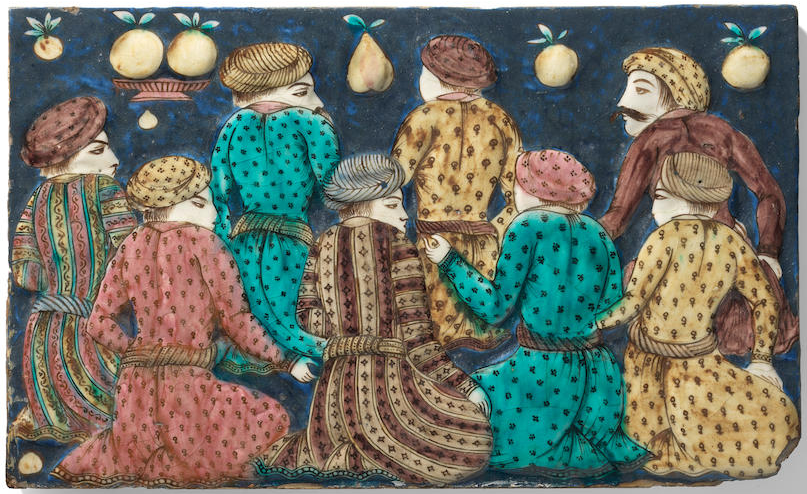
    This ceramic tile from 19th c. Qajar Iran was sold at Bonham’s in June 2019 for £3.812 to reappear the same year in Simon Ray catalogue.

    In Paris, prices are lower, though it doesn’t necessarily mean that the items are less interesting. The main auction houses to follow are Millon & Associés and Ader Nordmann, which organise two auctions per year following the London Islamic week. Millon also organises secondary auctions shortly after their mains, with items of lower value, but still of aesthetic significance.
    Sotheby’s Paris use to organise Orientalist auctions but hasn’t done so in 5 years.
    Boisgirard-Antonini also organises one to two auctions a year, while other houses like Gros & Delettrez, Rossini and Leclere focus on Orientalists. Finally, it is worth looking at Binoche & Giquello that sometimes offers secondary Islamic items for very low prices, usually in generalist auctions (but you really need to have your eyes wide open, these auctions are rarely advertised outside of Drouot).

    Galleries Kevorkian, Samarcande and Alexis Renard are the main three you need to look at, with a special mention to the latter for the reflection initiated around art displays and the relation to art, through “sensory” guided tours.

    In New York, Christie’s sometimes organise exceptional auctions, such as Maharajas & Mughal Magnificence in June 2019, offering part of the Al-Thani collection, but this is quite rare.
    To my knowledge, Carlton Rochell is the only noticeable New York gallery to offer Islamic art. They specialise in Indian art and have a very nice selection of paintings.

    Ch_06.19_175
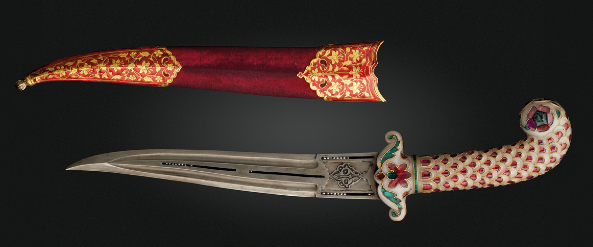
    Gem set jade-hilted dagger (khanjar) with scabbard, North India or Deccan, 1700-1725, sold at Christie’s New York, June 2019, $915.000

    How to buy

    All these references can already be overwhelming for a new collector, but all the auction and gallery catalogues are put online with high definition pictures, so it is very easy to sit in front of your computer an evening or on a lazy Sunday and browse websites for an initial selection. Galleries usually publish one catalogue per year and there is no set date on which you can buy. London auctions are usually held twice a year during the Islamic week, roughly around April and October (for normal years, not 2020), so looking in July is usually futile.

    I would not advice buying solely on photos, especially for pricey items, as pictures can be deceiving. I’ve done it without regret so far with trusted sellers, though I ended up, not long ago, with a very nice late Ottoman ewer and basin a lot bigger than expected. To this day, I’m still looking for the best place to display it.

    dav
    Late Ottoman ewer and basin currently waiting on top of a bookshelf for a better place

    Beside surprises (amusing or far less), having the feel of an object, being able to touch and hold it, might completely change your opinion on it, so going to auction houses during exhibitions is always a good idea. This can feel quite intimidating but try to go past it and don’t hesitate to ask to see each piece you are interested in from a close, even have paintings removed from their frame to see the back. In the end, it depends if you buy to keep or buy to invest. In both case, make sure the item meets your expectations.

    In any case, always request the “condition report”, which gives more information than the catalogue entry on the actual preservation state of an item.

    Gallery prices are not announced on catalogues and you will need to contact them directly to get an estimate.
    Auction catalogues show two prices on each lot, a “low estimate” and a “high estimate”. Usually the low estimate is close to the seller’s “reserve price” (meaning the minimum price the seller will accept) and a bid can start below that price. When you bid on a lot, always remember that the final number, called “hammer price”, is not what you will pay, as auction houses remunerate themselves by adding a premium on top of the hammer price, usually around 25% to 30%. Remember to read the house terms and conditions prior to put a bid to know exactly how much premium you’ll have to pay.
    The same way, if you wish to sell in auction, you will need to pay a “seller’s commission”, usually around 10% of the hammer price, to cover for valuation services, photography etc.

    Chis_06.20
    Syrian hanging mirror and cupboard, late 19th c., Chiswick auction £800- £1.200 + 25% premium and probably a lot more for transportation!

    To bid on a lot, you will need to register with the auctioneer and provide your personal and bank details. You will be given an unique identifier that will allow you to bid anonymously in a given bidding room (with the little sign you’ve seen in movies), or to bid online if you cannot or do not wish to attend. Note that the “bid increment”, the amount by which the auctioneer increases the bidding, is not yours to chose but is usually located around 10% higher than the previous bid. For instance, if the bidding opens at £5.000, subsequent bids of £5.500, £6.000, £6.500, etc. would follow. The figure is generally rounded up or down at the auctioneer’s discretion.

    After the auction, an invoice will be sent to you with a deadline to pay, and you will then be able to retrieve your purchase. Most auction houses assist with collection and delivery but you will have to pay for the service, so don’t forget to count this in your budget.4

    What to look for

    This part is the most complex part, as Islamic arts are so diversified. Going through all the productions would take far too long for an article titled “short”, but instead, I will leave you with some tips.

    Why are you collecting? 

    This is an important question, as the answer will profoundly impact your biding activity. If you are looking for a long term financial investment, and are ultimately buying to sell, you will need to study the market trends. This is not necessarily an easy thing to do, and going for the most expensive items might not be the answer. Trends evolve relatively fast, given than most of the market activity is condense over two weeks per year, and to understand them, it is often necessary to go back over a long period of time.
    For instance, Sotheby’s will present a 9th century Qur’an leaf in Kufic script on the 10th June for £60.000-80.000. Ten years ago, a very similar page from the same manuscript was offered by Sotheby’s Doha for £91.5000-£126.700.5 During the course of the last eleven years, this type of production has lost in value, so selling now might not be the best.

    On the opposite, both Sotheby’s and Christie’s will be presenting Medieval Persian potteries from 13th century Kashan (a famous production centre in Iran), a production that had not been properly represented on the market for a while. These pieces are expected to reach high prices, and more collectors might want to sell their Kashan ceramic pieces after that, resulting in a new trend and an increase of prices. Time will tell.

    If you buy only for your own pleasure, you still need to look at trends to make sure you get the best deal on the item of your choice. It might be the right time to get 9th-10th century Qur’an pages on vellum, same with late Kashmiri Qur’an that are not particularly in favour at the minute. As well, don’t only monitor the London market (and not only Christie’s and Sotheby’s obviously), but keep an eye out for Paris market, on which prices are naturally lower but quality is not. In the end, you are in a great position, as you are only limited by your budget.

    An important piece of advise: you need a set budget before starting to bid, as well as strong discipline to make sure you don’t go over. Biding on an item you love is an exciting experience that triggers a dangerous sense of commitment. Don’t go crazy, if you don’t get this particular item, another will come at a later date.

    padshanamah_front
    A page of the Royal Padshanamah from the St Petersbourg album, sold by Millon for €702.000 in Dec. 2019

    Think about conservation

    If you own a private safe somewhere in Switzerland, this section doesn’t concern you. For the rest of us, how to preserve and display art is an important topic. Indeed, art is fragile, and the last thing you want is your cat knocking down your recently purchased 17th century Safavid blue & white pottery ewer elegantly displayed over the fireplace.

    Chi_06.20_190
    Small blue & white pottery ewer, Safavid Iran, late 17th-early 18th c., Chiswick auction, June 2020, lot 190, £800-£1.200

    Before you buy anything, it is important to think about what you are going to do with it. I was joking earlier about my late Ottoman ewer and basin that are too big for my living room, but I was actually lucky I could place them on top of a bookshelf where they are safe. The same way, I collect metalwork, even though my first love is with manuscripts and paintings, because it is easier to store and preserve. If you decide to buy a single page painting, for instance, you will need a frame with UV protecting glass, which represents an additional cost, or display it on a wall that has no direct sun exposure and either provide additional non damaging lighting or accept the fact that your painting will be in the dark forever. Same go with textiles, that will need to be dusted, cleaned and treated and very specific ways, or even manuscripts that need moist control, light control and parasite control.
    Don’t feel discouraged by all these constraints but keep them in mind prior to biding and plan accordingly. There is no better feeling that preparing a space for a newly acquired addition to your personal collection.

    These are just a few insights into collecting, and there is a lot more to write about starting a collection of Islamic arts. In the future, I will get in more details about specific productions well represented on the market. If yo have any questions, article suggestions, or want to start your own art collection, I’ll be happy to provide support, feel free to get in touch.

    1. See my article published in IWA Mag in Winter 2019.
    2. All the links are on the Resources page.
    3. Part of Dreweatts.
    4. For all the technical terms, you can refer to Sotheby’s glossary.
    5. The exact valuation was $130.000-$180.000.
  • Under the shade of the tent: Showing Islamic Arts today

    Under the shade of the tent: Showing Islamic Arts today

    The field of Islamic Arts is particularly difficult to grasp, as we discussed in a previous article, and through the challenge of defining and bringing coherence to a mostly uncharted territory, comes the equally challenging task of showing Islamic arts and educating the public on these unknown wonders.

    In the recent years, efforts have been made by several institutions to transform the way Islamic arts are showcased, through a modernised scenography and reviewed themes and interpretations.

    The literal darkness of Islamic Arts

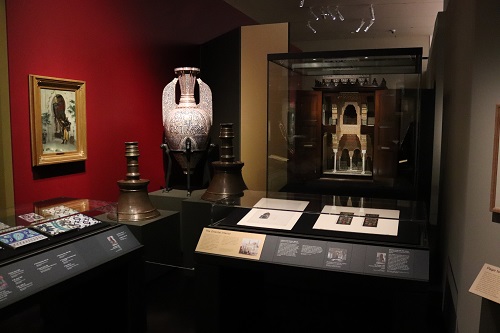
    Back in 2012, the Louvre reopened their Islamic arts department in a brand new space and installed their collection over two levels, designed by architects Mario Bellini and Rudy Ricciotti. The top level, in the courtyard of the Denon wing, was covered by a wavy metallic structure offering some deemed light, supposed to evoke the Bedouin tents floating in the desert wind (I won’t mention the cliché). Natural light is absent from the lower level that stretches underground. Artefacts are elegantly displayed under very bright and small lights that contrast with the darkness of the room, emphasised by the black walls, floors and stands.

    Louvre
    The department “Arts de l’Islam” in the Louvre, underground floor.

    Before the Louvre, the Metropolitan Museum in New York reopened their Islamic arts department with no less than 15 rooms displaying around 1.200 objects from the 12.000 items collection. While some rooms receive a decent amount of light, it is not the case for all, such as the gallery 460 dedicated to Ottoman arts. Doha Museum of Islamic Arts Museum, open in 2008, also presents the same characteristics.1

    460 Art of the Ottoman Court-Koc Family Gallery
    MET, gallery 460, Arts of the Ottoman Court. Credit: METmuseum

    The new Islamic gallery of the British Museum opened in 2018 after 3 years of intense collaboration between the museum, the Albukhary Foundation who funded the project, designers such as Stanton Williams and lighting specialist Arup. Together, they shed a very welcome new light on the British Museum’ extensive collection of Islamic arts.
    The challenge was big to display the most comprehensive selection, chosen among over 100.000 items that constitute the collection, while keeping a coherent and educational discourse. The new installation, in two large rooms, kept the ceiling glass tiles but covered the wall windows with modern jali, screens initially used in harem and zenazat and specially designed to see without being seen. The walls got covered by black panels and stands and the floor got varnished in a darker colour.

    Despite the clever lighting, these two beautiful rooms are dark, very dark. This particular feature is less striking than in the lower level of the Louvre, but is still particularly evident when one stands on the doorstep of the next department.

    Comparison pictures between the Islamic arts department (left) and the Europe department (right), taken from a single standpoint

    This choice of palette and lighting (or lack of) already stroke me in 2008, during the wonderful exhibition around Shah Abbas I held by the British Museum. Natural light is absent from the temporary exhibition space of the museum, but it was then emphasised by the black everything and the bright lighting shed on the items. Somehow even the exhibition catalogue cover was mostly black, except for the elegant figure of Shah Abbas cut from one of the Chehel Sotul palace murals.

    More recently, the small exhibition Inspired by the West, also in the British Museum, took a similar approach by choosing a minimalist scenography based on monochrome panels, red, black and ochre, as well as a dimmed light.

    img_3568
    “Inspired by the East”, exhibition of the British Museum. Credit photo: Visiting London Guide.com

    This type of sleek and minimalist scenography is becoming the norm in Western institutions, and was initially inspired by contemporary art galleries. The goals are to facilitate the viewing and serve a larger discourse around a theme – Islamic arts or other. Both depends on the exhibition atmosphere, created for the occasion by combining elements such as colour scheme, lighting, division of space through mobile sections and of course hanging. Depending on these, the atmosphere can be warm or cold, scientific or poetic, crowded or spacious, all impacting the viewing in a different way and leaving them with a unique feeling that determine their connection to the objects and the discourse. The cliché of all white art gallery walls with a few scarce paintings hanging is the bare minimum of art scenography. In these cases, the absence of distraction aims to facilitate the connection between the artwork and the viewer, while creating a sense of calm and neatness serving the same purpose.

    Islamic arts exhibition rooms are getting darker in an attempt to help viewers connect with artefacts their have mostly little knowledge of, by creating an intimate atmosphere highlighting the intrinsic richness of the objects. The readers of this article are most likely specialists of the field, or at least familiar with it (if not, welcome!), but let us not forget that Islamic arts are still quite niche, and bringing traffic to these dedicated rooms can be a struggle. In the Louvre, though the new Denon wing has helped the democratisation of the field, the superb pixys of al-Mughira will never move crowds as much as the Mona Lisa.

    70801_HD090052
    Al-Mughira pyxis, Cordoba, 357H./ 968 (detail). The intricate decoration probably bears a political message, though the iconography remains debated. Louvre, OA4068.

    A modern grand bazaar

    This is where lies the contradiction of these rooms. While helping viewers connect with the objects is essential, the mission of modern museum is mostly to educate through a clear and coherent message. It is particularly difficult for the field of Islamic arts, as it is as large in time and space as it is diversified in terms of material, media and meaning. It seems almost impossible to answer the question “what is Islamic art” in a decisive manner, and museums are only left with the option to highlight this diversity through their most luxurious pieces.

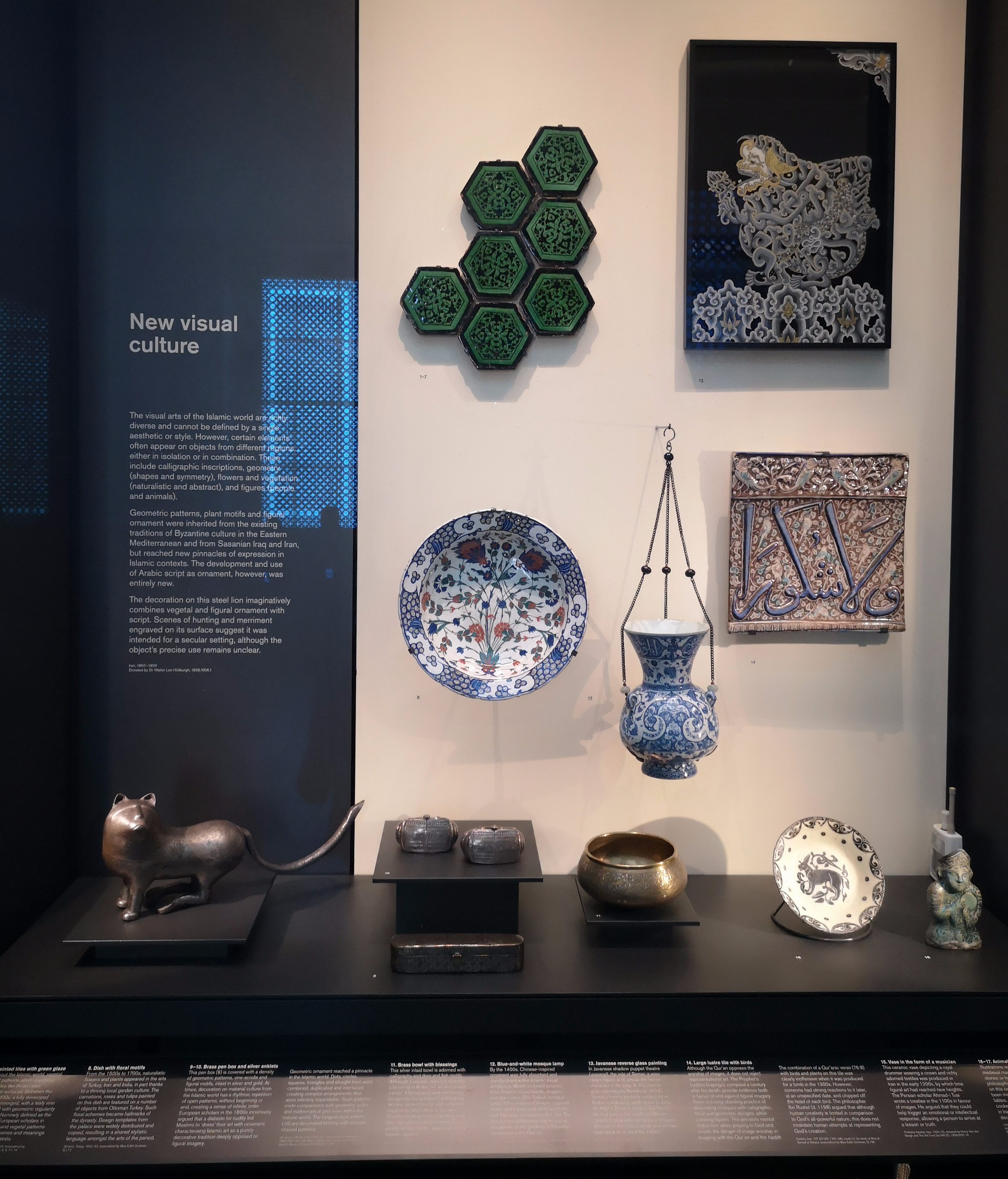
    The British Museum has chosen a dual approach in the new department, both chronological and thematic. Results an interesting hybrid, debatable in many points, but that features both classics (Iznik plates, Samarra woods, Takht-e Suleyman tiles, etc.) and less known productions, especially from South-East Asia and Sub-Saharan Africa.

    IMG_20191023_135131.jpg
    “New Visual Culture”, one of the first sections in the new Islamic arts departement of the British Museum. The message here is quite unclear.

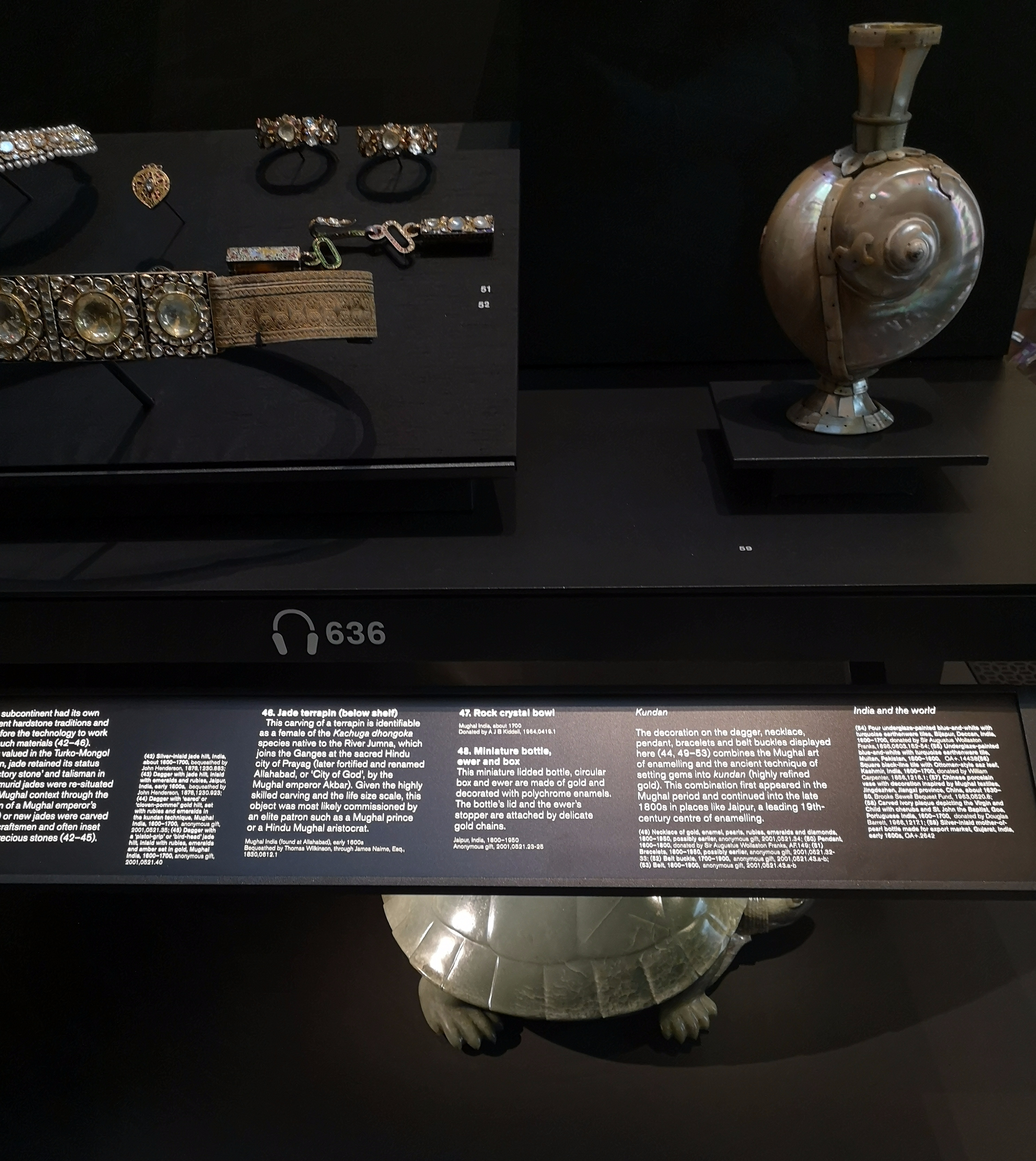
    Despite some honourable mentions, the reading of the items displayed is quite difficult. The fault doesn’t fall on the British Museum only, as most museums and most exhibitions have the same problem. The small cartels don’t bring much information and, as often, are difficult to link to the objects. Remember for instance the itinerant exhibition Roads of Arabia, held in the Louvre in 2010. Was made the puzzling choice to show objects from left to right with the allocated cartels numbered from right to left, meaning that the viewer had to navigate alongside the glass case to read about a piece. Needless to say that the circulation was difficult.

    This is of course not an issue exclusive to Islamic arts2 but it becomes particularly problematic when combined with a large amount of items displayed in a restricted space, some pieces becoming virtually invisible.

    IMG_20191023_140057.jpg
    Section “India and the World” in the British Museum. The picture was taken standing and facing the cartels, from the average viewer standpoint. Poor jade turtle, almost invisible!

    What’s next for Islamic Arts exhibitions? 

    While the exhibition spaces mentioned here are obviously doing their best to put Islamic arts in a modern and didactic light, they fall into the trap of traditional scenography. If the history of institutions has taught us anything, it is that there is not just one way to showcase artistic creation. From the Salon carré du Louvre from the 18th century, to Mori Building Digital Art Museum: teamLab Borderless in present-day Tokyo, museography has evolved with the public3, and maybe Islamic arts are too complex for a classic scenography. It seems indeed pointless to try showcasing in a single section a Samanid dish and a glass work by Farmanfarmaian, though both falls under the same “Islamic” label. So far, I haven’t been truly impressed by any model of Islamic art exhibition rooms and museums but the task is arduous.4

    Creating more space between artefacts could be a good start, though in restricted exhibition spaces such the British Museum’s, it is not always possible. Alternatively, putting the items in context as much as possible and recreating historical connections could help to popularise a field that is too often viewed as isolated. Sheila Canby exhibition on Shah ‘Abbas I was particularly successful in highlighting the link between Chinese ceramic, Ardabil Shrine architecture and the ruler tastes.

    Mughal painting could constitute a very comprehensive starting point for an exhibition. The below page from the Saint-Petersburg album, attributed to Bishandas shows the emperor Jahangir entertaining Shah ‘Abbas I. It contains weapons, jewellery, fabrics and garments, glasswork, metalwork, but also two European items, a white ceramic ewer and a brass statuette of the goddess Diana on a ram. Displaying the painting and similar objects together could help viewers understand what they are looking at.

    One could then extrapolate on the artistic exchanges between Mughal India and Safavid Iran through Shah ‘Abbas, then link Iran to the Chinese porcelain trade, then to European taste for China and the East (for instance through Marie-Antoinette chinoiseries and turqueries)… The possibilities are endless.
    This would, however, require to rethink museums as they are currently conceived, a succession of thematic rooms and galleries with little connections between them. The investment in time and money would be substantial, and the financial difficulties of non-profit institutions are not to be ignored, but I believe the benefits would be rapidly measurable in terms of attendance levels.

    Instead of a dark and confusing bazaar of objects, let’s give Islamic arts their place back in a global and intertwined art history.

    1. As well as the Jameel Gallery in the Victoria and Albert museum, but only sporadically. Last time I visited, in 2018, most lights were off and the magnificent Ardabil carpet (1539-40) was impossible to admire.
    2. Remembering the Marie-Antoinette exhibition in the Grand Palais in Paris back in 2008, showing a life-size portrait of the queen and its cartel at the bottom of it, 40cm from the floor.
    3. Both have their perks. The Musée des Augustins in Toulouse (South of France) has a pair of rooms replicating the 18th-19th c. scenography, I highly recommend (the entire museum is a wonder)! Click here to see.
    4. Beside the Pergamon museum in Berlin, but mostly by the grandeur of the remains: Mshatta, the market gate of Miletus, Babylon walls… Simply breath-taking.
  • Tracing the Modern in Post-Modern: The dilemma of Contemporary “Islamic” Art

    Tracing the Modern in Post-Modern: The dilemma of Contemporary “Islamic” Art

    While pre-modern Islamic art continues to grow as an academic field and as a profitable investment for collectors, the attention given to contemporary Islamic art has been increasing significantly among art dealers, academics and curators.

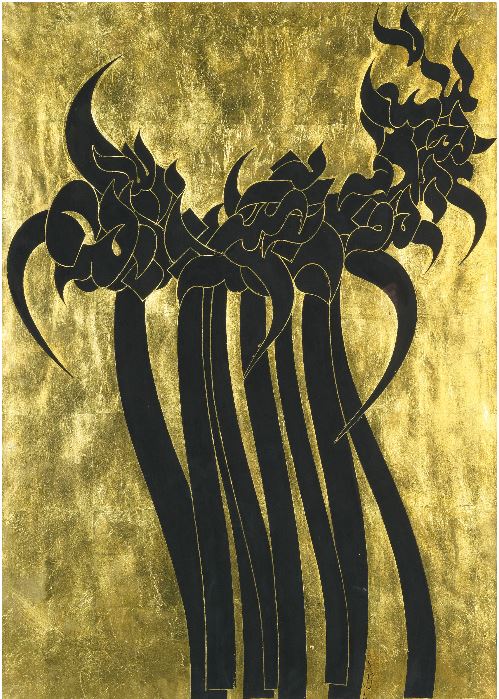
    Muhammad Ehsai Daffodils Christie's
    Muhammad Ehsai, “Daffodils”. Christie’s 24.10.18 lot 55, sold £137.500

    Starting this article, the intend was to create a focus on a few living artists well represented on the market. However, writing about contemporary Middle-Eastern art is like going trough the rabbit hole of a blurry and confusing terminology. In short, how to introduce a field that struggles to define itself?

    When does “Post modern” start?

    In 2006, Kader Attia, French artist from Algerian origin wrote: “To the question “is there a contemporary Islamic art?”, I would answer, we are currently building it, re-appropriating our culture and its influences in our own way“.
    Through this quote, the impact of French colonisation on Algerian culture emerges from the subtext. However, one cannot generalize, as Islamic culture was never unified and contexts are very different. In Turkey for instance, there is no gap in artistic production between the end of the pre-modern era, marked with the fall of the Ottoman empire in 1924, and what occurred right after, though the emphasis shifted slowly and quietly throughout the 20th century toward a more diversified and fragmented artistic production.

    It is only since the recent years, roughly the 90’s, that collectors, curators and academics have started to turn the spotlight on Middle-Eastern artistic creation.
    The task of defining Islamic art has already shown its complexity for the pre-modern era, as I wrote in a previous article, but while pre-modern art is mostly based on the repetition of a defined artistic syntax, post-modern Islamic art follow the concept of artist individuality – as most of post-modern art forms do – making it even more difficult to quantify.
    Artistic productions from Qajar Iran (1789-1925) are considered as modern, especially from the second half of the 19th century. This definition continues throughout the reign of the Pahlavi, until the revolution of 1979, when it switches to Post-modern or Contemporary.

    Mahmoud Mokhtar, Sotheby's Oct. 2018
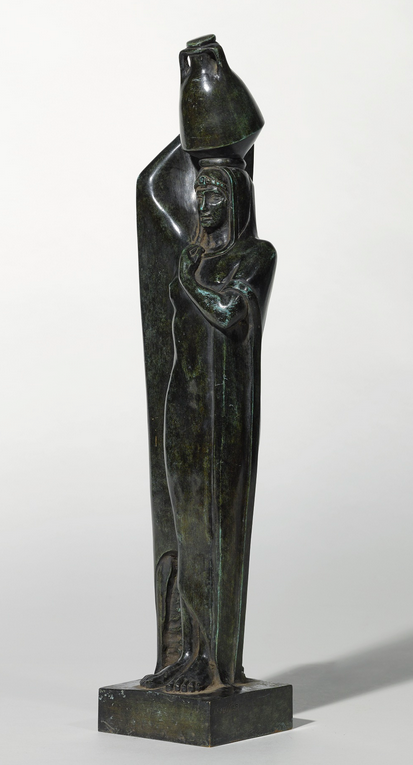
    Mahmoud Mokhtar, Au bord du Nil, 1931-48. Sotheby’s Oct. 2018, sold £75.000

    In Ottoman territories, things are more complicated and less linear. The vocabulary of Art History shifts from pre-modern, referring to art productions before 1924, to post-modern, embodied by 20th centuries artist. The “Modern” in between has very little representation on the market and in academia, and reflects a historiography gap that pains to be filed. For this reason, it is not rare to find artists from Turkey, Egypt, Bilal al-sham and Maghreb in Orientalist or Pre-modern Islamic arts auction catalogues. This confusion is due to the fact that no one knows how to label such creations, as they fall right within a semantic grey area.

    The Egytian artist Mahmoud Mokhtar (1891-1934) illustrates perfectly the problem. His life put him right on the border between premodern and modern but his work is unmistakably modern and reflects the impact of Art Nouveau and the Vienne Secession. “Au bord du Nil” statuette was sold at Sotheby’s London in October 2018 during the “20th Century Art / Middle East” auction, but was previously sold during the “vente Orientalisme” auction at Artcurial in 2016 (18th May, auction 3002, lot 76, sold 39.000€). It seems difficult to justify classifying an Egyptian artist as “Orientalist” but it is simply due to the fact that the French auction house hasn’t devoted an auction to contemporary Middle-Eastern art since 2009, and Mokhtar dates are too recent to insert his work in an “Islamic Art” auction.

    Islamic, Middle-Eastern, or else?

    The same way, Mokhtar work highlights the difficulty of putting the “Islamic” label on a Middle-Eastern artist. The Au bord du Nil statuette shows a clear inspiration of pre-Roman Egyptian art in the overall design, proportions and monumental rendering, while influence from Ottoman or medieval Islamic art is mostly absent from his artistic palette. Other Mokhtar works reflect his battle against British protectorate and his political engagement, a common characteristic of several artists labeled as “Islamic”.

    This conundrum is not restricted to Mokhtar but applies to numerous artists. Following Kader Attia definition, contemporary Islamic arts would only apply to creation openly influenced by traditional media and forms such as calligraphy or geometric designs. While artists such as Shirin Neshat (b. 1957) or Muhammad Ehsai (b. 1940) would both fit the description for their extensive work with calligraphy, an artist such Manoucher Yektai (b. 1921), largely influenced by French modern painting, would struggle to find his place in such a restrictive field.

    Shirin Neshat
    Shirin Neshat, “Unveilling”. Christie’s 24.10.18, lot 76, sold £27.500

    It seems indeed that contemporary art of the Middle-East falls under an unspoken double standard. While contemporary art has prided itself on transcending borders and vernacular political issues, it is a requirement for Middle-Eastern artists to be tied in some way to their country of origin, regardless the fact that some of them were born in diasporas. The same way, the market of Middle-Eastern contemporary art is mostly in demand for transgressive creation, pieces linked to a more or less obvious underlining statement, either political, religious or cultural.

    Culture and influence play a major role in the definition of contemporary Islamic art. It implies a timelessness of Islamic arts that is difficult to justify, but it is mostly based on a series of pre-established criteria of what Islamic art should be, emphasized by ethnocultural makers used as nationalist motifs: Islamic calligraphy, Persian painting… The Jamal Prize delivered every year by the Victoria and Albert Museum illustrates the dilemma. Described as “an international award for contemporary art and design inspired by Islamic tradition”, it can be won by all artists without distinction of cultural background, localisation or religion, as long as as they display some type of “Islamicity”. Most of the awarded artists use calligraphy as an identifying characteristic. Though Arabic calligraphy is immediately recognized by all crowds as an Islamic art form, it does restrict the field to a form of expression focused on religion, leaving aside the countless secular art forms developed through the ages in Muslim country, and today gathered under the Islamic label.

    Auction houses have found a way to get round the problem: they removed all reference to an Islamic culture from catalogues to focus on geographical criteria.

    Middle-Eastern Art on today Market

    Manoucher Yektai Sotheby's
    Manoucher Yektai, “Untitled”, Sotheby’s 25.04.2017, sold £81.250

    While this is a convenient way to include more artists, it doesn’t solve the issue. It does, however, target the audience in a steadily increasing market. The criteria described above fully apply to the market, and the most represented artists display strong links to either their native country, their cultural roots or their religion. Mostly represented by Christie’s, Sotheby’s and Bonhams in London and Dubai, as well as Tehran Auction, fully focused on modern and contemporary Iranian art, auctions gather 20th century artists under titles such as “Middle Eastern, Modern and Contemporary”, or “20th Century / Middle East”. This excludes Pakistani and Indian arts – at least partly – that fall under “Modern and Contemporary South-Asian Art”, showing once more the impossible task that is defining and circling Islamic arts.

    Regardless the title, modern and contemporary Middle-Eastern art is taking more and more space on the market and is gaining an international recognition with bidders from the region, but also from the US, Canada and Europe. This growth is also due to an increasing number of governments and institutions local initiatives to popularize contemporary artistic creation, taking the form of museums (Le Louvre Abu Dhabi is the most famous example), art fairs, temporary exhibitions in galleries and so on. These projects overall contribute to sales in the Middle-East, particularly in Iran and Egypt, holding the most market shares.
    Christie’s was the pioneer for Middle-Eastern and Contemporary art, starting in 2007. However, the house profits have dropped these past years in favor of Sotheby’s that shows an agressive growth since 2013, reflecting by a more ambitious selection. Bonham’s always appear as the third player in Islamic arts, but in this specific case it falls behind Tehran Auctions that yet shows uneven results through the years.

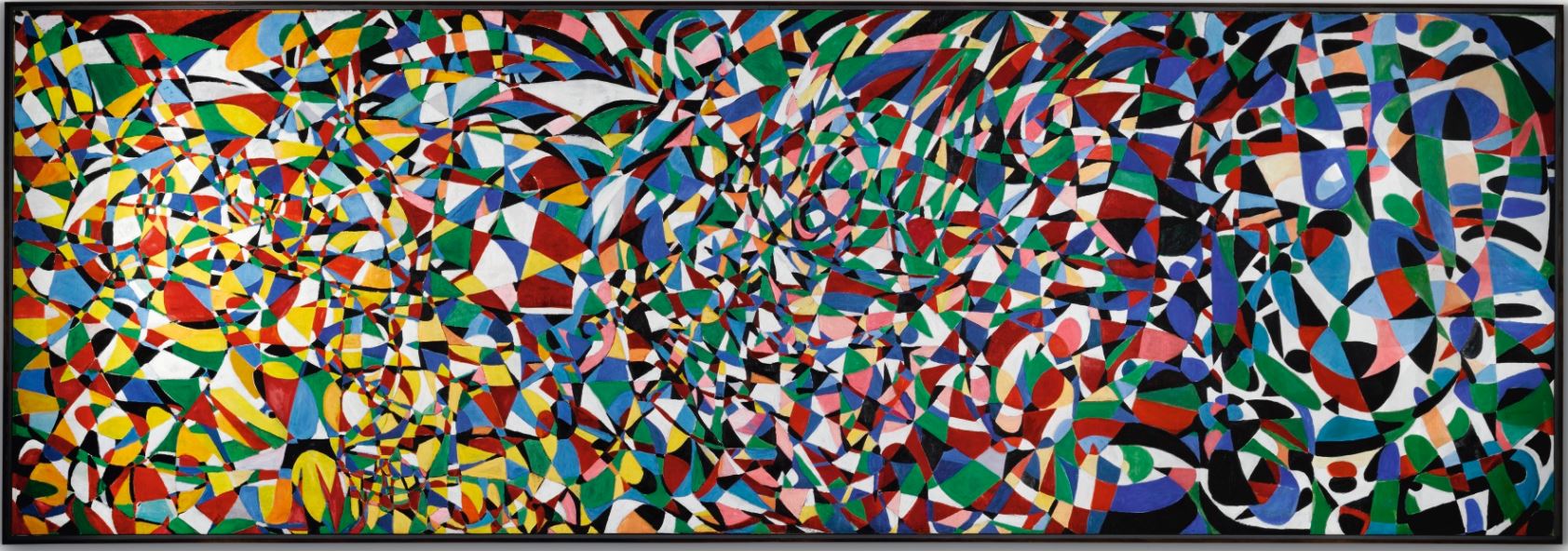
    Modern art seems to do better than Contemporary, the top prices these past years being achieved by modern artists such as Fahrelnissa Zeid (1901-1991). Her painting Toward a Sky broke record at Sotheby’s in 2017 by achieving £992.750.

    Fahrelnissa Zeid Towards a Sky Sotheby's
    Fahrelnissa Zeid, “Towards a Sky”, Sotheby’s 25.04.2017 lot 15, sold £992.750

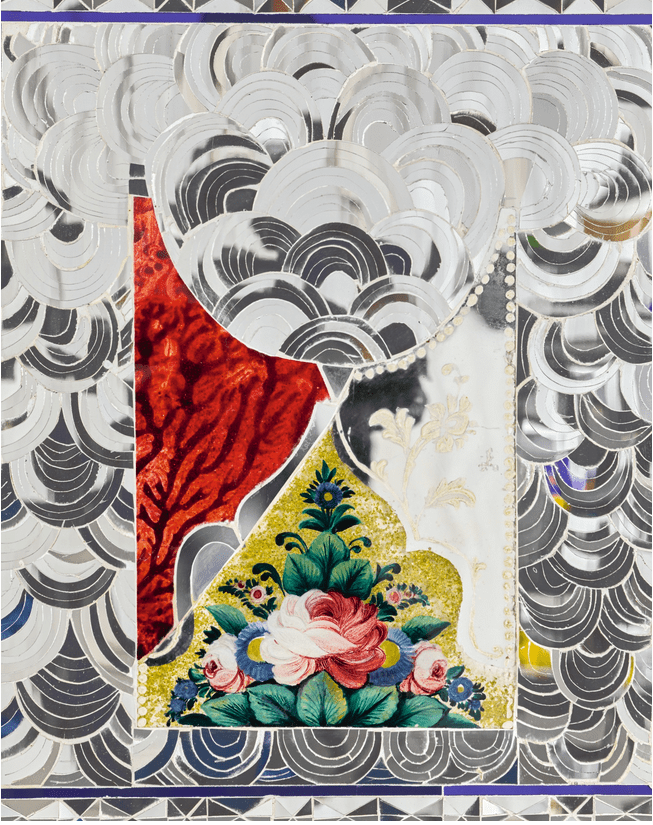
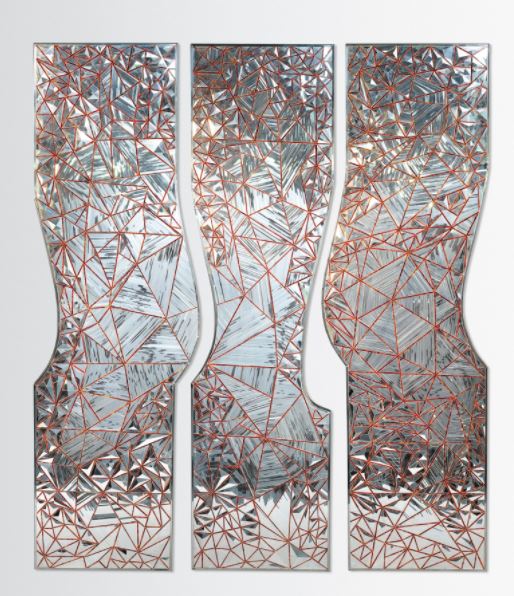
    Though the proportion of Modern artists is superior, some living creators have become regulars in auctions. It would be quite superfluous to enumarate them all, I will have the opportunity to introduce more when I write about auction news. However I will conclude with Monir Shahroudy Farmanfarmaian, who illustrates perfectly the dilemma of contemporary Islamic art and the way it is mostly perceived by the market.

    Born in 1922 in Qazvin, Farmanfarmaian possesses one of the strongest visual identity on the current market. Her works, mainly made of glass treated and cutted, performs as a reinterpretation of pre-modern (18th-19th c.) glasswork displayed in Safavid and Zand palaces and pavillons. The craftmanship that characterizes her work transcends cultural borders, while it also emphasized her Iranian origins. The aesthetic appeal of her glassworks, as well as her origin and the influences visible through her work put her on the list of the most profitable artist on the market.