Category: Auctions

  • A short guide for new collectors

    A short guide for new collectors

    While the world is diligently practising self-isolation and social distancing during the global outbreak of covid-19, Islamic arts experts and aficionados are mourning the spring Islamic week. All the London auctions have been postponed until June with the hope that the pandemic will be gone by then, but in reality, there is no guarantee.

    I am one the lucky few who can work from anywhere in the world, so my schedule during confinement has not changed much, only the size of my desk. For this reason, I have not be able to post more, nor to catch-up on my readings, but overall I am very grateful to be in this situation.
    For the others who have more time on their hands that they know what to do with, I’ve just started a Resources page dedicated to Islamic arts. Hopefully, it will give you a solid base to occupy your days.

    The content I publish is extremely niche and can be of little interest to those who aren’t familiar with Islamic Arts history. I’ve talked in other articles about some challenges linked to Islamic arts, especially what it is and how it is showed to the public, but I am yet to write about the very basis of Islamic Arts History in the West: collecting.
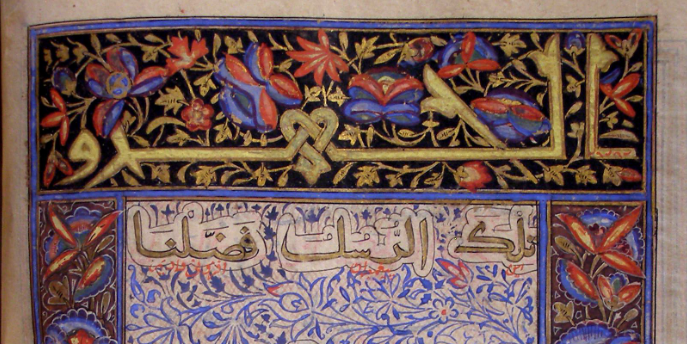
    Gwalior40b
    The Gwalior Qur’an, Aga Khan collection (Toronto), bought at Sotheby’s in 1974 for £2.600

    Through the diversity of the field, Islamic arts constitute a great object of curiosity and collection. Whether you focus on ceramic, painting, metalwork, textile or glass, and regardless of your budget, productions from Islamic lands represent a solid investment for buyers.

    There are three branches on the Islamic art market, leading to different auctions and different pricing:

    • Pre-modern: artefacts mostly produced before 1900 in Muslim lands, or more rarely in Europe for the Muslim market
    • Orientalist: mostly paintings and statuettes produced in Europe around the 1900’s (roughly)
    • Modern and Contemporary: Islamic creation after the 1900, about which I write here.

    In the present article, I will focus on the Pre-Modern category. In general, branches of Islamic arts are represented in dedicated auctions but some cross-overs are also possible, especially between Pre-Modern and Orientalist, or Orientalist and Contemporary.

    Where to buy 

    In short, it all depends on your budget, even more than what you’re looking for. As a rule, better stay away from online auctions without real physical headquarters, as artefact provenance is not always documented, nor even guaranteed to be legal. Same goes with most independent sellers working on Facebook, Instagram or LinkedIn. Provenances are a big issue on the Islamic art market, especially after the years of war in the Middle-East, all the way to Pakistan1 and prudence is particularly needed for archaeological finds and architectural ceramic tiles, as they might come from illegal looting, destruction of archaeological sites (and complete loss of data for archaeologists and historians) and degradation of historical monument, not to mention probable exploitation of human lives. This is not a matter to take lightly. Luckily, the auction houses and galleries mentioned below take every precautions with researching and documenting lot provenance and are therefore safe to turn to.2

    The main cities where to buy Pre-Modern Islamic arts are London and Paris. In London, Sotheby’s and Christie’s condense the most prestigious lots in two auctions per year, in the spring and the fall. Valuations are the highest of the market and though are sometimes difficult to justify compared to Paris, they usually come with the best preserved, most beautiful artefacts.
    Bonhams constitutes the second level of the London market and offer a less expensive selection, more and more focused on Pre-modern (16th-19th centuries) Indian objects.
    Finally, Chiswick auction represents a very good entry point for new collectors with a smaller budget, as well as Roseberys that organises auctions with a chronology spanning from millenniums B.C. to the present day, and Bloomsburry who entirely focuses on manuscripts and paintings.3

    A large number of galleries are also installed in London, such as Simon Ray (Indian & Islamic arts), Francesca Galloway (Asian & Islamic art) David Aaron (Antiques & early Islamic). Prices in galleries are usually higher and subject to negotiations, and if you start following the market, you will sometimes see pieces sold in auctions offered in galleries some time after. Other pieces are previously unseen, though there are becoming increasingly rare in a market that is working mostly in close loop.
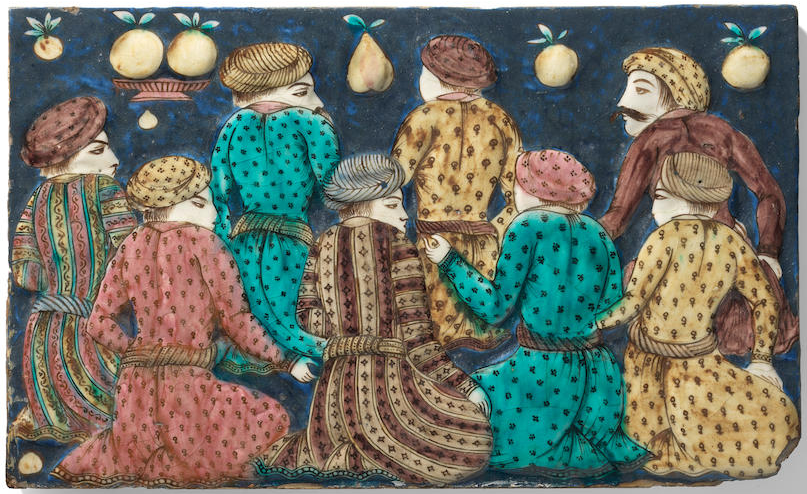
    Bo_06.19_37
    This ceramic tile from 19th c. Qajar Iran was sold at Bonham’s in June 2019 for £3.812 to reappear the same year in Simon Ray catalogue.

    In Paris, prices are lower, though it doesn’t necessarily mean that the items are less interesting. The main auction houses to follow are Millon & Associés and Ader Nordmann, which organise two auctions per year following the London Islamic week. Millon also organises secondary auctions shortly after their mains, with items of lower value, but still of aesthetic significance.
    Sotheby’s Paris use to organise Orientalist auctions but hasn’t done so in 5 years.
    Boisgirard-Antonini also organises one to two auctions a year, while other houses like Gros & Delettrez, Rossini and Leclere focus on Orientalists. Finally, it is worth looking at Binoche & Giquello that sometimes offers secondary Islamic items for very low prices, usually in generalist auctions (but you really need to have your eyes wide open, these auctions are rarely advertised outside of Drouot).

    Galleries Kevorkian, Samarcande and Alexis Renard are the main three you need to look at, with a special mention to the latter for the reflection initiated around art displays and the relation to art, through “sensory” guided tours.

    In New York, Christie’s sometimes organise exceptional auctions, such as Maharajas & Mughal Magnificence in June 2019, offering part of the Al-Thani collection, but this is quite rare.
    To my knowledge, Carlton Rochell is the only noticeable New York gallery to offer Islamic art. They specialise in Indian art and have a very nice selection of paintings.
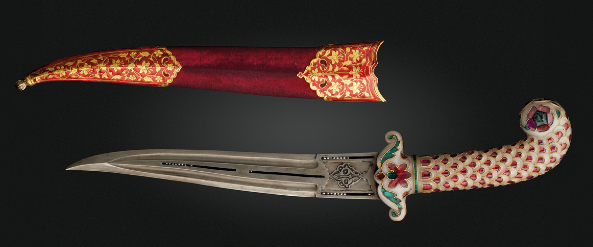
    Ch_06.19_175
    Gem set jade-hilted dagger (khanjar) with scabbard, North India or Deccan, 1700-1725, sold at Christie’s New York, June 2019, $915.000

    How to buy

    All these references can already be overwhelming for a new collector, but all the auction and gallery catalogues are put online with high definition pictures, so it is very easy to sit in front of your computer an evening or on a lazy Sunday and browse websites for an initial selection. Galleries usually publish one catalogue per year and there is no set date on which you can buy. London auctions are usually held twice a year during the Islamic week, roughly around April and October (for normal years, not 2020), so looking in July is usually futile.

    I would not advice buying solely on photos, especially for pricey items, as pictures can be deceiving. I’ve done it without regret so far with trusted sellers, though I ended up, not long ago, with a very nice late Ottoman ewer and basin a lot bigger than expected. To this day, I’m still looking for the best place to display it.

    dav
    Late Ottoman ewer and basin currently waiting on top of a bookshelf for a better place

    Beside surprises (amusing or far less), having the feel of an object, being able to touch and hold it, might completely change your opinion on it, so going to auction houses during exhibitions is always a good idea. This can feel quite intimidating but try to go past it and don’t hesitate to ask to see each piece you are interested in from a close, even have paintings removed from their frame to see the back. In the end, it depends if you buy to keep or buy to invest. In both case, make sure the item meets your expectations.

    In any case, always request the “condition report”, which gives more information than the catalogue entry on the actual preservation state of an item.

    Gallery prices are not announced on catalogues and you will need to contact them directly to get an estimate.
    Auction catalogues show two prices on each lot, a “low estimate” and a “high estimate”. Usually the low estimate is close to the seller’s “reserve price” (meaning the minimum price the seller will accept) and a bid can start below that price. When you bid on a lot, always remember that the final number, called “hammer price”, is not what you will pay, as auction houses remunerate themselves by adding a premium on top of the hammer price, usually around 25% to 30%. Remember to read the house terms and conditions prior to put a bid to know exactly how much premium you’ll have to pay.
    The same way, if you wish to sell in auction, you will need to pay a “seller’s commission”, usually around 10% of the hammer price, to cover for valuation services, photography etc.

    Chis_06.20
    Syrian hanging mirror and cupboard, late 19th c., Chiswick auction £800- £1.200 + 25% premium and probably a lot more for transportation!

    To bid on a lot, you will need to register with the auctioneer and provide your personal and bank details. You will be given an unique identifier that will allow you to bid anonymously in a given bidding room (with the little sign you’ve seen in movies), or to bid online if you cannot or do not wish to attend. Note that the “bid increment”, the amount by which the auctioneer increases the bidding, is not yours to chose but is usually located around 10% higher than the previous bid. For instance, if the bidding opens at £5.000, subsequent bids of £5.500, £6.000, £6.500, etc. would follow. The figure is generally rounded up or down at the auctioneer’s discretion.

    After the auction, an invoice will be sent to you with a deadline to pay, and you will then be able to retrieve your purchase. Most auction houses assist with collection and delivery but you will have to pay for the service, so don’t forget to count this in your budget.4

    What to look for

    This part is the most complex part, as Islamic arts are so diversified. Going through all the productions would take far too long for an article titled “short”, but instead, I will leave you with some tips.

    Why are you collecting? 

    This is an important question, as the answer will profoundly impact your biding activity. If you are looking for a long term financial investment, and are ultimately buying to sell, you will need to study the market trends. This is not necessarily an easy thing to do, and going for the most expensive items might not be the answer. Trends evolve relatively fast, given than most of the market activity is condense over two weeks per year, and to understand them, it is often necessary to go back over a long period of time.
    For instance, Sotheby’s will present a 9th century Qur’an leaf in Kufic script on the 10th June for £60.000-80.000. Ten years ago, a very similar page from the same manuscript was offered by Sotheby’s Doha for £91.5000-£126.700.5 During the course of the last eleven years, this type of production has lost in value, so selling now might not be the best.

    On the opposite, both Sotheby’s and Christie’s will be presenting Medieval Persian potteries from 13th century Kashan (a famous production centre in Iran), a production that had not been properly represented on the market for a while. These pieces are expected to reach high prices, and more collectors might want to sell their Kashan ceramic pieces after that, resulting in a new trend and an increase of prices. Time will tell.

    If you buy only for your own pleasure, you still need to look at trends to make sure you get the best deal on the item of your choice. It might be the right time to get 9th-10th century Qur’an pages on vellum, same with late Kashmiri Qur’an that are not particularly in favour at the minute. As well, don’t only monitor the London market (and not only Christie’s and Sotheby’s obviously), but keep an eye out for Paris market, on which prices are naturally lower but quality is not. In the end, you are in a great position, as you are only limited by your budget.

    An important piece of advise: you need a set budget before starting to bid, as well as strong discipline to make sure you don’t go over. Biding on an item you love is an exciting experience that triggers a dangerous sense of commitment. Don’t go crazy, if you don’t get this particular item, another will come at a later date.
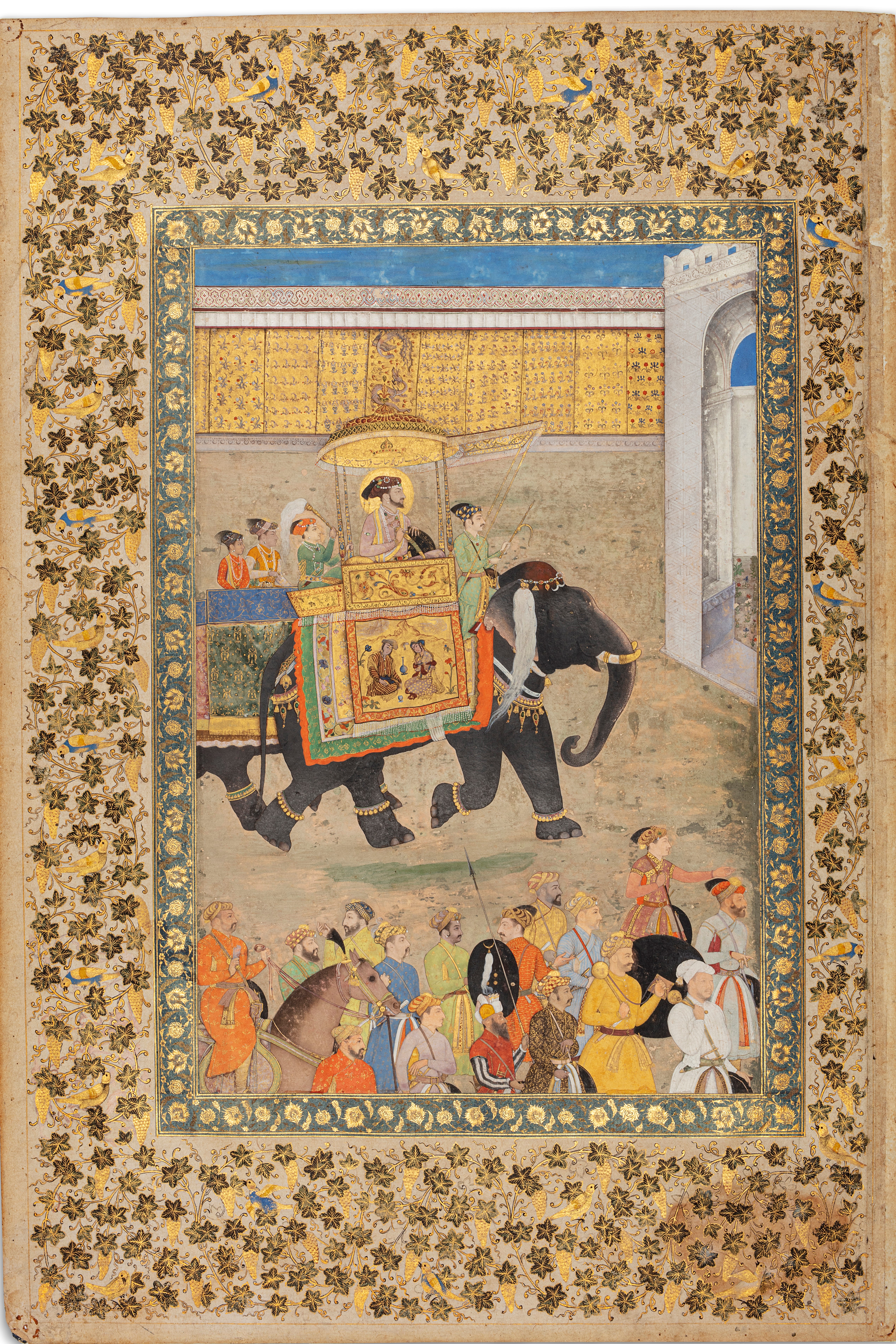
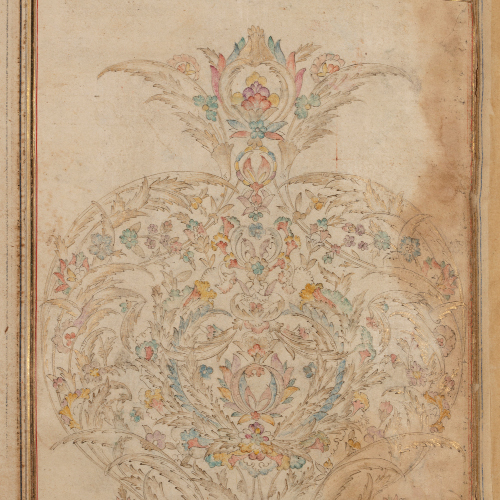
    padshanamah_front
    A page of the Royal Padshanamah from the St Petersbourg album, sold by Millon for €702.000 in Dec. 2019

    Think about conservation

    If you own a private safe somewhere in Switzerland, this section doesn’t concern you. For the rest of us, how to preserve and display art is an important topic. Indeed, art is fragile, and the last thing you want is your cat knocking down your recently purchased 17th century Safavid blue & white pottery ewer elegantly displayed over the fireplace.

    Chi_06.20_190
    Small blue & white pottery ewer, Safavid Iran, late 17th-early 18th c., Chiswick auction, June 2020, lot 190, £800-£1.200

    Before you buy anything, it is important to think about what you are going to do with it. I was joking earlier about my late Ottoman ewer and basin that are too big for my living room, but I was actually lucky I could place them on top of a bookshelf where they are safe. The same way, I collect metalwork, even though my first love is with manuscripts and paintings, because it is easier to store and preserve. If you decide to buy a single page painting, for instance, you will need a frame with UV protecting glass, which represents an additional cost, or display it on a wall that has no direct sun exposure and either provide additional non damaging lighting or accept the fact that your painting will be in the dark forever. Same go with textiles, that will need to be dusted, cleaned and treated and very specific ways, or even manuscripts that need moist control, light control and parasite control.
    Don’t feel discouraged by all these constraints but keep them in mind prior to biding and plan accordingly. There is no better feeling that preparing a space for a newly acquired addition to your personal collection.

    These are just a few insights into collecting, and there is a lot more to write about starting a collection of Islamic arts. In the future, I will get in more details about specific productions well represented on the market. If yo have any questions, article suggestions, or want to start your own art collection, I’ll be happy to provide support, feel free to get in touch.

    1. See my article published in IWA Mag in Winter 2019.
    2. All the links are on the Resources page.
    3. Part of Dreweatts.
    4. For all the technical terms, you can refer to Sotheby’s glossary.
    5. The exact valuation was $130.000-$180.000.
  • The Last before the Next: October 2019 Islamic Week in London

    The Last before the Next: October 2019 Islamic Week in London

    I have been looking forward this Islamic Week all summer. Though reading through auction catalogues and feverishly discovering what items major houses will have managed to put on the market is always an exciting time, I can’t help but wonder if this particular Islamic week doesn’t mark the end of an era. This gloomy thought is of course linked to the Damocles sword that is the very real possibility of a no-deal Brexit, hanging over the head of London market, ready to cut prices in half.
    A complete absence of thoroughly agreed legislation would be catastrophic for the market – any market – while the impact of the British government tribulations have already started to show on the British Pound value.

    Pound

    Since the last Islamic week in April 2019, the Pound has continued to plunge. This decline is not necessarily a bad thing for buyers coming from outside the UK, and it is going to be interesting to see if they’ll take this opportunity to acquire more for less, while the market is still standing.

    The fact is, no one knows what will happen on 31st October, and speculating here would be pointless. After the Conservative conference was held last week in Manchester, a new proposal was expected, as the deadline gets closer every day, but it now seems that the European Union will no budge, especially wen it comes to the very delicate and historically charged question of the Northern Ireland backstop. Though a no-deal Brexit has been ruled illegal, it is impossible to predict what Boris Johnson government will do.
    The British art and antiques market is the second largest in the world (between the US, 1st, and China, 3rd), and the uncertainty around Brexit doesn’t seem to have impacted this ranking so far, but an absence of agreement with the EU would necessarily imply a renegotiation of VAT taxes, as well on passports and border checks. Currently, the UK import VAT on art is the lowest in Europe with only 5%. This will necessarily change with a no-deal Brexit, though there is no doubt the UK government will try to maintain London position as first European hub for art trade.

    While experts argue about what could and will happen, let’s focus on what is. Bonhams will open the week on the 22nd October with a catalogue of  222 lots, continuing to slowly switch focus toward later Indian art. On the 23rd, all eyes will be on Christie’s and their 295 lots. April week was particularly successful for Christie’s and it will be particularly interesting to see if the two folios from Sultan Abu Sa’id Nahj al-Faradis will be enough to keep the house on top. This will certainly be a delicate operation, as Sotheby’s is getting as many manuscripts as possible with the partial sale of the so-called Shakerine collection on the 24th, including 94 lots. The afternoon session will also include a lot of manuscripts and paintings, but not only, and will include 219 lots. Finally, Chiswick will close the ball on the 25th with a selection of 296 lots.

    Sub-Saharan Qur'an Bloomsbury Ethiopia
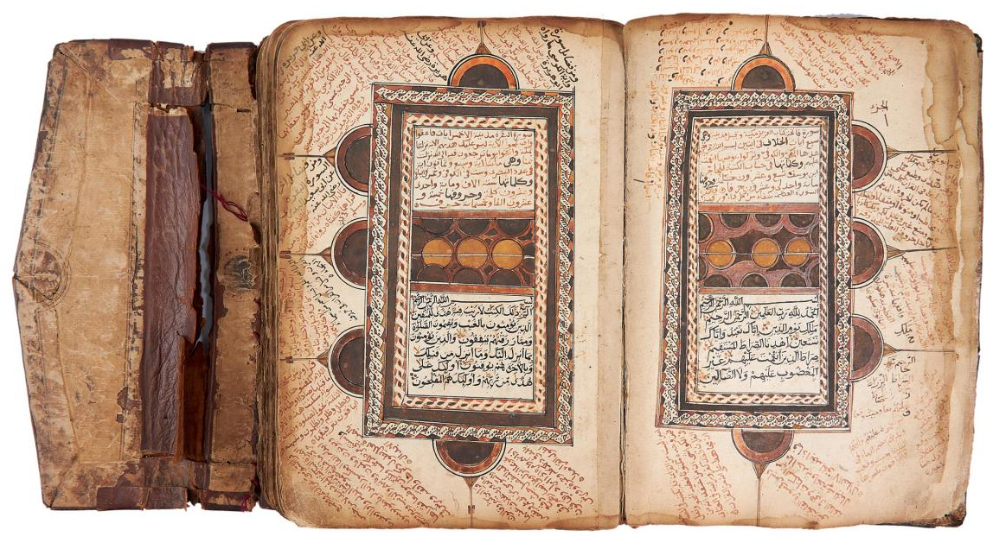
    Sub-Saharan Qur’an copied by Rasul Muhammad Sali’Allah, 1260/1844. Bloomsbury, £3.000/5.000

    Indeed, manuscripts and paintings are the focus point of this Islamic week. Let’s mention here Bloomsbury online auction on the 22nd October with a catalogue of 120 manuscripts and paintings, mostly of secondary quality but with some nice surprises such as a large Sub-Saharan Qur’an dated 1296/1879, ornamented with characteristic illuminations and filled with marginal annotations (£3.000/5.000).

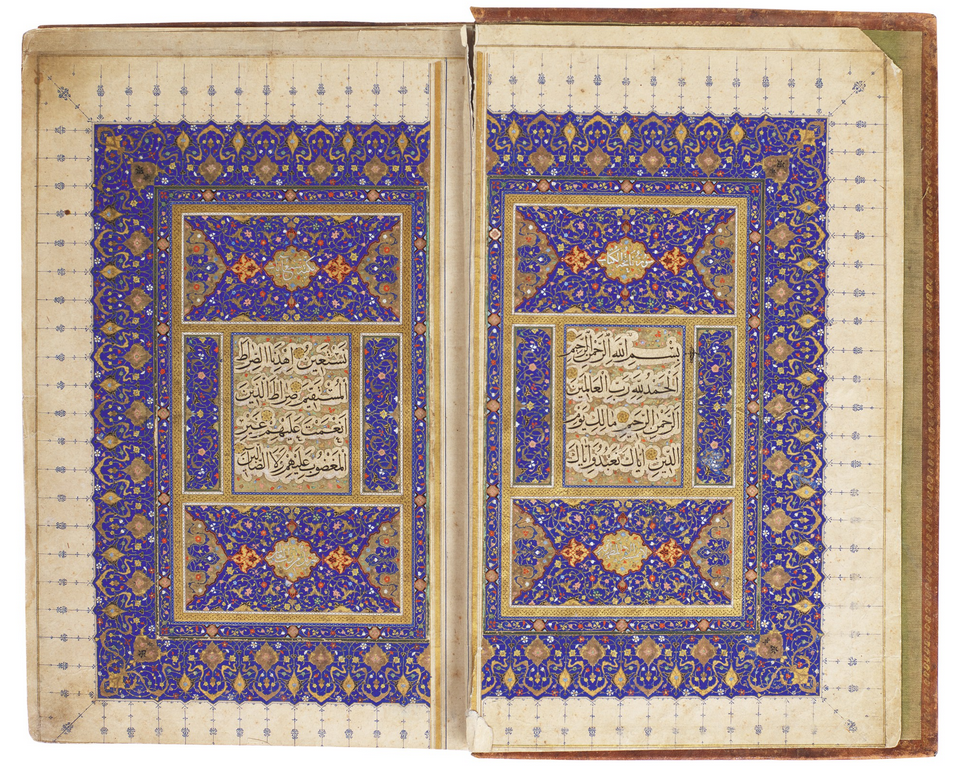
    All eyes will of course be on the 94 lots from the so-called Shakerine collection presented by Sotheby’s , including some true splendors, such as an Safavid Qur’an from the first half of the 16th c., illuminated with a rare finesse that shows a direct link with its Timurid predecessors (£80.000/120.000). To be mentioned as well a large Safavid Qur’an from mid-16th c., written in a variety of scripts and colors on white and thin folios measuring 50.6 x 33 cm (£200.000/300.000). The manuscript is described as “monumental” in the catalogue, a misleading denomination when one has in mind real monumental Qur’ans produced under the Mamluks, between 70 x 50 cm to an extravagant 108.5 x 82 cm for the biggest. The Shakerine Qur’an is large, nothing more.
    One of my personal favorites is a 19th c. Indian collection of prayers including Dala’il al-Khayrat. Though we can regret the absence of a more detailed description in the catalogue, let’s highlight the rarity of such manuscripts produced in this region.

    Safavid Qur'an Sotheby's
    Safavid Qur’an, first half 16th c., 33×21 cm. Sotheby’s £80.000/120.000

    Sotheby’s continues in the afternoon session with no less than 64 manuscripts, folios and paintings, including a page from the Blue Qur’an valued at £400.000/600.000 but with a provision of only £85.000 (!). The selection is more diverse in the afternoon, with some very interesting scientific texts such a copy of Kitab al-asbab wa’al-‘alamat written by Muhammad b. Abu Bakr al-Nishapuri in 594/1197, during the lifetime of the its author, Najib al-din al-Samarqandi who died in 1222 (£80.000/120.000). This example of direct transmission is particularly precious, while the manuscript seems to be in an exceptional state of preservation.

    This selection of very high quality is put to shame by the two folios from the Nahj al-Faradis commissioned by Sultan Abu Sa’id Gurkan of Herat around 1465. Written in Khawrazmian Turkish in a very refined and characteristi script, both folios are illustrated on both sides. Lot 38 shows the Prophet Muhammad on al-Buraq arriving to the Second Heaven and the Prophet on al-Buraq meeting the Angels of Bounty. Lot 38 constitutes a fascinating counterpoint with the Prophet and the angel Gabriel visiting the Hell for Misers on one side, the Prophet and the angel Gabriel visiting the Hell for False Flatterers on the other. The refinement of the line and the purity of the pigments are almost without comparison in the 15th century Persianate lands. Both pages are valued £700.000/1.000.000 and there is no doubt Christie’s will break records.

    Nahj al-Faradis Sultan Abu Sa'id Gurkan Christie's
    Nahj al-Faradis commissioned by Sultan Abu Sa’id Gurkan, c. 1465 (detail). Christie’s lot 38, £700.000/1.000.000

    I’ve been wondering about Kufic Qur’an pages for a while now but it seems that, despite a complete saturation and a real lack of traceability, pre-Ilkhanid Qur’anic folios have become a safe bet. Christie’s third most expensive lot after the Nahj al-Faradis pages is a group of 76 pages from a dismembered Qur’an previously in the al-Farsi collection. Large sections of 8th c, Qur’an such as this one are extremely rare and we can expect a exciting betting competition.
    Other auctions also offer Kufic Qur’an pages, including Bonhams whith a bound group of ten leaves valued at £80.000/120.000. Pretty ambitious estimation, knowing that Sotheby’s 76 pages are only given at £400.000/600.000.

    Speaking of Bonhams, beside the usual manuscripts and Iznik ceramics, I was pretty impressed by thecourageous selection of later Indian paintings, whether on paper or oil on canevas. The group of sketches from the workshop of Raghavji Mazji produced in Bhuj (Gujarat) at the end of the 19th c. possesses an organic aesthetics that can only be found in preparatory drawings.

    Preparatory Drawing  Raghavji Mawji Bhuj  Bonhams
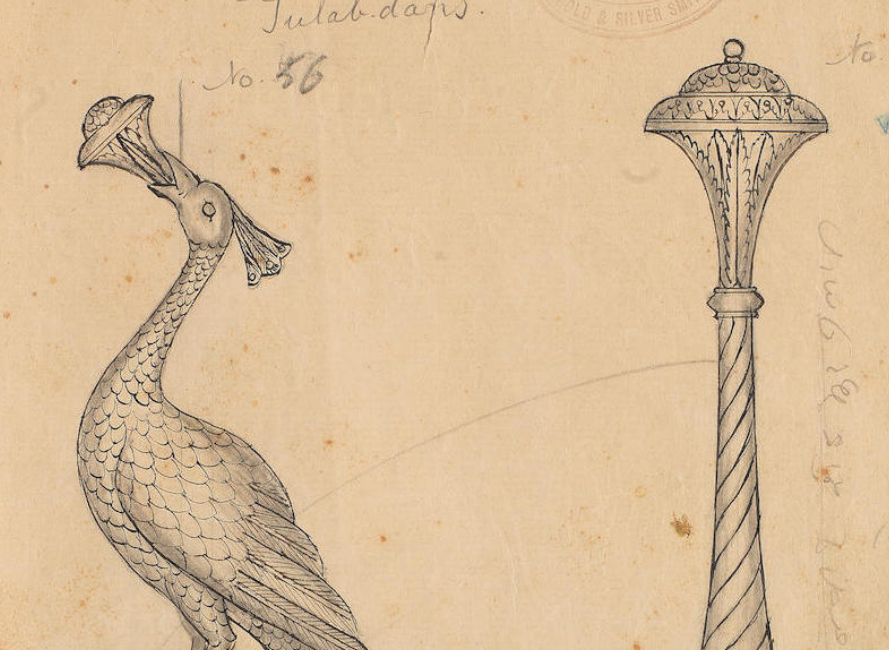
    Preparatory Drawing by the workshop of Raghavji Mawji, Bhuj, late 19th c. (detail), Bonhams, lot 166, £20.000/30.000

    Not to mention the ensemble of oil paintings showing Guru Nanak, the first Sikh Guru, and Guru Arjun, fifth Sikh Guru from the late 20th c. , that confirm that Bonhams is shifting his focus toward a new kind of “Islamic art”, further from the academic classifications based on the distinction “Medieval” and “Pre-modern”. Though this renewal is needed in a field that is becoming increasingly crippled by self-imposed limitations, I am not completely sure the buyers are ready to follow. Bonhams has been struggling for a while to rewrite its narrative and finds its place between Christie’s and Sotheby’s, being relagated to the third row, however, though the London market continue to strive, the wind might eventually turn. A discussion with a gloomy art dealer, years ago, had left me with the thought that “there is nothing to sell anymore”, and while it is obviously not true, Brexit might make things a bit more difficult for major auction houses.

    However, let’s not abandon all hope just yet! Plenty remains to be discovered and offered to the public, the Taslimanic Jama from 15th/16th c. Sultanate India sold by Sotheby’s being a prime example. At first sight, I thought it was the same shirt sold in 2010 but it is apparently not. These talismanic shirts, covered in behari script invocations (that is how we know they’re from Sultanate India) possess a great historical value and are still surrounded by mystery regarding their production.

    Seated Female Ruller, Kashan, Sotheby's
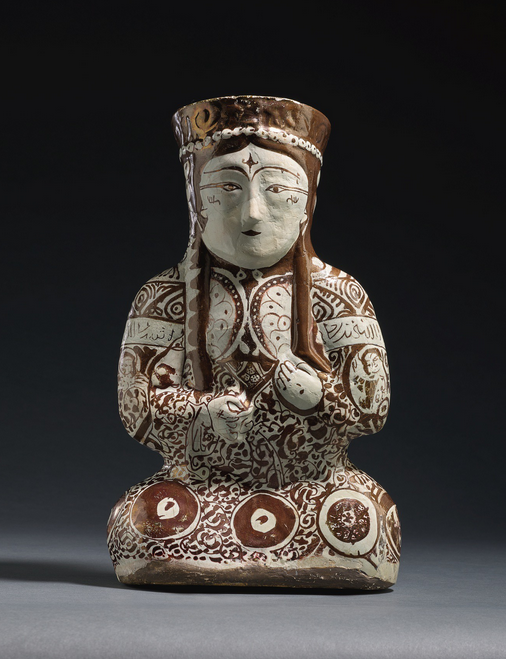
    My favorite item from this Islamic Week! Seated Female Ruller, Kashan, 12th/13th c. Sotheby’s lot 212, £10.000/12.000

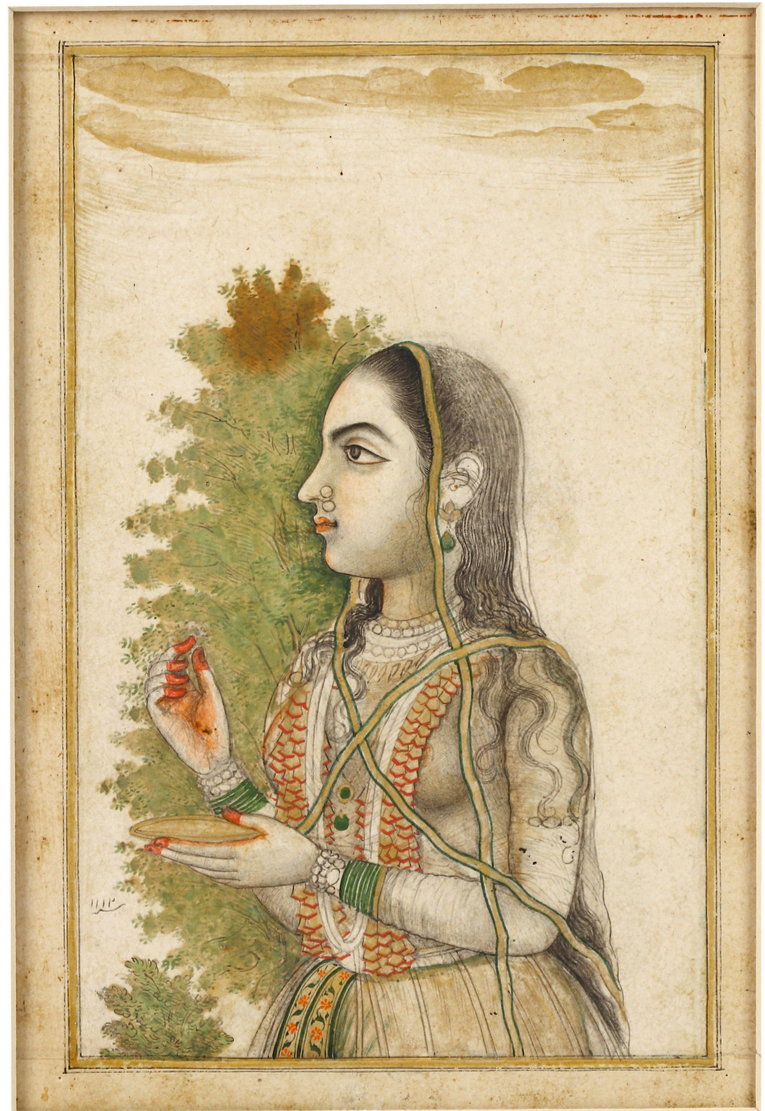
    Finally, I haven’t mentionned any lots from Chiswick yet, and this is a mistake I will correct right away, as the low-price selection is both intriguing and exciting. I will not talk about the four bidri silver and copper-inlaid Charpai legs that might or might not look like tiny robots but I will, however, mention the portrait of a young lady located in Faizabad (though I have my doubts) and dated 1112/1700-1701. Considering the preservation state and the aesthetic quality of the page, I am not completely sure why it is only given for £600/800.

    I will be in London from the 21st to the 23rd and I cannot wait to take the pre-Brexit temperature of auction rooms. Will this week be business as usual, or will we be witnessing a part of history? We’ll find out very soon!

    A portrait of a Young Lady, Faizabad, Chiswick,
    A portrait of a Young Lady, Faizabad (?), 1700-1701. Chiswick, lot 367, £600/800


  • After June Auctions, it’s Time for a Summer Break!

    After June Auctions, it’s Time for a Summer Break!

    I am in complete disbelief, already half of the year has passed. The first six months of 2019 have been busy for the Islamic Arts Market, with some beautiful auctions and some historical artefacts!

    Millon_24
    A peaceful and summary scene by Antoine GADAN (1854 -1934), Women near the River, Millon, sold 7805€

    After the spring Islamic week in London, all eyes were turned to Paris for Millon & Associés and Ader Nordmann early summer auctions, but also to New-York for Maharajas & Mughal Magnificence at Christie’s New York, where were presented 359 items from the Sheikh Hamad Al-Thani collection, all more fantastic than the other. My concern for this auction, voiced in my article for lot-art blog, was that the market wouldn’t be able to absord the profusion of high valued items. This concern was reflected by Christie’s decision to sell all lots valued below $50.000 without reserve. However, all lots but one (withdrawn) were sold, though for a total price that is considered by most, and myself, as not that high.
    While $109.271.875 is a fair price, it still reflects the fact that Islamic Arts remain a niche field, despite a exhibition tour of several years and an agressive communication campain let by Christie’s. More was expected from this auction, and it would be interesting to dig in the lots history to calculate the actual capital gain.

    Paan boxes Christie's
    This Enamelled and Diamond-set suite of Paan boxes has lost almost 10% of its value between 2013 and 2019

    For instance, an enamelled and diamond-set suite of paan boxes made in Hyderabad around 1760-80 achieved $975.000, but had previously been sold at Sotheby’s in 2013 for $1.063.644 (both incl. premium).
    Same goes for the star lot of the auction, a Cartier Belle-Epoque diamond devant-de-corsage brooch, valued $10.000.000/15.000.000 and sold with premium just above the low range, $10.603.500. The item had been aquired in 2014 from Christie’s Geneva for around $16.024.840 (CHF 15.845.000).
    Between the inflation and the natural increase in value, we end up with a probably disappointed seller who overall seems to have lost a fair amount of money. 

    Paris auctions were equally interesting to follow for different reasons. Both Millon et Associé and Ader Nordmann had a large selection of diverse quality, with some really interesting pieces, and both were particularly manuscript-heavy following the unexpected success of last winter auctions. Millon sold 45% of their 389 lots for a total of 849 894€, while Ader sold 57.3% of the 398 lots presented for 501 012€. Millon remains in the 1st place on the Parisian market, which can be attributed to a less encyclopaedic selection but of higher quality and a younger and more expensive looking catalogue. Here lies one of the challenges that faces Drouot, the historical auction place in Paris. In compareason to British auction houses who highligh the luxury that already emanates from the art market, many French auction houses represented at Drouot look like flea markets. To counter this, a fresher looking and well organised catalogue seems like a step in the right direction.

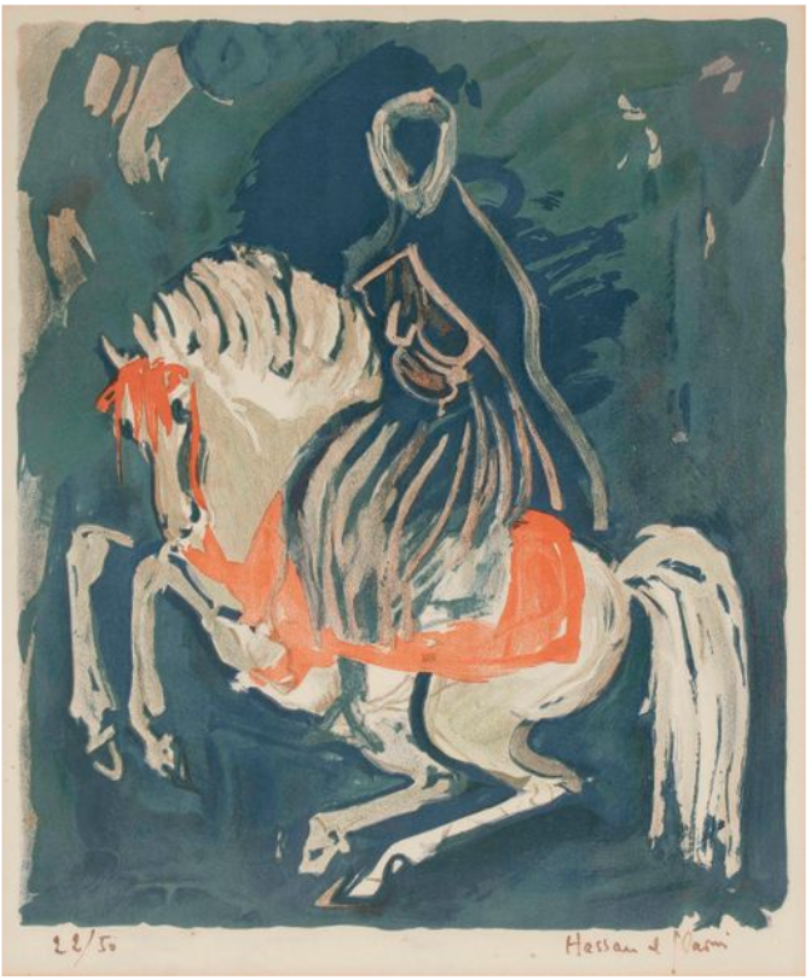
    Hassan EL GLAOUI  Horseman Ader
    Hassan EL GLAOUI (b. 1924), Horseman, Ader Nordmann 26 June 2019 lot 14, sold 320€

    Interestingly, both auction houses have included contemporary pieces to their selection. While Orientalism and early photographies are common in French auctions, 21st century artists are usually absent. The self-imposed barriers of the field seem to be slowly falling, and even though buyers remain timid, it will be very interesting to see how Parisian market will evolve. Contemporary Islamic art is generally sold in dedicated auctions in Dubai, London, Tehran and New-York, so I am curious to see if French auction houses will pick up the trend and raise up to the challenge.

    Personnally, these past months have definitely kept me busy, being mainly focused on exciting collaborations with several journals and academic publications to come out soon.
    This summer and the second half of the year will be equally intense, probably more, as I am now going to focuse my energy on the publication of my doctoral dissertation. This is a goal I set for myself at the beginning of the year but the task is big and time is always too short.

    I have also been thinking about the content of my website and how to improve what it offers to all readers, either completely new to Islamic Arts or well specialised. I will like to make this site a plateform open to all, collectors wanting to introduce their latest acquisition, young (or less young!) scholars working on a specific topic, or even professionals of the art market commenting on upcoming auctions.
    If you feel like this could interest you, get it touch through the Contact page and let’s see where we could go together! 

    CH_290
    A Carved Sapphire Hindu Saint, India 18th c., Christie’s sold $75.000
  • Islamic Week, spring 2019: overview of the results

    Islamic Week, spring 2019: overview of the results

    The London Islamic Week came and went like a dream this spring! I had planned a lot around it but in the end, life held me hostage and I had to cancel everything, being finally able to go though the catalogues only two days before the first auction.
    While being hopeful that the Fall Islamic Week will go differently, I still have the delight of untangling the results of the three main houses. For the first time, I will also discuss Chiswick Auction’s results, as their Islamic & Indian Art sale was held during the Islamic week and offered numerous lots valued between £100 and £15.000.

    All results discussed below include Premium.

    Bonhams opened the week with 216 lots, including a section of 73 items produced in Qajar Iran. 56.49% of the catalogue was sold for a total of £2.012.679. The next day, Sotheby’s presented 311 lots, of which 57.3% found buyer for £9.914.625. Christie’s broke their own record by achieving £16.031.375, with 58.94% of the 302 lots sold. Finally, Chiswick closed the week with a massive catalogue of 421 lots, of which 61.8% were sold for a total of £44.211. Though this last result doesn’t exceed the million, the success of the auction demonstrates once more the weigh of less prestigious items on the overall market.

    Bonhams had some interesting lots and unexpected results, including a selection of Surah copied by the Ottoman calligrapher Isma’il al-Zuhdi in 1217 / 1802-3, valued £3.000/5.000 and sold at £52.562.50. Both calligraphy and illuminations are of exceptional quality and we can only conclude that Bonhams experts doubted their own material by giving a valuation that low. Quick note to whoever put the manuscript reproduction on line: the colophon is upside down.

    Bo_12
    Selected surah from the Qur’an, copied by Isma’il al-Zuhdi, Ottoman Turkey, 1217/ 1802-03. Sold £52.562.50

    The same way, an incredibly delicate tulwar hilt and two matching sword belt fittings went for £125.062.50 against an initial pricing at £10.000/15.000. Though the catalogue doesn’t particularly elaborate on it, the provenance of the item, going back to the late 18th century East India Company and its direct transmission to the seller, contributed to romanticise the lot and probably increase its price.

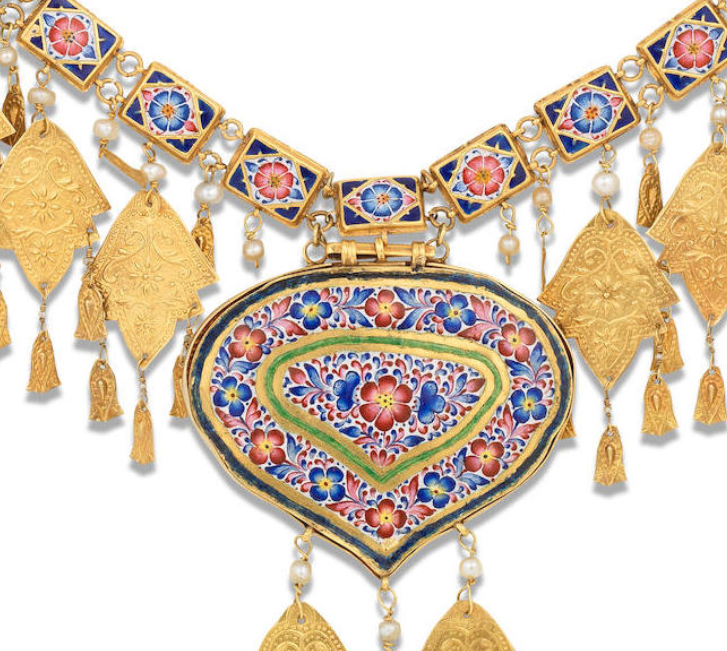
    Bo_101
    A Qajar enameled gold necklace, Iran, 19th c. Sold £10.062

    However, Bonhams seemed to have suffered from overconfidence by focusing on the Qajar era. If past auctions have told us anything, is that late productions, namely Qajar Iran and late Ottoman fluctuate greatly. Despite a diversified and interesting selection validated by an introduction written by Robert Hillenbrand, only 30 lots over the 73 presented were sold, most of them within their price ranges or barely above. More importantly, the star item of the auction, an anonymous portrait of Fath ‘Ali Shah Qajar dated 1251/1835-6, remained unsold. The estimate was upon request, which is a good way for the department to gather interests, however, it can scare away potential buyer and, let’s be honest, it is not particularly justified. Though portraits of Fath ‘Ali Shah are indeed rare on the market, Qajar portraiture itself is not exceptional. Most of the other full-length portraits from the 19th century remained unsold, while early 20th century paintings did a bit better. Maybe we are seeing here a shift of emphasis toward more recent productions, but the interest for Qajar art remains mixed.

    Each Islamic Week, the excitement lies in the competition between Sotheby’s and Christie’s. Last season, the battle was won by Sotheby’s who exploded records by selling the Debbane Charger for more than £5 millions but this spring, Christie’s had not one but three not that secret weapons: an extraordinary Mamluk Qur’an dated 894/1489, sold £3.724.750 and two rare 17th c. “Polonaise” carpets, respectively sold £3.895.000 and £3.724.750. Between the three lots, already more than £11 millions were assured.

    Qur'an signed and dated 894/1489, Mamluk, Christie's lot 11
    An impressive Qur’an signed and dated 894/1489, Mamluk Egypt. Christie’s, sold £3.754.750

    A few surprises occurred on top of that, for instance with a “Kubatchi” pottery dish, valued £10.000/15.000 and sold £40.000. While Iznik potteries are numerous in every auctions, Kubatchi wares are more rare, and usually of secondary quality or more or less heavily restored. This lot seems to be whole, despite a chip visible on the back, with a colorful and characteristic decoration that definitely seduced buyers.
    Special mention for a very rare gold and silver-inlaid window grill bross produced in Ilkhanid Iran during the 14th c.. Valued £12.000/18.000, it went at £47.500, a price relatively humble considering the rarity and exceptional preservation of the piece. Though this one in particular doesn’t bare any inscription, it can be linked to others in the Museum of Islamic Art, Cairo, and inscribed in the name of the Ilkhanid Sultan Uljeitu (1304-1317) whose summer capital was Sultaniyya.

    A gold and silver-inlaid window grill boss, Ilkhanid, 14th c. Christie's lot 17
    A gold and silver-inlaid window grill boss, Ilkhanid Iran, 14th c. Christie’s lot 17, sold £47.500

    The price achieved by this last piece illustrates the difference between Christie’s and Sotheby’s catalogues. Comparatively, Sotheby’s sold less than Christie’s, but the house took more risks in their offer by introducing different types of items, some normally less represented on the market, other not currently in favour of buyers. This is for instance the case with early Qur’anic leaves. Except for a pink North African leave written in maghribi during the 12/13th c., other leaves and bifolio from this category remained unsold.
    Some items were also more difficult to apprehend. It is particularly the case of two pages of an Indian Falnamah (book of omens) painted on cloth around 1580. I had good expectations for these two paintings, early Mughal painting on cloth usually doing well, but this series of paintings is actually not popular. This could be due to the fact that documentation on this dismembered manuscript is virtually inexistent, or perhaps the preservation state of some of the pages (I haven’t seen any de visu and Sotheby’s condition reports are famously vague), but the fact is that the house has presented other pages from the same ensemble in the past and buyers never showed a high interest.
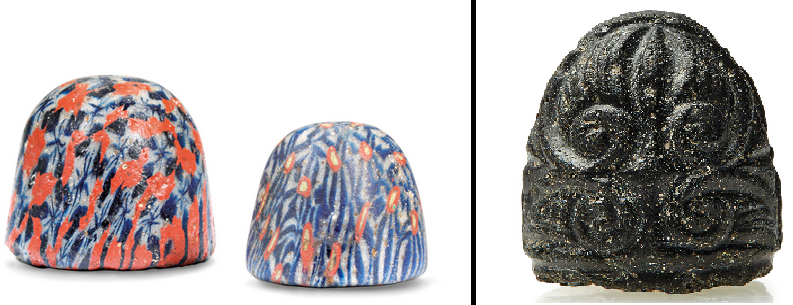
    Early glassworks timidly reappeared on the market, but where Christie’s priced very cautiously the glass flask and the two marvered glass domed game pieces, Sotheby’s went all the way with a Fatimid carved glass or obsidian chess piece priced at £30.000/40.000. Despite the quality of the item, it did not convince the buyers.

    glassworks
    On the left: marvered glass game pieces, Egypt/ Syria, 12th/13th c. Christie’s, £2.000/3.000, sold £1.375. On the right: carved glass or obsidian chest piece, Fatimid Egypt, 10th/11th Sotheby’s, £30.000/40.000, unsold

    Luckily for Sotheby’s, some lots retained the attention of collectors. One of the most anticipated lot was the portrait of Suleyman the Magnificent by a follower of Gentile Bellini. This painting holds a particular historical importance and though it is unlikely that it was executed by Bellini himself, its aesthetic and technique are very close from the master style. Valued £250.000/350.000, it achieved without surprise £5.323.500.

    durer
    On the left: anonymous painting, Mughal India, c. 1500-35. Sotheby’s, sold £102.500. On the right: portrait of Frederick the Wise by Albrecht Durer, 1524.

    Another expected result was the Mughal copy of Albrech Durer engraving of Frederick the Wise. Indian reproductions of European designs are usually appealing for their immediate reference, while remaining firmly anchored as “other”. More often, as in the present case, the copy is not completely faithful to the original and the alterations made increase the interest and intrinsic value of the painting. Here, the frame was increased to add a hand holding a book, while the inscription beneath the painting was changed to S. Bernardus, maybe in relation to a saint, maybe to something else. As a result, the lot was sold £105.500, more than four time its valuation.

    Ottoman figurative painting never ceases to baffle me these days. While Christie’s, Bonham’s and Chiswick decided to skip this section altogether due to an understandable caution after the last Islamic week, Sotheby’s took the calculated risk to present one painting with a low estimation, £10.000/15.000, sold for £43.750.

    “Bahram killing Shervan in battle”, Shahnama, Injuid Iran late 14th c., Chiswick Auction, sold £3.500

    Chiswick finished the week with a strong and interesting offer. Despite showing cautions in the valuation, early Qur’anic leaves poorly sold, while other early items did surprisingly well, for instance an Abbasid blue and white ceramic dish, broken and put back together but with an elegant design. Valued £200-300, it went for £4.375.
    More impressive is the price achieved by a Moroccan pilgrimage scroll dated 1191/1777. Valued only £500/700, it was sold for £18.125. The same way, an Ottoman talismanic jama from the late 19th century was presented for £400/600 and ended up at £11.250.

    Detail of a Moroccan Pilgrimage Scroll, dated 1191/1777. Chiswick
    Detail of a Moroccan Pilgrimage Scroll, dated 1191/1777. Cheswick Auction, sold £18.125

    Overall, Chiswick selection was more diversified than the three other houses and somehow more adventurous, but risk is more easily permitted with low price items. Paintings produced under the Injuid dynasty are for instance rare on the market, coming from this historically grey area between the Ilkhanid and the Timurid rules, not particularly well documented. Two pages from an Injuid Shahnama were offered for £800/1.000 and achieved £3.500, a price easily justified by the aesthetic quality of the painting and the historical interest of the folios.
    Also noticeable was the selection of blue and white Safavid and post-Safavid ceramics. After the fall of the Ming dynasty in 1644, Iran took over the production of blue and white ceramics bound for the European market. Nevermind that China produced porcelain while Iran could only make siliceous potteries due to the absence of kaolin, the production knows a great success in Europe and the preserved pieces are numerous. However, they are not particularly popular on the market these days, the focus being on blue and white Iznik. Seven of the twelve lots presented found a buyer, mostly within their range but with a few noticeable exceptions like a highly decorative 18th century inkwell, sold £4.000 against a valuation at £800/1.200.

    I already look forward the next Islamic week. First because I hope to be able to actually attend, but also because I am curious to see how things will evolve. For instance, the inclusion of early glassworks in Christie’s and Sotheby’s catalogues might be an interest sign, though time will tell.