
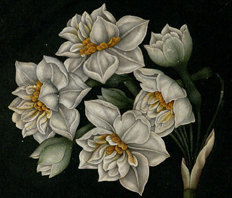
This page is dedicated to a book I wrote and never published. The core research comes from my doctoral dissertation, written in French in the Paris-Sorbonne University under the same title and defended in December 2015 in front of a jury composed of Pr Jean-Pierre Van Staevel (dir.), Pr Eloise Brac de la Perriere (codir.), Pr Philippe Senechal (jury dir.) Pr Markus Ritter (exam.) and Pr Yves Porter (exam.).
I reworked this research between 2022 and 2023 with the aim of publishing with Edinburgh University Press. The book was submitted and accepted for publication, with the caveat that some parts of the text were reworked, as it is most often the case. Life took me in a completely different direction, and I never went back to my text. Two years later, in 2025, I am now putting most of this research on my website, for anybody to use. All I ask in exchange is to be acknowledged in any publications my humble work will have helped to produce.
First disclaimer: The text contains little images aside from details. For the full paintings, you will need to refer to the catalogue (scroll at the bottom of this page), which contains no image neither but has all the links to online reproductions. It might be a bit tedious to read but you got this.
Final disclaimer: As mentioned above, this text hasn’t been reworked in two years, please bear this in mind when reading it. Some of the research might not be up to date, some wording could be considered as “clunky” (English is not my first language), and you might disagree with some findings. It’s all okay!
Synopsis
Between the Mughal empire in India and the Safavid, Afshar and Zand kingdoms of Persia, existed a shared passion for the depiction of full-page flower paintings bound in albums with calligraphies and figurative scenes. Following the introduction of European botanical prints, this production developed at the beginning of the 17th century and encountered a fast and large success that remained unmatched for more than two centuries. Flower paintings had a major impact on all facets of artistic creativity in India and Persia but had never been analysed in a dedicated monograph until now. This book gathers, for the first time, an important corpus of nearly 350 pages, and an in-depth investigation on the evolution of the production, its local particularities, its role in Indian and Persian albums, and its place in the large context of material and cultural exchanges during the first modernity.
Content and links to the text
Volume I: Text
- Acknowledgement
- Transliteration, Spelling and Dates
- Introduction
Prologue: Botanical Illustration, Curiosity and Collections
- Nature and the garden: the beginnings of flower paintings in Europe
- Botanical prints, ornaments and so many tulips
- Curiosity and Collection in the 17th century
This prologue offers a very concise overview of the history of botanical illustration as an introduction to Indian and Persian flower paintings, having no ambition of completeness. It sets the scene of what is to come, with a similar approach as Werner and Zimmerman’s concept of “histoire croisée”, acknowledging the multiplicity of viewpoints and aiming to “articulate various dimensions and place them into movement”.[1]
Chapter 1: Copy and Assimilation of European Botanical Engravings
- Transmission
- The European starting points
- The actors of transfers
- Reception
- The formation of Mughal floral painting: Collaert and Manṣūr
- Adriaen Collaert in Isfahan: Safavid reaction to European botanical prints
- Longevity of models and successive reproductions
This first chapter deals with the direct impact of European botanical engraving on the development of flower painting in Mughal India and Safavid Persia. Several books of flowers published between the end of the 16th century and the middle of the 17th century have been identified as possible model for paintings and drawings. The first part of the chapter focuses on the chains of transmission of European books from the West to the East. It offers an historical and historiographical overview of the networks existing between the 16th and the 18th century, through which flower forms passed. It also interrogates the reception of European figurative forms, and the creation of new styles of painting such as farangi sāzi in Safavid Persia. The second part comes back to the Florilegium of Adriaen Collaert and Philip Galle, and especially the copy made in India by Manṣūr, and later in Persia by an anonymous maker. Through these examples and others, the modalities of copy are analysed, as well as the practicalities of reproducing models. Finally, the last part of the chapter offers some reflexions on the longevity of European models and the use of indirect models.
Chapter 2: Pictorial Genre and Individual Practices
- Flower Painting in Indian and Persian Albums
- Notes on Methodology
- Corpus analysis
- Rose
- Tulip
- Lily
- Violet and “supporting” flowers
- Construction of a genre
- Theme and Placement
- Constitution of Plants and Geometrical Outlines
- Indian or Persian? Remarks on styles
- Summary
- Signatures, Ascriptions and Attributions: Preliminary remarks
- Manṣūr
- Overview of Manṣūr’s career
- The tulip of 1621
- Rejected attributions
- Flower painting during Jahāngīr and Shāh Jahān reigns
- Shafī’ ‘Abbāsī
- The signatures of Shafī’ ‘Abbāsī: Methodological approach
- Wording
- Form
- The son of his father
- Formation, Inspiration, Influence
- An enigmatic influence: Bahrām-e Sofrekesh
- Career peak and (re)productions
- Synthesis
- The signatures of Shafī’ ‘Abbāsī: Methodological approach
- Muḥammad Zamān and Ḥājjī Muḥammad
- Muḥammad Zamān
- The “voyage d’artiste”, a Western fantasy
- Yā ṣāḥib al-zamān
- Muḥammad Zamān flower paintings
- Hajjī Muḥammad
- Muḥammad Zamān
As soon as the second decade of the 17th century, floral forms got codified by painters who adapt the rules of florilegia and herbaria and bend them to their will and to the taste of their patrons. New characteristics developed that became the standards for depicting plants and flowers on album pages, starting with the choice of the species. While some encountered an international enthusiasm, others were used almost exclusively in particular workshops and at particular times. However, the use of set composition outlines does not diminish the creativity and historical significance of key makers. The career of Manṣūr and the analysis of the flowers signed or ascribed to him deserve particular attention, especially because he is one of the only painter renowned for his floral works at the beginning of the 17th century. The reigns of Jahāngīr and Shāh Jahān, otherwise known for their brilliant floral decoration on every artistic medium, are surprisingly bare for signed and dated paintings.
At the same time as the construction of the Taj Mahal, Shafī’ ‘Abbāsī was producing some of his best gol o bolbol in Safavid Isfahan. This enigmatic painter is the most prolific maker of flower and bird paintings, his work synthesising the multiculturalism of Persian painting in the middle of the 17th century. Some years later, Muḥammad Zamān and his brother Hājjī Muḥammad dabbled in flower paintings at the end of their career, announcing by their masterful style what is to come after the end of the Safavids.
Chapter 3: Patronage and Commercial Productions
- A (very) Brief History of Albums
- Jahāngīr
- Introduction to Jahāngīr’s Albums
- Flowers and Animals in Jahāngīr’s Albums
- Floral margins
- Dārā Shukōh’s Album
- The reading of the album
- How the album was put together
- The album margins
- Shah Jahan, “the spring of the garden of justice and generosity”
- Floral metaphor in shahjahani arts
- Flowers in Shāh Jahān’s Albums
- A visible shift: 18th century Indian Patronage and Productions
- Album production in Delhi under Muḥammad Shāh
- Album production in Delhi under Shāh ‘Alam II
- Faizābād and Lucknow and the circulation of album pages
- Flower Painting, Floral Margins and Album Patronage in 18th century Āfshār Persia
- The St Petersburg album
- The flower paintings in the albums
- From central field to margins
- Margin designs in the Drouot album
Roughly a third of the flower paintings in the corpus are now isolated loose-leaves, but given their format and layout, we can safely assume that many were intended to be bound in albums which were dismembered through the years. The importance of muraqqā’ in the context of the study of flower paintings is double. First, as mentioned, most of the flowers were or still are bound in volumes. The albums described in the catalogue illustrate the importance of documenting flower paintings within their immediate environment. Secondly, a complex marginal decoration based on naturalistic floral motifs developed in the early years of the 17th century in Mughal India, most likely under the reign of Jahāngīr. This chapter aims to replace flower paintings within the context of the volume in which they are still bound or might have been, but also to expand on design analysis by including floral margins produced in India and Persia between in the 17th and 18th century, to highlight the evolution of the designs as well as gather evidence of what can be considered a “commercial” productions, defined as productions that do fall outside the patronage of a single figure and were destined to be sold in bazaars or from hand to hand to collectors.
Epilogue: The Diffusion of Floral Designs
- A book of designs? The British Museum Album and Persian floral design
- Case study: the Iris
Although they are the main topic of the present book, flower paintings in Indian and Persian albums are only one part of the rich production of floral designs that rapidly spread from the first decades of the 17th century. Their analysis would then feel incomplete without opening to some of the other artistic media that received floral decoration and contributed to the evolution of the motif. However, the question of the diffusion of floral motifs in 17th and 18th centuries India and Persia is impossibly vast. This epilogue is short and has no ambition for exhaustivity, as I believe it is unachievable. Rather, it offers a glimpse of possible avenues for future research and the potential they carry. The first part focuses on the British Museum album and its content. I decided to approach this volume as a whole in this epilogue for two reasons; firstly, because the volume was bound in the 19th century, hence exceeding the chronological boundaries of this study, secondly because it best illustrates the topic of diffusion, especially through ten pricked drawings bound inside. The second part is a case study centre on the iris plant. It is the most depicted flower in the Indian corpus and the fifth one in the Persian corpus, and the plant takes particular forms in different 17th and 18th century productions and beyond.
When I say this catalogue is a labor of love, I trully, trully, mean it. I started gathering it in 2009, to give you an idea.
This catalogue presents flower paintings produced in India and Persia between the end of the 16th century and the end of the 18th century. It gathers a total of 353 paintings and drawings, 114 as isolated pages, 238 bound in 19 albums. The pages can include one flower species, or more in elaborated compositions, less often in studies, pouncing patterns or unfinished works.
The catalogue includes all the links to online collections I could find, I hope they still work, if not you will have no trouble finding your way through online collections with the accession numbers.
[1] Michael Werner and Benedicte Zimermman, ‘Beyond Comparison: Histoire Croisée and the Challenge of Reflexivity’, History and Theory 45 (2006): 30–50.
 Isabelle Imbert