Tag: art history

  • Cartier et les Arts de l’Islam, between Darkness and Sparkles (blog)

    Cartier et les Arts de l’Islam, between Darkness and Sparkles (blog)

    This January, for the first time in three years, I was able to fly back to Paris. I lived in the city for nine years before moving to the UK, so coming back is always a moment I treasure. I get to see old friends, walk through the lane of my 20’s memories, and catch up on current affair, namely, this time, getting to the Musee des Arts Decoratifs to see the exhibition Cartier et les Arts de l’Islam.

    I initially intended to do an Instagram live through the exhibition but I had too many conflicting feelings about its content, and promptly decided to write them down in a more structured fashion.

    Two remarks between jumping in: First, I only saw the exhibition and haven’t read the catalogue (hard-cover sold for 62€ in the museum store, I almost chocked), so my opinion is solely based on the exhibition rooms. Secondly, the pictures below have not been edited or altered in any way. The reader will excuse the absence of information on the objects depicted such as accession numbers, my intend here is merely to give an opinion, not redraw the exhibition.
    The fine line between intimate and hazardous

    Two years ago, I wrote on this blog an article about the way Islamic arts are displayed in museums, with a section titled “The literal darkness of Islamic arts” in which I was questioning the common choice to install displays in particularly dark rooms. The Louvre and the British Museum, with their newly refurbished Islamic arts departments, are particularly relevant examples of this trend.

    The Cartier exhibition follows the fashion, but takes it a step further by plunging the rooms in pitch black, to the point where I saw people bump into each other.

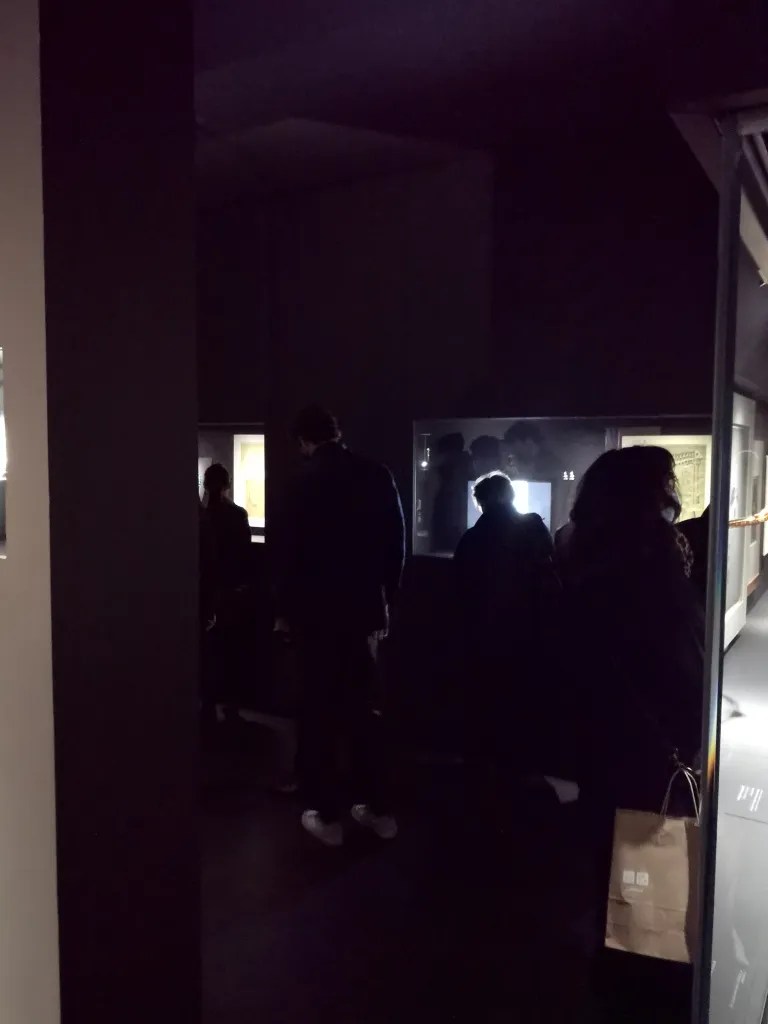
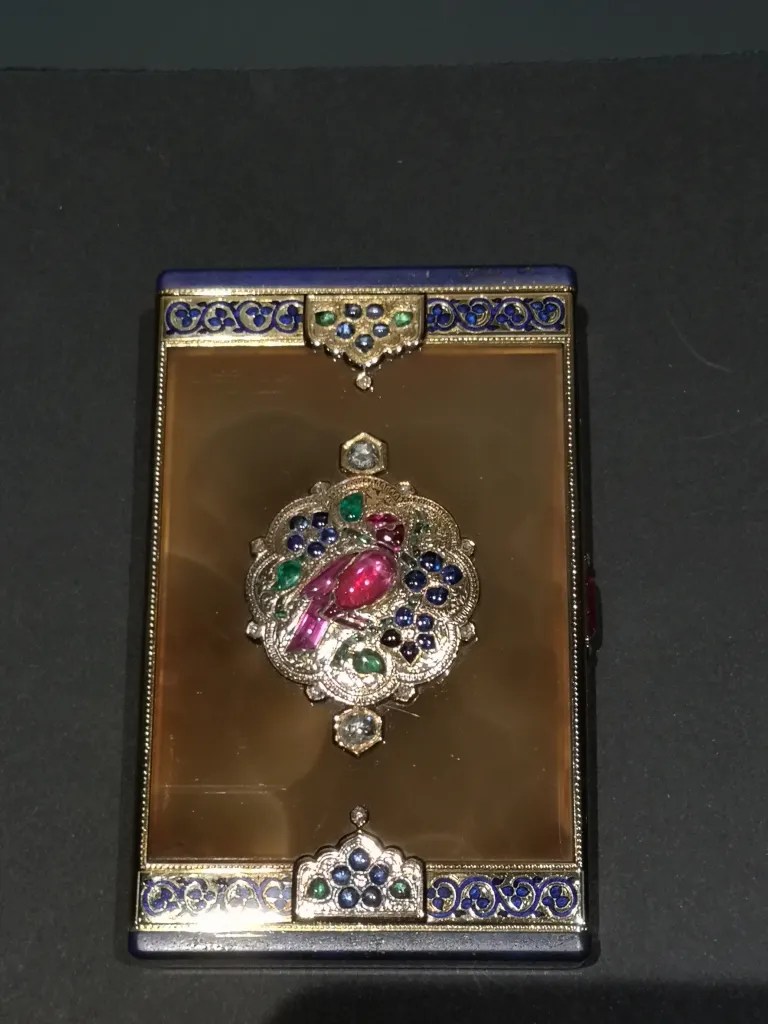
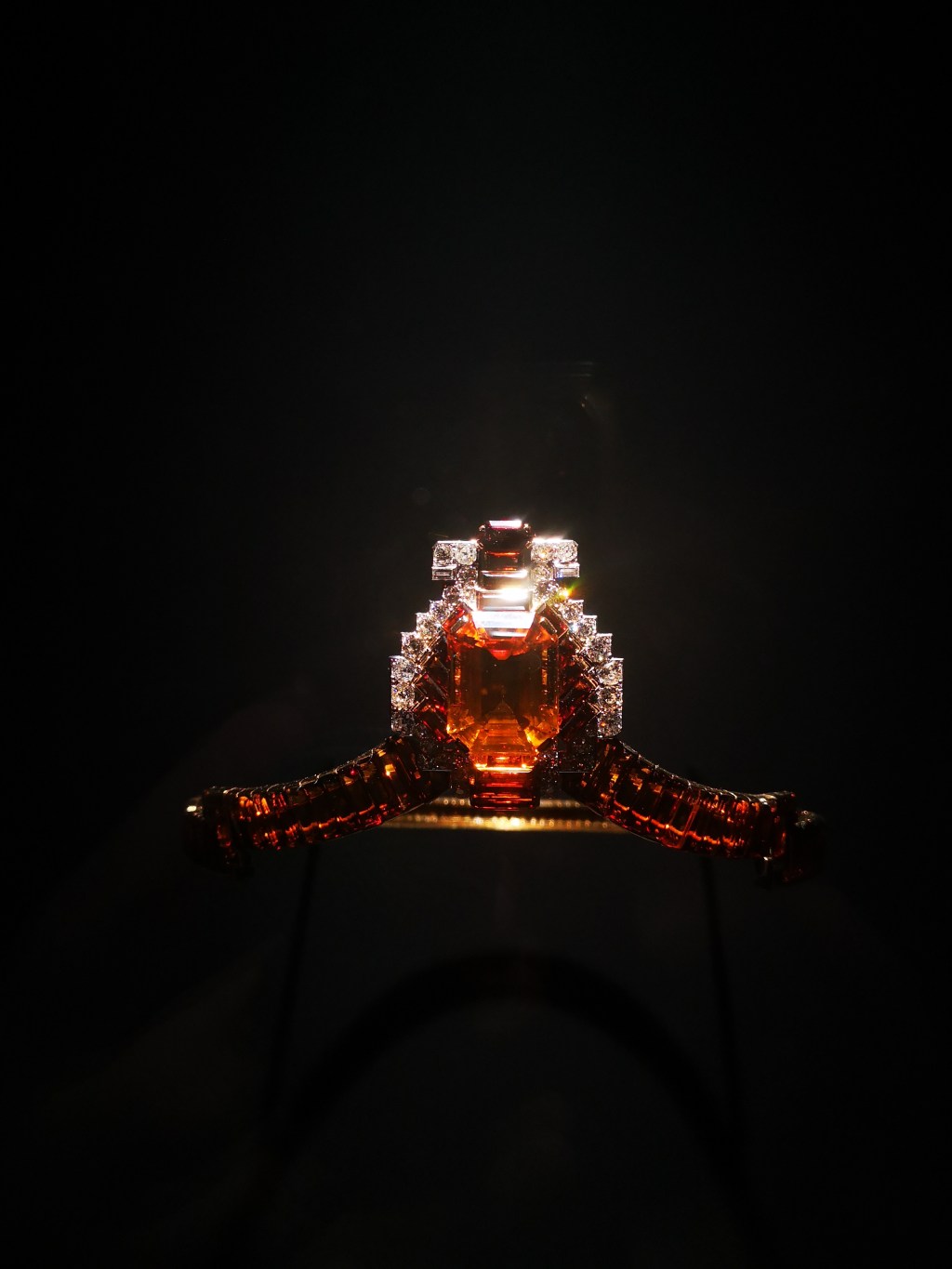
    The benefit of such a display is the contrast with the exposed pieces, in particular the jewellery that was very cleverly lighted. Now, I am not particularly familiar with jewellery exhibitions, and maybe this kind of “non-lighting lighting” is common practice, but I struggle to understand this trend with Islamic art display. It seems to me that Islamic arts are purposely kept into dark rooms to signify a sort of mystery, somehow linked to the notion of Orient as seen by 19th century orientalists, fascinated by harems forbidden to men, and palace intrigues hidden behind musharabieh. Delicate Persian paintings and princely cups made of semi-previous stone were, after all, not intended to be seen by a large public, and current trends might be trying to emulate that idea of privacy. My interpretation might completely be off, it might just be a particularly annoying museography trend that will eventually be replaced by another, I just cannot help but wonder.
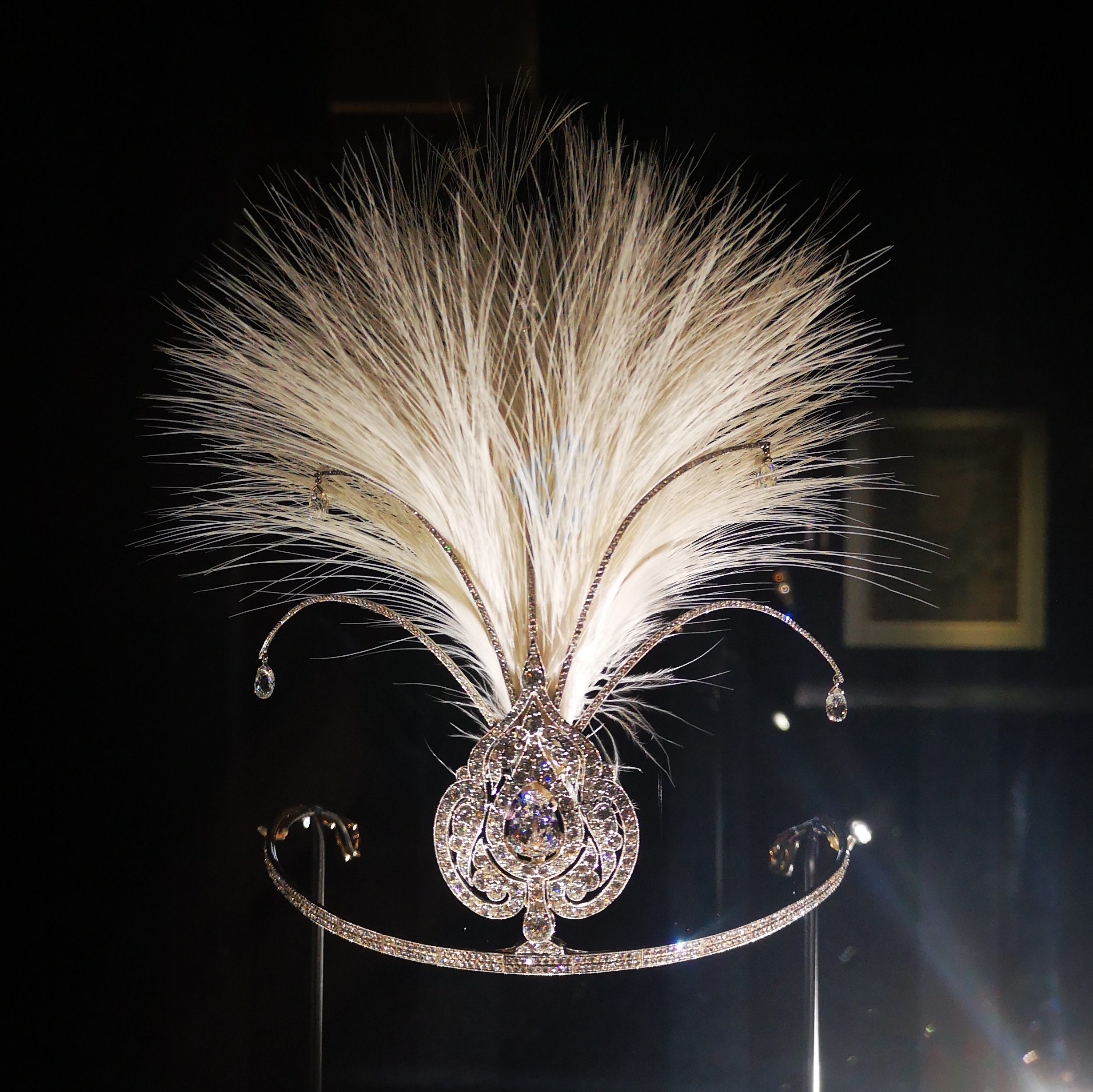
    The contrast with the dark rooms make the jewels sparkle even more

    A point not completely made

    The ambition of the exhibition is to show the close connection between the Maison Cartier and Islamic arts. For this, it is divided in two halves. The first one treats of different thematics, for instance the Persian taste in French decorative arts at the end of the 19th century, the diffusion of non-European decorative patterns through ornament books such as The Grammar of Ornament of Owen Jones, etc. The second half of the exhibition is more centred on iconography, juxtaposing Islamic or Indian artefacts bearing particular patterns (such as botteh, mandorla, cintamani etc.), with Cartier pieces ornamented with the same patterns.

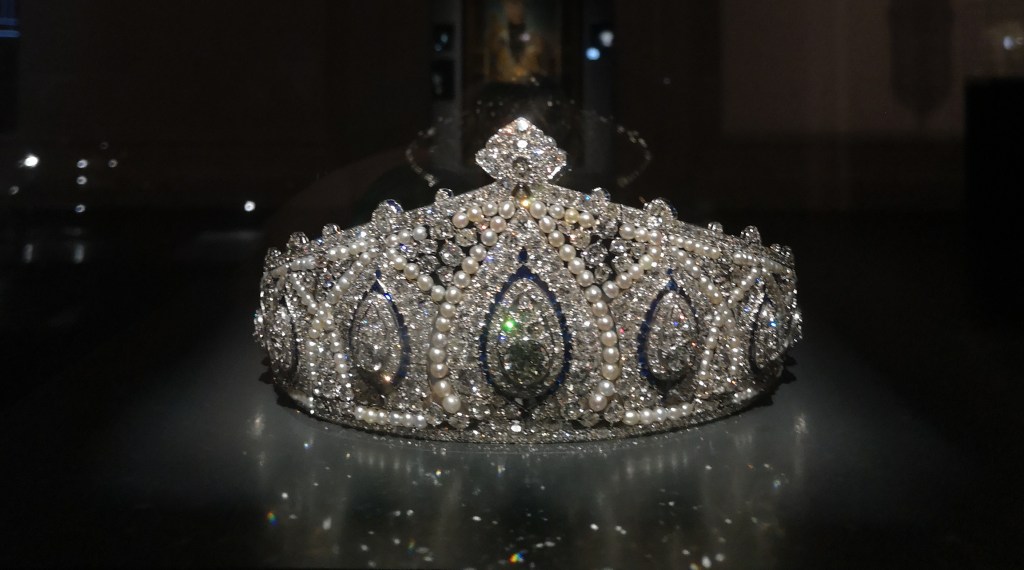
    In the first place, it is important to note the disproportion of Cartier jewels and Islamic pieces. I fully appreciate the fact that this is a Cartier exhibition, with many pieces coming from the private Cartier collection, but I do believe more Islamic pieces would have brought more clarity. Showing only one Mamluk wood panel carved with 8 pointed stars seems like a missed opportunity. Some choices also seem odd, though commendable, mainly for the lack of justification, which left the visitor to read between the line. For instance, the life-size portrait of Fath ‘Ali Shah Qajar, Iran’s ruler from 1797 to 1834, has been landed by the Louvre for this exhibition. The painting is installed between the tiara-aigrette reproduced above and a pearl necklace. Neither piece appear on Fath ‘Ali Shah’s portrait, which was produced almost a century earlier than the two jewels, so what is the point made, beside showing that the ruler was dripping in pearls? Another example is the first room of the exhibition, titled “A Persian taste”, in which the very first object is a Mamluk glass lamp.
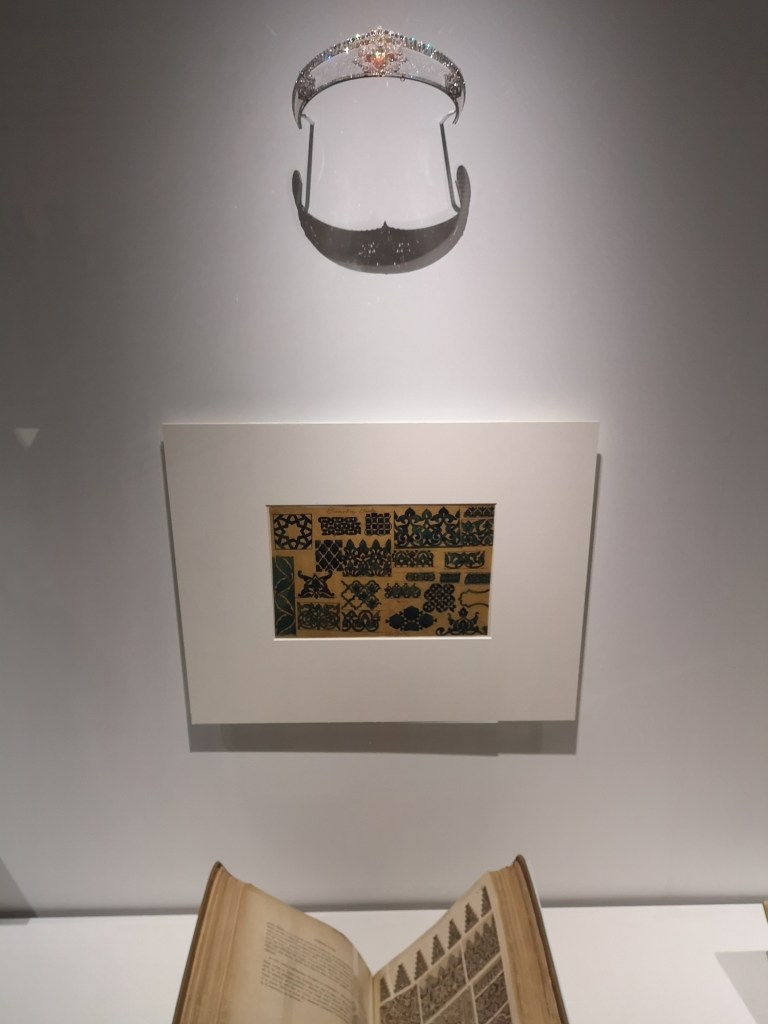
    Two direct inspiration sources for Cartier

    Here lies my main issue with the exhibition: the absence of nuance. The entire display seemed like a juxtaposition of pieces that share common patterns. This is fair, the ambition is clearly stated in the title, however it would have been beneficial to push the analysis further. The “Islamic” patterns presented to the viewers are just there, with no explanation on where they come from, how they were developed, what is their function and what is their meaning. All these motives are transposed to Cartier jewels without much critical analysis. The first two or three rooms attempt to contextualise the passion of aristocratic Europe for Islamic arts and the taxonomical effort of ornamentalists and travellers, but it remains unclear what those ornament books are used for, beside for Cartier creations, and what is the real impact on the knowledge of Islamic arts and cultures in Europe. The beginning of the 20th century is an important moment in Islamic arts history in Europe, which the exhibition recognises by mentioning Gaston Migeon, but the explanations are not sufficient for a non-specialist to really connect the dot. They will have to buy the catalogue to understand.

    What have I learned?
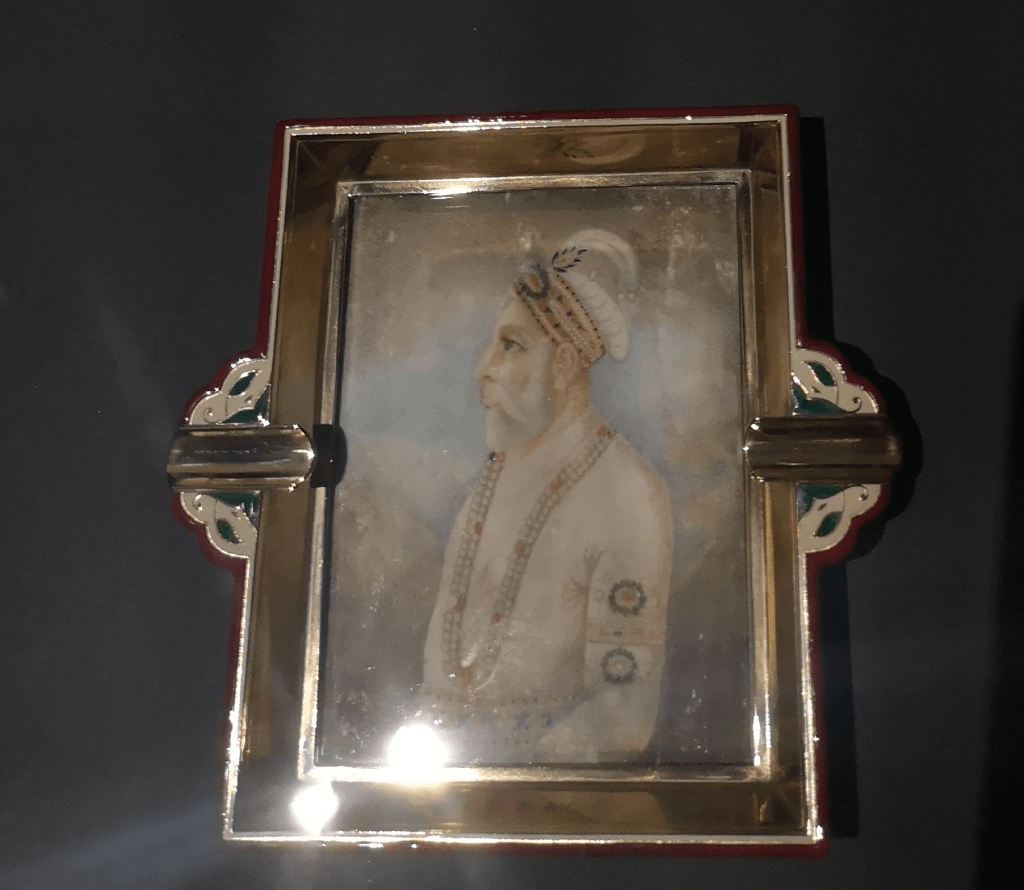
    A Mughal emperor (?) as an ashtray, refined

    At the end of each exhibition, I always ask myself this question: what have I learned that I didn’t know before? In other words, what was the point of the exhibition? With Cartier et les arts de l’Islam, I learned about the history of the maison Cartier that I didn’t know, and I learned that between the end of the 19th century and the 1940’s, the house created luxury items inspired by or copied from Islamic arts. One could say mission accomplished, but I can’t help feeling like something is missing, and I remember leaving with a slight feeling of frustration. Maybe was it the overall darkness, the too minimalistic display for the main part, or the confusing museography, or maybe am I just tired to see Islamic arts presented like a block of objects out of time and out of space, mixing together Timurid architectural tiles and Mughal paintings, minbar carved panels and Iznik beer-mugs. Cartier used bits of Islamic arts indifferently, and this is how Islamic arts are presented in the exhibition, interchangeable, anonymous and confusing.

    In conclusion, the exhibition treats Islamic arts exactly like Cartier did: a collection of pretty things that can be extracted from history and reused to make more pretty things.

  • Happy New Year 2022 !

    Happy New Year 2022 !

    Time flies when you’re having fun… And when you’re stuck at home, apparently. 2021 went like a dream in sweatpants, or like a bad sequel to 2020, which was already not that great.

    Luckily, 2021 has also been the year of new encounters, collaborations and initiatives, and overall has been a busy year. Two highlights of the year were my participation to the symposium “Eighteenth-century Persianate Albums Made in India: Audiences – Artists – Patrons and Collectors” in Berlin, during which I had the opportunity to talk about floral margins in 18th century Indian albums. The proceedings will be published this year or the next.
    The second highlight was the launch of the ART Informant podcast at the end of the year, of which three episodes are already out. I debated whether to start this project for a while, as this format did not exist in the fields of Islamic art history, conservation and market. In the end, I am glad I got passed my doubts, as the feedback of the audience and guests have been particularly positive. For this, I thank you all.

    What to look for in 2022

    In 2022, I want to continue growing the ART Informant community and reach out to a larger audience. There are a lot of fantastic scholars, curators, conservators, collectors, experts and merchants I want to invite, let’s hope they’ll all say yes.
    The content I offer via the website and the podcast represent a significant investment, and even though I do this with passion, the realities of the world remind themselves to me. For this reason, I am introducing a Paypal donation button on the site. If you like the content I offer and want to support the site and the podcast, please consider donating. Your donations will help me in growing the platforms and eventually offer more diversified content.

    [paypal-donation]

    I will attend London spring Islamic week, should covid let me. Last time I was able to attend was in 2019, so I’m particularly excited to meet experts and collectors, and to offer new content on the website and the podcast related to the event.

    Hopefully, I will publish two papers, or at least get them accepted for publication. Because I’ve been short on time since I got my PhD in December 2015, I haven’t been able to publish my doctoral dissertation. This is still a project, but to do so I will need uninterrupted time, which your donations might be able to get me. In the meantime, I spread information in shorter bursts, such as the paper I published in The Journal of Islamic Manuscripts last year, on “Patronage and Productions of Paintings and Albums in 18th-Century Awadh“.

    On a more personal note, I am aiming to finish my Diploma in Art Law offered by the Institute of Art and Law in London. I would also come back to teaching art history, which I miss dearly, and will start to look for opportunities to do so.

    Rendezvous in December 2022 to see if all the above have been accomplished!

    I wish you all a fantastic year, hoping the journey will be filled with success, joy and surprises.

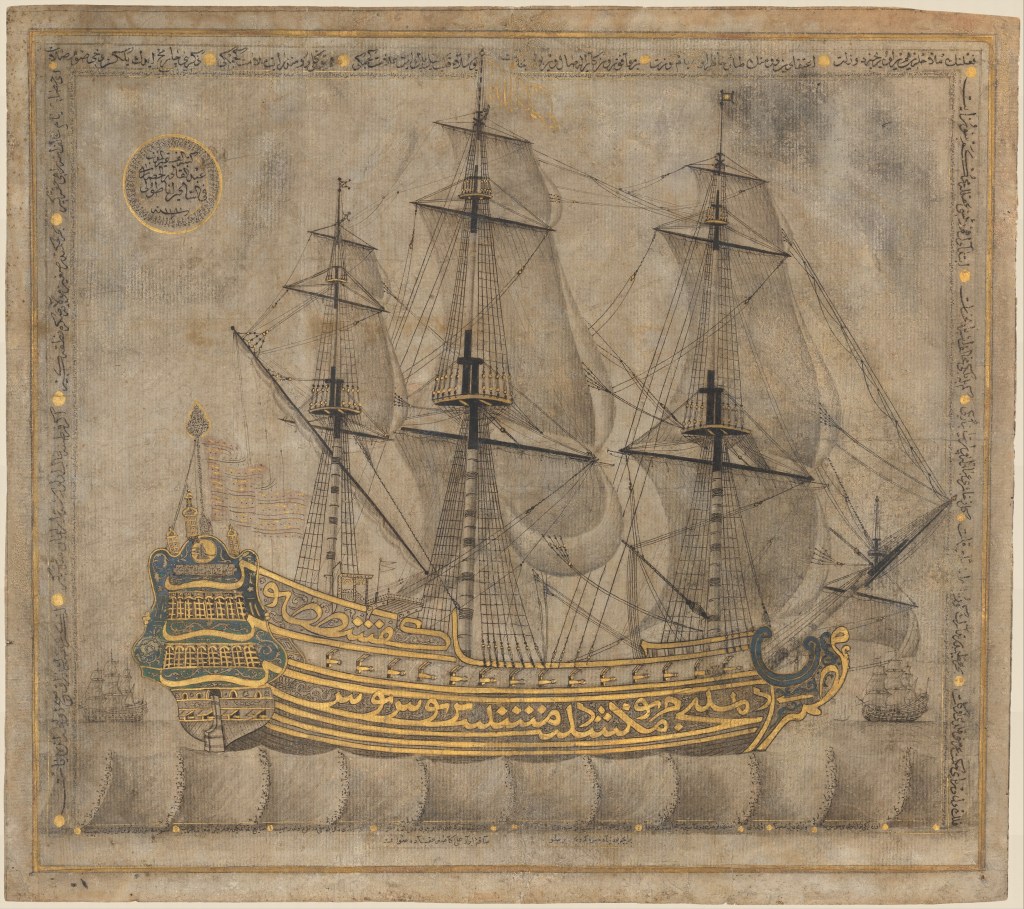
     ‘Abd al-Qadir Hisari, Calligraphic Galleon, A.H. 1180/ A.D. 1766–67, Turkey (MET 2003.241)
  • Islamic Week, Autumn 2021 or An Unexpected Number of Bats

    Islamic Week, Autumn 2021 or An Unexpected Number of Bats

    I admit it, this title might be a bit dramatic, but it is still an accurate depiction of the upcoming Islamic week, as, yes, there are bats.

    This year, Bonhams opens on the 25th October with a large catalogue of 342 lots, more than double since last Spring auction;
    Roseberys presents on the next day with a head-turning catalogue of 557 lots, though not all are Islamic. Going through the selection is not easy, as there is such a thing as too much of a good thing, especially when the internal organisation of the catalogue makes no sense and the online navigation only allows keyword searches. That being said, a large part of Oliver Hoare’s collection is offered for sale and kept as a cohesive whole within the catalogue.1
    Sotheby’s holds two auctions on the 27th, in the morning with 29 Company School paintings, in the afternoon with 184 lots, including three going over the million.
    Christie’s presents a single catalogue of 207 lots on the 28th. Only one item goes over one million, and the catalogue gives the impression that the auction house has struggled to get a high-quality selection. There are still some pretty amazing and unpublished artefacts, so all is not lost.
    Finally, Chiswick closes the week on the 29th with two catalogues, a single-owner sale of 162 lots in the morning entirely dedicated to 19th and early 20th Qajar Iran, and a larger catalogue of 236 lots in the afternoon.

    All previous auction results include premium.
    You can click on any image below to get to the corresponding catalogue entry.

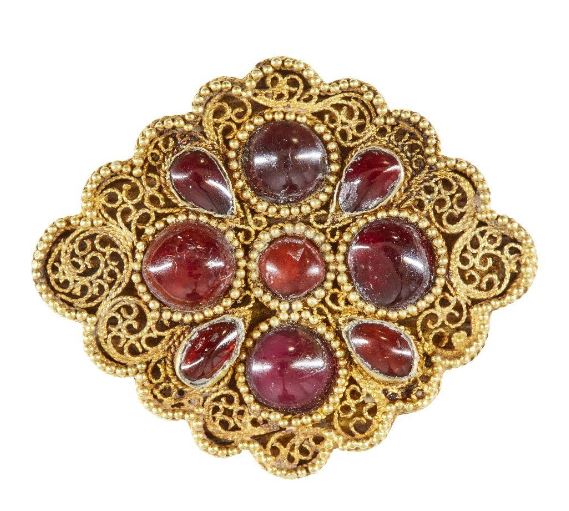
    Garnet set gold elements, Roseberys, lot 314, £6-800

    The commodity of Indian art

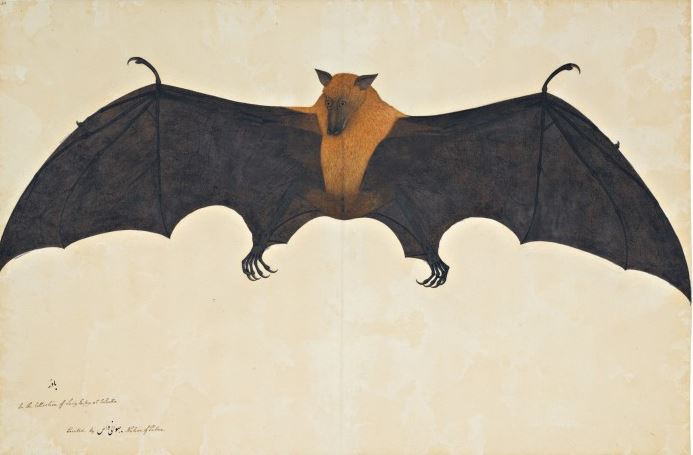
    Let’s start with the bats. Sotheby’s first auction is exclusively made of Company School paintings, coming from the collection of the New-York gallery Carlton Rochell. Prices go from £8.000-12.000 to an astonishing £300.000-400.000 for a Great Indian Fruit Bat signed Bhawani Das, produced for Sir and Lady Impey. Elijah Impey was Chief Justice of Bengal from 1774 to 1787 and settled in Calcutta with his wife Mary, where they took a particular interest in hiring local artists to depict Indian natural history. They are today the most famous patrons of “Company School” painting, reflected here in the price of Sotheby’s bat. The flying fox was already famous on the market, having most recently been sold for £458.500 at Bonhams in 2014, before that for £168.500 at Christie’s in 2008 as part of the Niall Hobhouse Collection sale.

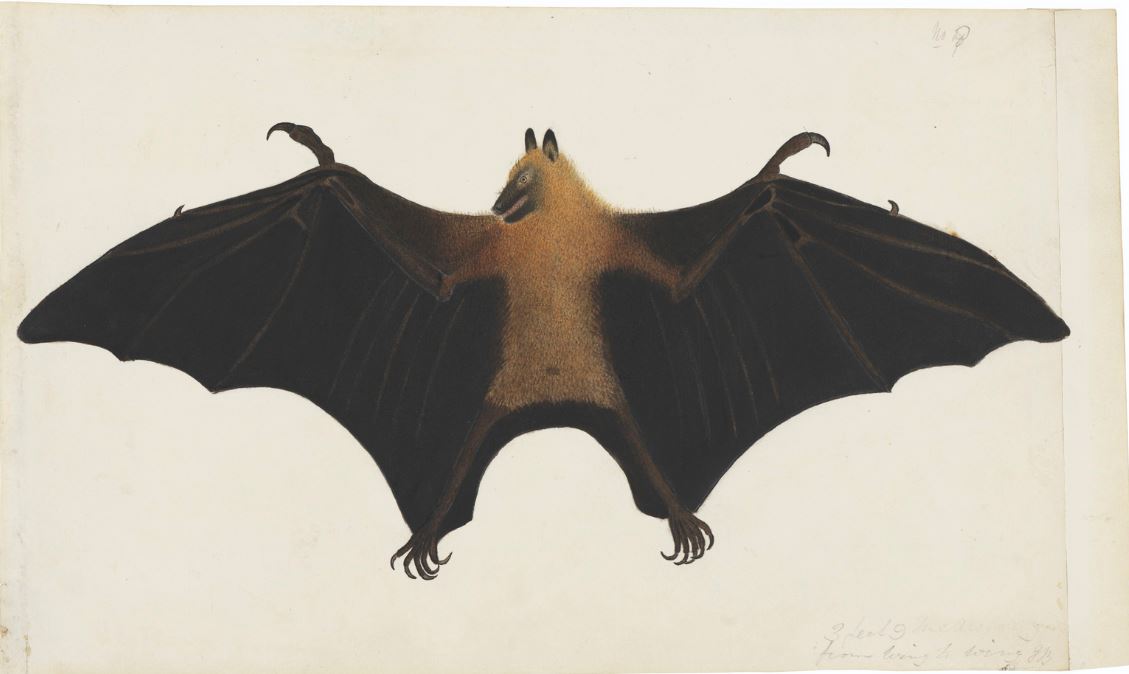
    The second flying fox, presented at Christie’s for £20.000-30.000, appears a bit pale in comparison to the first one. Unsigned, it lacks the endearing realism that characterises Sotheby’s bat. As well, the catalogue only mentions one previous provenance and nothing prior to 2018.

    Company School paintings haven’t moved crowds in a few years, and estimations rarely exceed £40.000. Sotheby’s is taking a risk by presenting a catalogue exclusively composed of Company School paintings, hence the clever marketing, betting on a foreword of William Dalrymple, famous author and curator of the exhibition Forgotten Masters: Indian Painting for the East India Company, held at The Wallace Collection in 2019-2020. It will be interested to see if the announcement effect bring new buyers, but we can at least expect the Flying Fox to do well.

    Sotheby’s details the provenance of most of the paintings, which is always laudable, but was not particularly difficult in this case, the majority having been sold in the past 10 years on the London market, either in public auctions or in galleries such as Simon Ray and Francesca Galloway. Stuck in the close loop of increasing values, this leads to suspect that Sotheby’s Bat and Crimson Horned Pheasant are not collected for their artistic merits, but instead the safety their investment represents. It would be naive to think this is not the case for other, even any, high-value artefacts, but this is particularly obvious in this case.

    What is also obvious in this auction, is the unofficial agreement between Sotheby’s and Carlton Rochell. Browsing through the afternoon auction catalogue, many Indian paintings rang a bell. With reason, as they were published not long ago in Carlton Rochell’s 2020 and 2021 catalogue, for instance lots 141, 146 and 147 (as I’m finishing this article, Carlton Rochell’s website has been down for two days, and I didn’t get the chance to download the catalogues to compare with Sotheby’s any further. The site was working on the 5th October when I started writing. As we say in French, mystère et boule de gomme).

    Indian glasses?

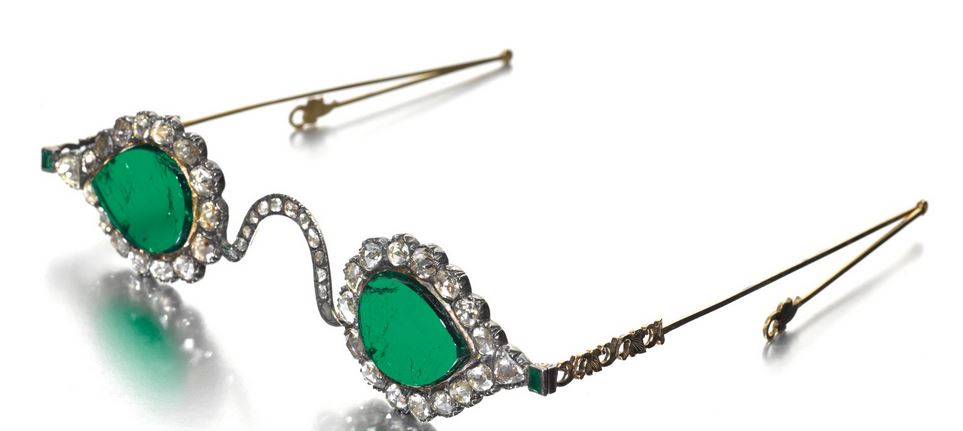
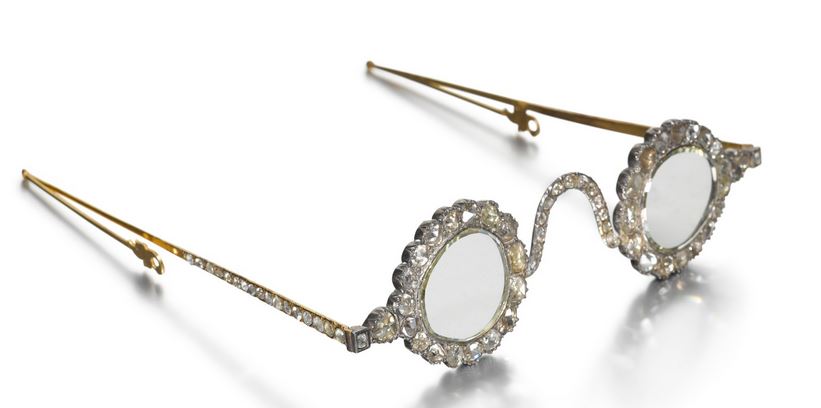
    Moving from bats to elephants (the ones in the room), Sotheby’s presents two pairs of 19th century spectacles set with emerald and diamond lenses, each valued at £1.500-2.500.000. I am not a lapidary specialist, so my opinion is solely based on the catalogue, and let’s say I’m confused by these objects. The emeralds originate from a mine in Colombia discovered in 1560, and it is stated in the text that large quantities of emeralds were subsequently acquired by the Mughals. This seems to contradict the fact that emerald deposits can be found in Afghanistan and India. The diamonds “most probably” came from Golconda, but this is not confirmed. Aside from the stone’s origins, the main issue is that the frames are described as European. Indian stone-setting techniques are mentioned in the text, but it is specified that “they incorporate a European ‘open claw’ design”. Examples of figurative paintings showing Pince-nez glasses are also given, such as a portrait of Aurangzeb2, but these spectacles are not pince-nez. The valuation is probably justified by the stones, but the catalogue is extremely misleading, as these beautiful spectacles might very well not be Indian at all. Golconda diamonds and Colombian emeralds on a European frame raise a lot of questions, but I let the reader forms their own opinion.

    Metalwork in the Place of Honour

    The debatable spectacles are not Sotheby’s high-value lots, the first place goes to a gold and silver inlaid brass candlestick attributed to Mosul circa 1275, offered for £2-3.000.000. Previously sold in Paris in 2003 for a price I was unfortunately not able to retrieve, it was exhibited in the MET from 2017 to 2021. The inscriptions do not give any information on the production context, but the subtle iconography suggests a court commission.

    Mosul brass candlestick Sotheby’s lot 170, £2-3.000.000

    The same way, Christie’s second-biggest lot is an elegant brass ewer attributed to the Khorassan region c. 1200-1210, valued at £ 300-500.000. Bonhams presents a few early bronzes, including a horse-shaped censer. The piece had previously been presented by Christie’s in 2006 as Byzantine and sold for €20.050, but is rebranded here as Umayyad and valued at £100-120.000. The line between Byzantine and Umayyad is often so thin, deciding on one over the other becomes a marketing question. Early Islamic usually sells better than late Byzantine, but it also involves more risks. Clearly, Bonhams feels confident enough to give a 6 figures’ valuation.

    Umayyad bronze burner, Bonham’s lot 23, £100-120.000

    Not to be outdone, Roseberys and Chiswick offer a large selection of metalworks. Roseberys presents 12 lots composed of gold elements set with garnets and two similar rings, attributed to 12th century Iran and valued between £2-300 and £2-4.000 (lots 309-320). My guess would be that the gold elements come from two different ensembles, but the 10 pieces would deserve to remain together.
    From what I could see (again, navigation is really uneasy), their most expensive metal artefact is a 12th century Seljuq bronze incense burner in the shape of a bird, valued £20-30.000. It is close to another burner in the MET, though Roseberys’ is better preserved.

    My personal favourite presented at Chiswick is an engraved brass casket attributed to 12th century Sicily with later modifications, offered for £4-6.000. The complex history of the Sicily kingdom makes attributions particularly tricky, and art market professionals tend to stay away from the region, complex to brand and sell. It will then be particularly interesting to see if buyers are willing to invest.

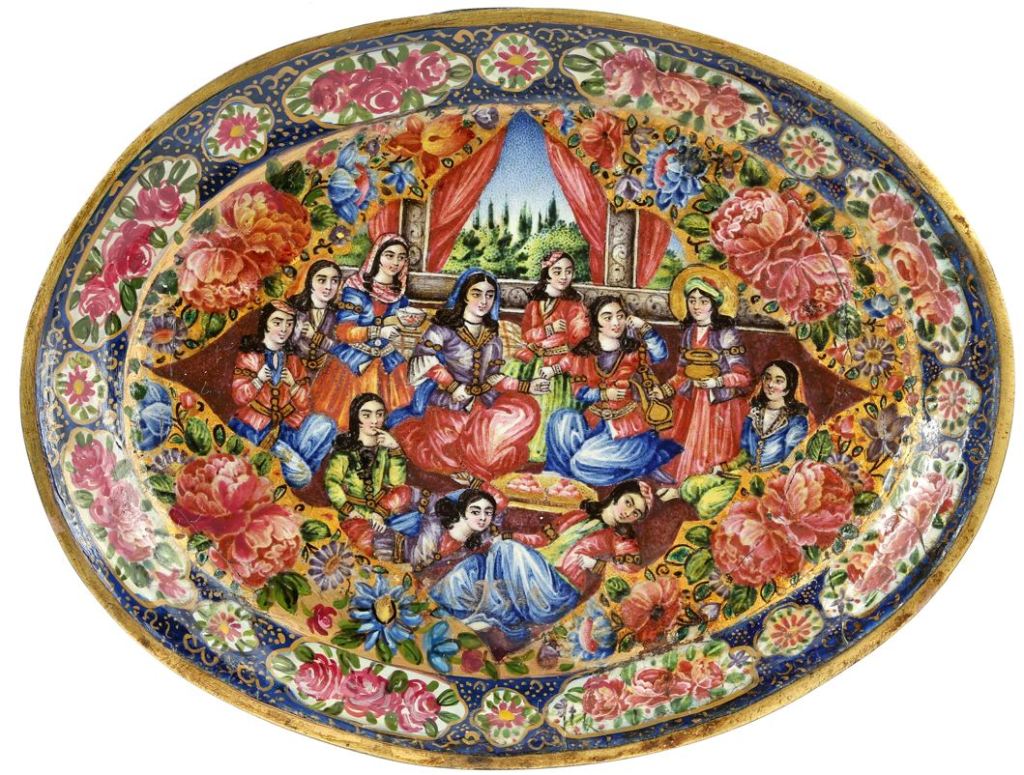
    Qajar enamelled copper, Chiswick, lot 201, £6-800

    Historical Figures, Historical Manuscripts

    Chiswick main attraction in their afternoon auction is a group of 11 ivory figures depicting the Maharaja Ranjit Singh and his court, probably produced in Delhi in the first half of the 19th century. The central figure is identifiable, which is quite rare for this type of artefacts, but not unique in the case of Maharaja Ranjit Singh, as demonstrated by another ivory figure in the Victoria and Albert museum. The identification and the overall quality of the ensemble easily justifies the valuation at £25-30.000. To be noted that a second group of ivory figures is presented by Chiswick in the same auction, 13 anonymous palanquin bearers and attendants, valued only £6-800.

    The same way, Bonhams most valuable artefact is a gold-koftgari steel repeating flintlock from the personal armoury of Tipu Sultan, signed by Sayyid Dawud and dated 1785-86. The provenance is no less prestigious, the weapon was acquired by Major Thomas Hart of the East India Company, following the siege of Seringapatam, and kept in the family until March 2019. I would not be surprised if a museum decided to acquire this piece, while Bonhams continues to establish their authority on historical artefacts.

    Portrait of Sultan Orhan, Christie’s lot 76, £800-1.200.000

    Christie’s is betting big on historical figures this season, with their highest valued lot being six portraits of Ottoman sultans produced in Venice around 1600 for the Grand Vizier Sokollu Mehmed Pasha. The ensemble is very interesting, both for its historical value, but also for the inherent dynamism and quality of each portrait. It seems risky to put European paintings as showrunner of an Islamic art auction, but I believe these will do well.

    My favourite item of this entire Islamic Week is a Qur’an produced in Sultanate India, both signed and dated 838/1435, which is extremely rare. Offered by Christie’s for £30-50.000, the valuation doesn’t seem to fit the quality of the manuscript. That being said, Sultanate manuscripts rarely fly, so it will be interesting to see what this one will achieve. The gorgeous illuminations are characteristic of Sultanate Qur’ans, an odd mix of Egyptian and Persian influences, interpreted through then Indian lens.3

    To finish, and speaking of rare, Sotheby’s present a complete Chinese Qur’an in 30 volumes, signed and dated 1103/1691. This is a huge event, and I hope the specialists of the field will have the opportunity to rush to London to see it before it is sold. Chinese Qur’ans are almost always dismembered, juz being sold separately, while dates and signatures are art history unicorns. The manuscript is sold without provenance, which is highly problematic, and I sincerely hope Christie’s will open their archive to scholars (which they usually do).

    So much more could be said about this Islamic week, but I’ll stop there before rewriting all the catalogues. What do you think about Bonhams, Roseberys, Sotheby’s, Christie’s and Chiswick selections? Please share in the comments below!

    Complete Chinese Qur’an, Sotheby’s, lot 119, £40-60.000
    1. Oliver Hoare (1945-2018) was an influential Islamic art dealer, to whom we owe the creation of the first Islamic art department at Christie’s. More info on his Wikipedia page.
    2. Museum für Islamische Kunst, Berlin, inv. I4594 fol.5.
    3. The lot essay finally quotes Pr Brac de la Perriere’s work, one of the few specialists of Sultanate India and who has been mostly ignored in previous auctions. It was about time!
  • Auction Catalogues and Reattribution: a Difficult Exercise

    Auction Catalogues and Reattribution: a Difficult Exercise

    All Islamic Art Historians working on large set of material data will tell you the same, spending hours going through auction catalogues to find the forgotten gem is part of the job. Writing my doctoral dissertation of Indian and Persian flower paintings produced between the 16th and the 18th centuries, I dissected countless of catalogues from the 60’s to recent days, hoping to find the long-lost twin of Mansur’s Tulip (which I didn’t). What I found, however, was a lot of questionable attributions, dating, and deeply cut corners.

    This is not the case for all auction catalogues and some houses take very seriously their responsibility to publish accurate analysis of Islamic artefacts, especially for the most prestigious auction lots, but it is common practice to put objects in artificial categories and call it a day. These categories are usually based on one distinctive feature, whether it is a chronological marker such as a ruling dynasty (i.e. Safavid Iran), a city or production centre, loosely attached to chronological range (i.e. Iznik or Kashan), or more rarely another artefact (i.e. The St Petersburg Muraqqa’). Integral part of the catalogue entries, these categories provide an immediate reference to the seasoned reader, but they also constitute a selling argument.

    Some productions are indeed more valued than others, depending on market trends. Earlier this year, I had the opportunity to produce an expertise for a client who was interested in acquiring an archaeological artefact that raised the difficulty of re-attribution.

    Abbasid, Early Islamic, Sasanian: Close Call…

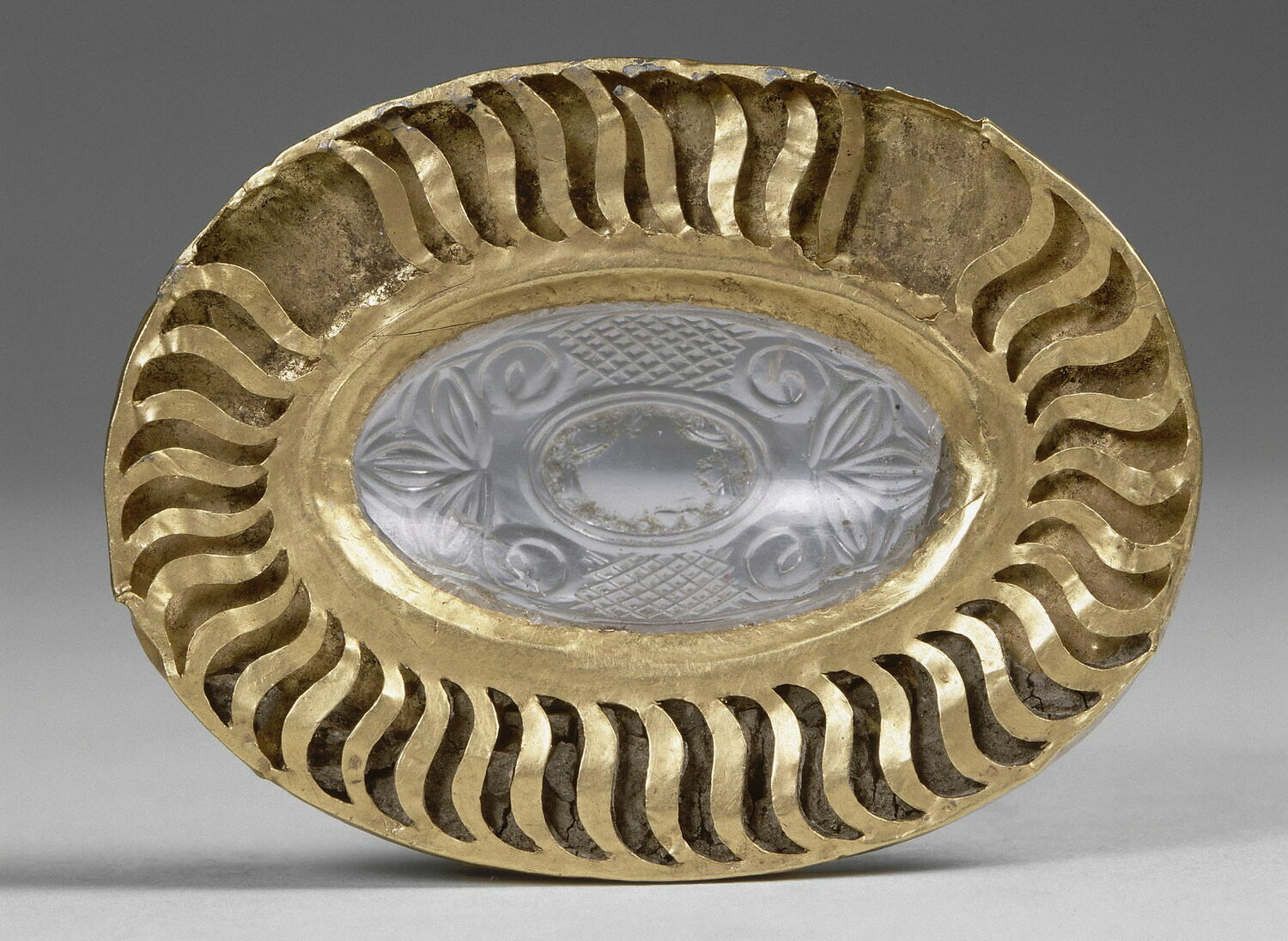
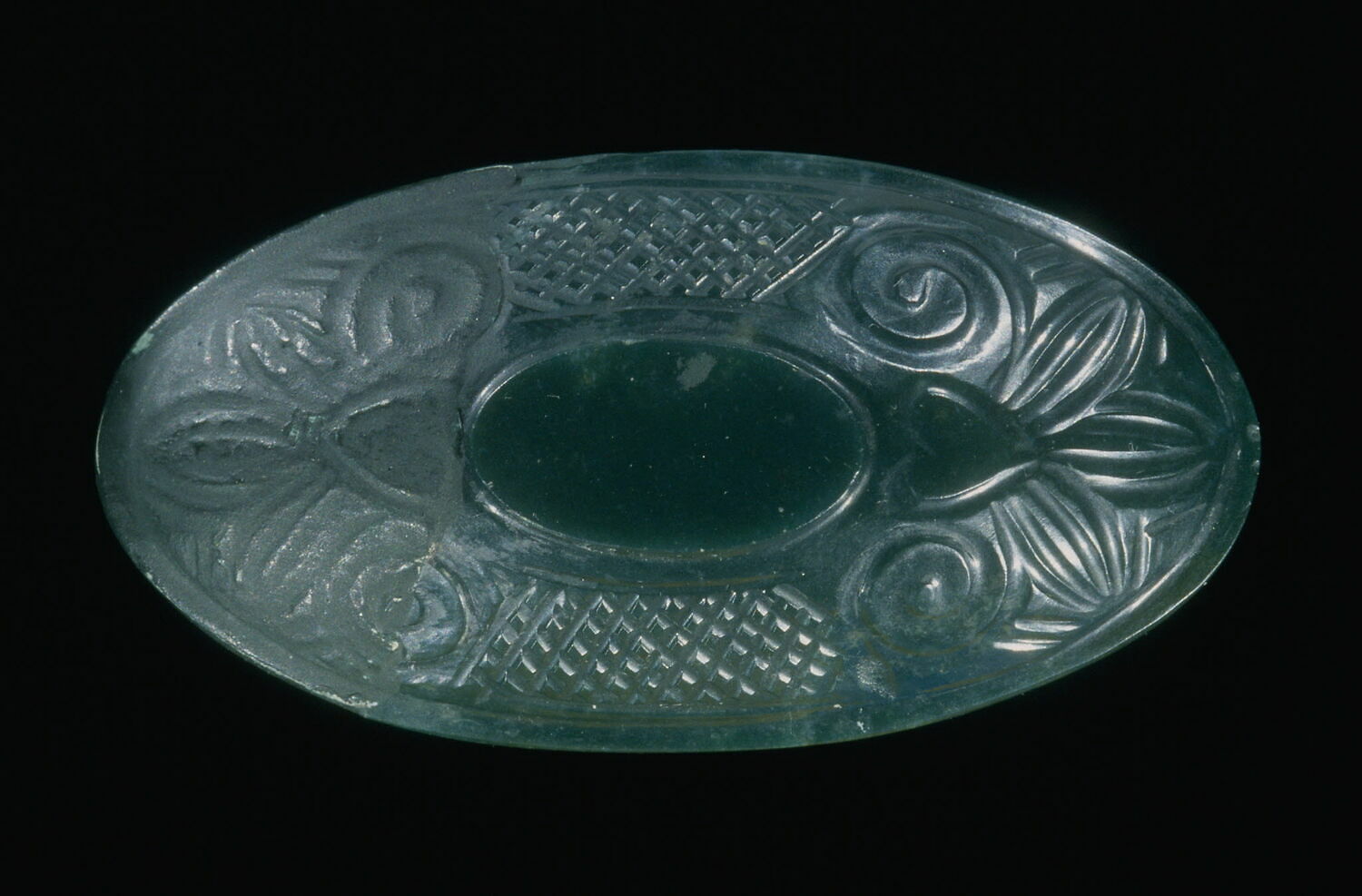
    The objects was an elliptical dish on low foot, flared belly and flattened rim, carved in a single piece of rock crystal. The outside body was cut in a symmetrical composition based on two repeating patterns of a palmette of three main double leaves and two smalls at the base, flanked by long looping stamen and a centric pattern repeating on the long sides. The centre of the dish was marked by a double line forming a medallion. The rim was cross-hatched apart from both ends, highlighted by a symmetrical pattern based on repeating lines.

    The object had been sold previously as Abbasid (750-1258). Based on the pictures I first received, it was my immediate opinion that the piece was not Abbasid, as its shape and ornementation had no equivalent in known objects and architectural decoration from this period. The other clue was the proximity of this piece with two others kept in the Louvre, discovered in the archaeological settlements of Susa.

    Archaeological excavations of Susa, spanning from 1851 till 1979 and led by several teams of mostly French nationality, had focused first and foremost on Ancient and Imperial periods up to the Achaemenid dynasty, destroying upper layers in the process. For this reason, the line between late Sasanian and Early Islamic settlements is today blurry and it is virtually impossible to date precisely artefacts that do not bear any distinctive features (such as Arabic inscriptions).

    Stucco relief fragment, Ctesiphon, Iraq, Sasanian, 6th c. MET (32.150.10)

    Individual patterns and the overall shape of the piece led me to suspect the piece had nothing to do with Abbasid productions, even in Susa, but could be linked to late Sasanian productions. For instance, the three-leaves palmettes that occupy each sides of the dish, find numerous equivalences in Sassanian repertoire. Palmettes are extremely common in late Antiquity and in Islamic arts, but the structure of these patterns is specific enough to be used as a point of comparison: three leaves doubled in their centre, two additional leaves at the base in the shape of a crude heart, flanked by symmetrical loops. It appears in stucco decoration found in Ctesiphon, the Sasanian capital, as well as Susa in the late Sasanian/ Early Islamic layers.

    The same way, the elliptical shape of the dish is a commonplace of late Sasanian art.1 Either elliptical or boat-shaped, with or without a foot, these dishes are associate to wine-drinking and can be ornamented lavishly.

    Walters Art Museum, Baltimore (57.625)

    Though archaeological layers haven’t been preserved, Sasanian occupation of Susa is well documented in primary sources2, revealing that the city was conquered in the 3rd century and rebuilt into a vibrant economic trade centre with Mesopotamia and Fārs. The artefacts found on site, including the two Louvre dishes, suggest that rich merchants were installed in the city. It then declined under the last Sasanian rulers but continued to inhabited under the Umayyad and Abbasid, before being progressively abandoned.

    …Or Easy Way Out?

    Attributions to particular productions and chronological eras tend to be passed down from dealer to dealer, as if the first publication was the unalterable authority. Because the object had been published in a previous auction catalogue as Abbasid, the attribution was acted, and going against it without any new archaeological evidence would be a challenge. Intellectual honesty aside, reattributing the piece to what I think is its correct production context, or at least questioning the status quo, have a significant impact of the valuation.

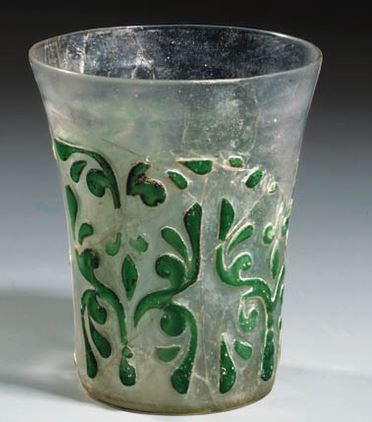
    Glass fragmentary beaker, attributed to Samarra, 9-10 c. Christie’s 11/04/2000, lot 288

    Sasanian and post-Sasanian3 are rare on the market and do not easily find buyer, apart from silver wine-boats with exceptional decoration. The productions are not particularly well studied and raise questions of dating and authenticity. In comparison, glass or rock-crystal objects identified as Abbasid have a lot more chances to reach high prices, sometimes despite questionable attributions. In consequence, it is a safer bet for auction houses and art dealers to put an object as Abbasid. The dynasty lasted more than 500 years and covered a massive territory, so even if doubts remain, attributions do not raise too many eyebrows.

    In truth, attributions to Sasanian, post-Sasanian, Omayyad or Abbasid remain speculative. Certainty is rare in early Islamic arts history, but rethinking the importance of attributing unmarked object and opening the door to doubt would constitute a healthier alternative to catalogues too prescriptive. These might leave interested buyers or potential sellers disappointed, should new information arrise that would render the original attribution obsolete.
    Whether it was the doubt caused my analysis or the price given by the dealer that changed the buyer’s mind regarding the acquisition, I will not know, but finding the right words to question established historiography was certainly a challenge!

    1. A. S. Melikian-Chirvani, “From the Royal Boat to the Beggar’s bowl”, Islamic Art IV, New York, 1992.
    2. See G. Gropp, “Susa v. The Sasanian Period”, Encyclopædia Iranica, online edition, 2005 and associated bibliography.
    3. The term “Post-Sasanian” is attributed to artefacts that cannot be attributed to either Sasanian or early Islamic productions with absolute certainty. It usually encompasses objects linked to Zoroastrianism but found is Islamic occupation layers on archaeological sites, or to objects that more vaguely look Sasanian but cause sufficient doubts.