Tag: art market

  • Top 20 of the Most Expensive Islamic Art Pieces – part 1 (blog)

    Top 20 of the Most Expensive Islamic Art Pieces – part 1 (blog)

    With Summer fast approaching, I thought it would be the perfect time for some light reading to enjoy wherever you’re vacationing, and nothing get lighter than a list of top historical artefacts sold for outrageous amounts.

    Three caveats before starting:

    1. I decided to divide this top 20 in two, it was too long otherwise;
    2. The list only goes back to 2010, mainly for access ease, but also because prices have exploded in the past few years and going back further is not necessarily relevant;
    3. I purposefully left the auction “Maharajas & Mughal Magnificence” out of this list, otherwise most of it would have been composed of objects sold there, and some being debatable as their “Islamic” categorisation. For those who wouldn’t remember, this auction was held at Christie’s New York in June 2019 and was composed of jewelled pieces, gems and paintings from the Al-Thani collection. The most expensive lot, a Cartier devant-de-corsage brooch, was sold for $10,603,500, which would put it in second place of the list after conversion. I wrote about the results of this auction back in the days.

    As mentioned, the reader will quickly notice the dates of the record auctions: most of them occurred between the end of 2018 and 2023. This truly shows how London market has drastically changed in the past few years, with prices increasing rapidly. As Dr Hiba Abid was telling in the episode of the ART Informant podcast, this is an issue for institutions that cannot rely on London’s market to expand their collection. However, this is a question for another day, as we are keeping the content light, so let’s jump into the first part Top20! In true internet fashion, we’ll start with the last.

    All prices include premium. Click on the auction date and estimate to access the catalogue notice.

    20 – £1,854,200: A Mamluk Carpet, probably Cairo, end of 15th c./ early 16th c.

    Sotheby’s, 27 October 2020, lot 448: £400,000 – 600,000

    This list starts with a very rare piece on the art market. Probably made in Egypt in a production context that remains to be precisely defined, these carpets were widely popular in 15th and 16th centuries European markets, especially around the Mediterranean sea where several were found in ports such as Venice and Genoa. In 2018, the blog “rugtracker” posted an in-depth article on Mamluk carpets; their popularity in Europe and their representation in Renaissance painting: you can read it here (it’s very good and full of images). These rugs are usually identifiable by their decoration, usually based on kaleidoscopic repetition of small motifs, central medallions, and their limited colour range dominated by brick-red. This particular carpet is a prime example of the production but according to the catalogue, it appears to be the only square carpet with a lobed medallion in its centre, usually this motif is applied to oblong pieces. Buyer’s enthusiasm for this rare piece can easily be understood, which is not necessarily the case for all the artefacts on this list!
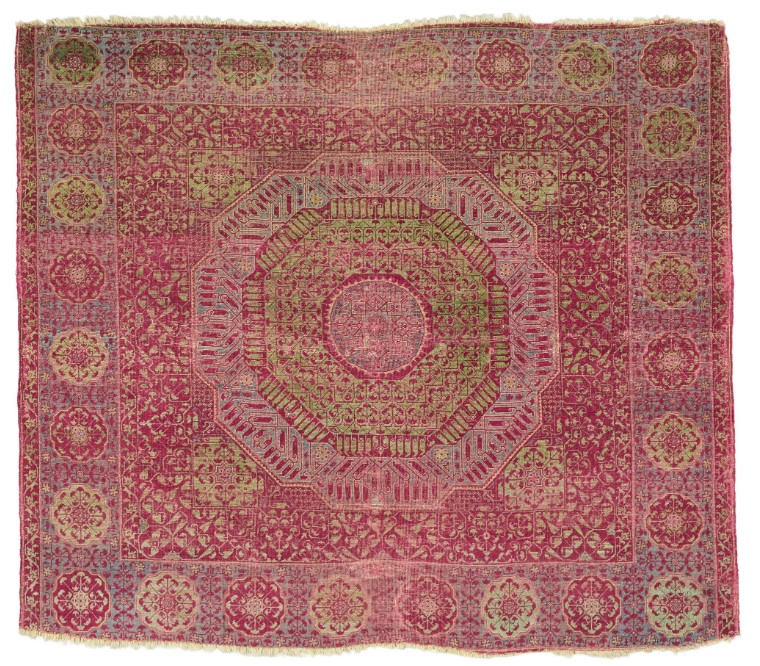
    Mamluk carpet, Sotheby’s 27.10.20, 448

    19 – £1,855,000: A Gold Finial from the Throne of Tipu Sultan, c. 1800

    Christie’s, 27 April 2023, lot 84: £300,000 – 500,000

    If you don’t know who Tipu Sultan was, let me quickly introduce him, as you will see his name several times in that list (and you can be grateful it is only a top 20). Known as “the tiger of Mysore”, he was the ruler of the kingdom of Mysore from 1782 to 1799 (roughly the southern half of India at its largest). His reign is marked by conflicts with his neighbours, but mainly with the British East India Company, whom he fought all his life, sending emissaries to Ottoman Turkey, Afghanistan and France to gather forces against them. Ultimately, his efforts to limit the progression of the British in India were a failure, and he died in 1799 when British armies invaded the capital city. He was such a fierce opponent to the crown that his death was declared a national holiday in Britain, and the obsession for the man has continued ever since. This golden and gem-inlaid tiger head was part of the Al-Thani collection, which bought it at Bonhams in 2013 for £389,600. It was offered in New York in 2019 for $500,000-700,000 and remained unsold, until this year when it was valued roughly the same after conversion, this time achieving nearly 2 millions. This head was probably taken from the throne right after the death of the ruler and brought to England as a souvenir for Thomas Wallace (1763-1843), who was part of the Board of Control overseeing the activities of the East India Company. As we will see, a lot of Tipu’s memorabilia was taken from the palace immediately after his demise and passed to British collections, adding provenance to famous history.
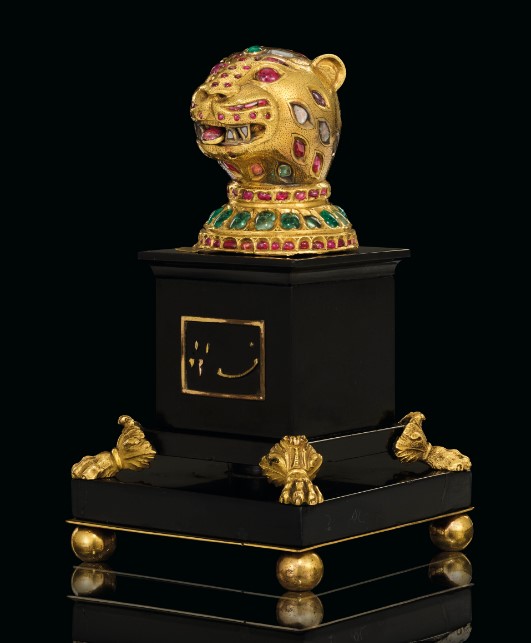
    Tipu Sultan throne finial, Christie’s 27.04.23, 84

    18 – 2,062,500: A Safavid silk and metal-thread “Polonaise” Carpet, first half of the 17th century

    Christie’s, 1 April 2021, lot 129: £1,500,000 – 2,000,000

    Polonaise carpets are normally quite rare on the market so they usually do quite well, as we will see in this list. The production of these carpets have little to do with Poland and everything to do with the Safavid ruler Shah ‘Abbas I (r. 1587-1629). After moving the capital to Isfahan in 1598, he launched a big campaign to modernise Persia textile industry, and used the Armenian community freshly deported from Julfa to Isfahan to develop a solid trade network with Europe. Polonaise carpets produced at that time were often sent to Europe to either be sold, or to be gifted to royal families to illustrate the finesse of Persia’s craftsmanship. For this reason, a lot of Polonaise carpets have a very prestigious provenance, such as this one which was initially in the collection of Prince Pio Falcó in Rome. Among the particularities of this production is the decoration, often repeated nearly identically on two or more pieces. According to Christie’s catalogue, this one has an exact pair in the Palazzo del Principe in Genoa, built for Andrea Doria in 1521.
    Polonaise carpet, Christie’s 1.4.21, 129

    17 – 2,302,500: A Qajar Group Portrait, c. 1810-20

    Christie’s, 1 April 2021, lot 30: £1,000,000 – 1,500,000

    This massive painting, 2.565 x 4.42 meters, depicts twenty-four royal courtiers portrayed in three rows of eight, all standing facing left and wearing lavish robes and turbans or crowns, each figure identified. It was part of the Bonnet House Museum and Gardens in Fort Lauderdale, the summer residence of the artist and collector Frederic Clay Bartlett, and is truly unique occurrence on the recent market. It was probably made to decorate the walls of the Negarestan Palace, near Tehran, built in 1807 as a summer residence for Fath ‘Ali Shah, second ruler of the Qajar dynasty (r. 1797-1834). Christie’s bet big when offering this painting, and called upon Dr Layla S. Diba, great scholar of the period, to produce the catalogue essay. She did a phenomenal job that I will not paraphrase here, but I encourage all to have a look at it. Qajar painting is increasingly popular, however, and to my knowledge, it had never passed the million at auction. With a valuation at £1 million, this could have flopped dramatically. Instead, it made the list!
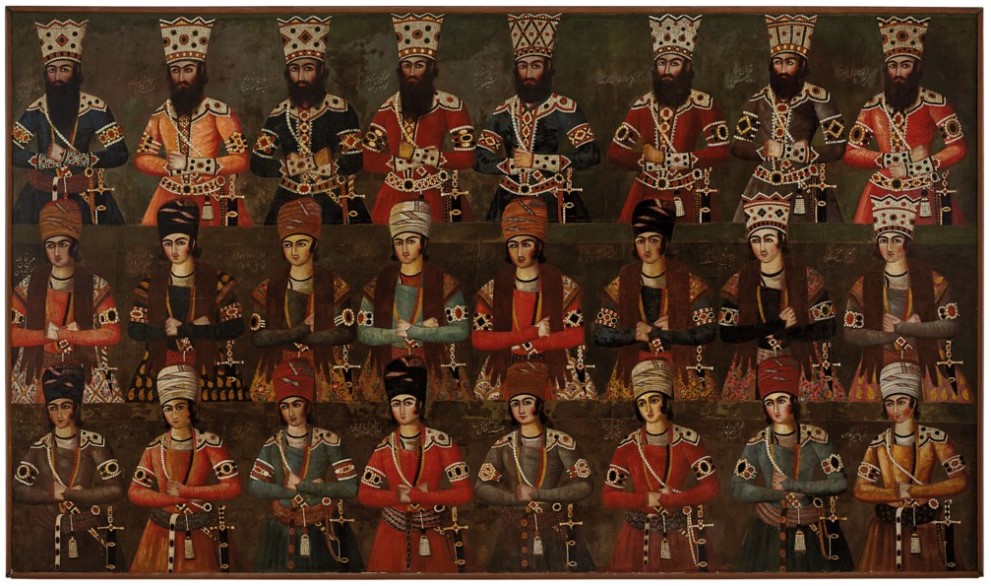
    Qajar group portrait, Christie’s 1.4.21, 30

    16 – £2,322,000: A Safavid silk and metal-thread “Polonaise” Carpet, first half of the 17th century

    Christie’s, 31 March 2022, lot 174: £1,000,000 – 1,500,000

    Christie’s seems to have a deal with owners of Polonaise carpets, as this second carpet is not the last one on the list. This one was in the collection of the Baron Adolphe Carl von Rothschild (1823-1900). Regarding the appellation “Polonaise”, it is linked to the passion of 17th century Baroque Europe for these carpets. Louis XV apparently owned 25 of them, but the Polish royal family developed a deeper fascination with Persia. As early as 1584, King Stephen Bathory (r. 1576-1586) bought 34 Persian textiles, and in 1601 a group of 8 Safavid silk and gold carpets was ordered by Sigismund Vasa III of Poland for his daughter’s wedding.1 The term itself was coined a lot later, during Paris Universal Exhibition in 1878 where examples of these carpets were exhibited in the Polish pavilions.
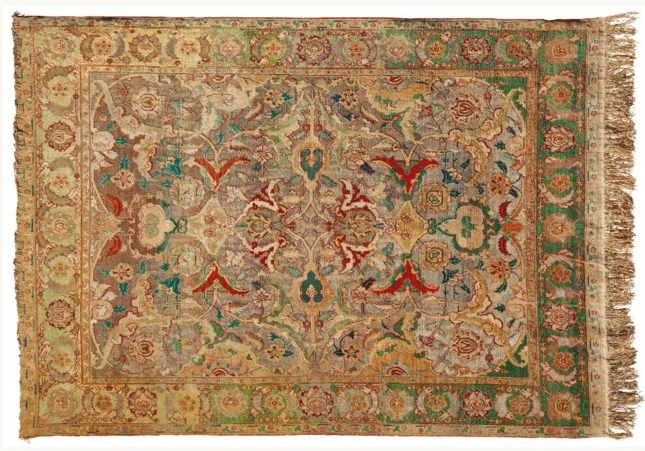
    Polonaise carpet, Christie’s 31.03.22, 174

    15 – £3,100,500: A silver-inlaid brass Basin, probably Herat, c.1200

    Sotheby’s, 31 March 2021, lot 74: £1,000,000 – 1,500,000

    This large basin of 50 cm diameter is particularly remarkable for its decoration. The twelve Zodiac signs sit in the bottom of the basin, each represented according to the iconographic codes developed in astrology literature, placed around the centre which features the planetary cycle, with Saturn in the middle, surmounted by the Sun, and clockwise – Mercury, Mars, the Moon, Jupiter and Venus.2 By itself, this piece is incredible, but when put back in the intellectual context of 12th or 13th century Persia, it becomes even more intricate and meaningful.
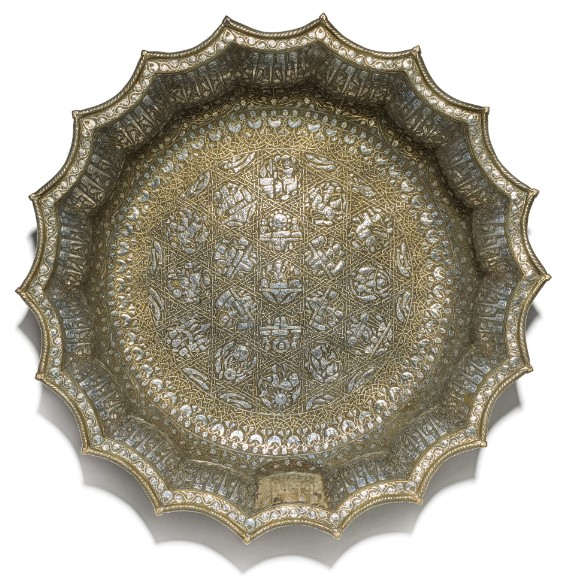
    Astrological basin, Sotheby’s 31.03.21, 74

    14 – £3,724,750: Qur’an dated 894 H./ 1489 made for the Sultan Qaytbay, Egypt

    Christie’s, 2 May 2019, lot 11: £500,000 – 800,000

    This is the only manuscript of this list, but also a head scratcher. While 14th century Mamluk Qur’ans are usually quite popular on the market and in academic historiography, the 15th century has suffered from a general lack of interest, and has fallen in an historiographical gap that is only starting to be filled. Among other things, the difference between the two centuries is linked to the change of style and, some would say, of quality, of the manuscripts produced. As noted in Christie’s catalogue, this Qur’an reflects a rapid execution, the calligraphy shows some irregularities and the illumination, nice from a distance, looks quite crude on some details (for instance the title band on picture 17 in the online catalogue: look at the layering of the reddish colour – it might be a repaint – and of the gold in the rosette underneath). The manuscript is a wonderful testimony of artistic patronage under Sultan Qaytbay, but was it worth more than £3 millions? I don’t believe so, but the market decides what the market decides.
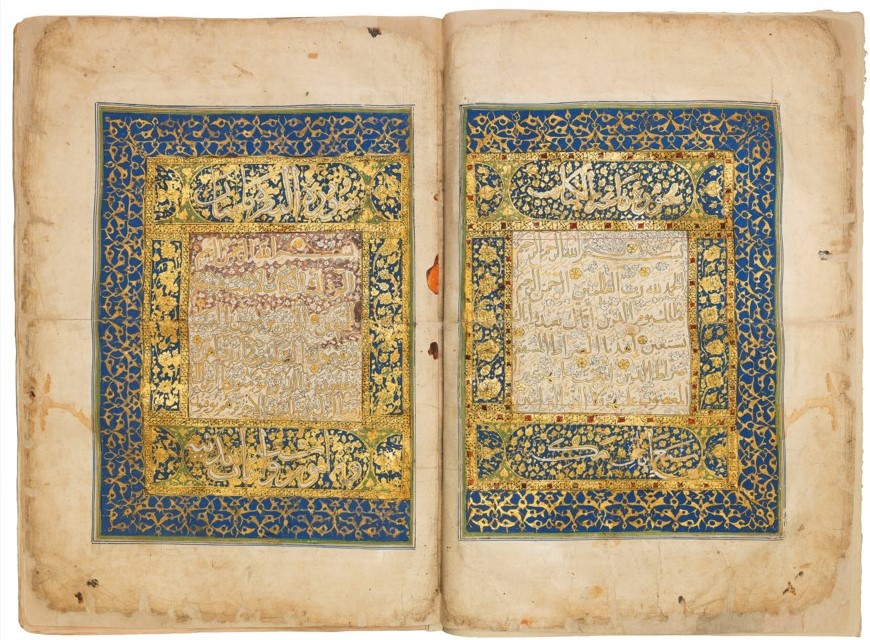
    Mamluk Qur’an, Christie’s 2.05.19, 11

    13 – £3,724,750: A Safavid silk and metal-thread “Polonaise” Carpet, first half of the 17th century

    Christie’s 2 May 2019, lot 255: £550,000 – 750,000

    Yes, another Polonaise carpet sold at Christie’s, in the same auction as the Qur’an aforementioned. This one is described as: “With the Saxon Elector and later King of Poland Augustus the Strong. Reputedly gifted in 1695 to Lothar Franz von Schonborn, Prince-Elector and Archbishop of Mainz, Archchancellor of the Holy Roman Empire.”
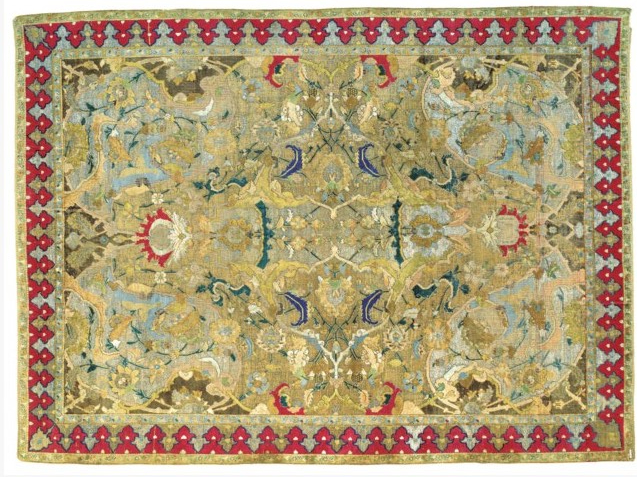
    Polonaise carpet, Christie’s 2.05.19, 255

    12 – £3,737, 250: A Nasrid period ear-dagger, Spain, 15th century

    Sotheby’s, 6 October 2010, lot 250: £600,000 – 800,000

    This dagger is the only Spanish entry in this list. Nasrid objects are quite rare on the market and usually do quite well without exploding records, except for this one. The Nasrids were the last Muslim dynasty in the Iberian Peninsula, ruling from 1230 to 1492 over a decreasing kingdom. This dagger is a great example of the artistic productions in the Peninsula, but also of the cultural hybridity that characterises the period. Arabic and Latin inscriptions or pseudo-inscriptions decorate the “ear” grips, and the letters R and TT are carved in relief, which might indicate it was owned by a Christian or a Castilian-speaker. The gold was restored, which gives this piece a remarkable finish, and the catalogue entry did a great job relating this dagger to others dated.

    Nasrid ear dagger, Sotheby’s 06.10.10, 250

    11 – £3,895,000: A Safavid silk and metal-thread “Polonaise” Carpet, first half of the 17th century

    Christie’s, 2 May 2019, lot 254: £600,000 – 800,000

    The last Polonaise carpet in this Top20, and the last entry of the first half of the list. Sold with the previous one, it came from the same private Swiss collection and was initially owned by the Archchancellor of the Holy Roman Empire.

    Polonaise carpet, Christie’s 2.05.19, 254

    Honourable Mentions

    To finish, I wanted to mention a few pieces that didn’t make the list but that caught my attention. Click on the links to access the auction catalogue:

    A life-size portrait of Mughal emperor Jahangir, signed Abu’l Hasan, 1026/ 1617: £1,420,000

    Bonhams, 5 April 2011, lot 322: Described as the largest known Mughal portrait, this gouache painting of Jahangir sitting on a throne holding an orb is nothing less than an oddity. It measures 2.10 x 1.41m (including calligraphic borders), a size never seen before and never seen since. Lots of eyebrows were raised at the time, including mines.

    A bronze Cannon from the Gun Carriage Manufactory at Seringapatam, Mysore, late 18th c.: £1,426,500

    Bonhams, 21 April 2015, lot 156: Initially valued at £40,000 – 60,000, this £1,4M canon illustrates the obsession of the market with Tipu Sultan. A large part of Bonhams auction was dedicated to Tipu memorabilia but for reasons that elude me, this particular canon broke records.

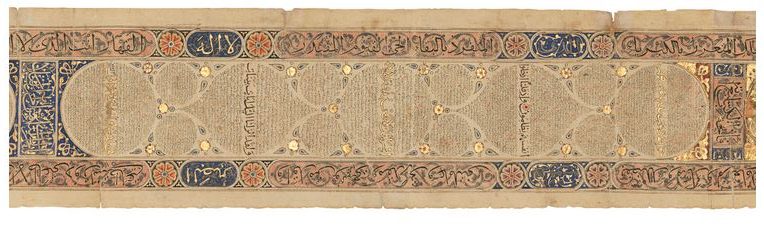
    A Qur’an Scroll, signed Mubarak ibn ‘Abdullah, Eastern Anatolia, 754 H./ 1353-54: £1,602,000

    Christie’s, 27 October 2022, lot 28: This extraordinary manuscript deserves its price. Valued at £250,000 – 350,000, it was beautifully exhibited at Christie’s alongside the wall of a small room where it could shine in all its glory. Its sale came with a bit of noise that didn’t go further.

    A monumental bronze oil-lamp, Andalusia, 11th c.: £1,608,000

    Sotheby’s, 26 October 2022, lot 93: Last but not least, this telescopic Andalusian oil lamp valued £300,000-400,000. This one is complete, with all its components present in a very good state of preservation. It is truly a technical masterpiece brighten up with exquisite decoration.

    Stay tuned for part 2, coming soon!

    Qur’an scroll (detail), 754 H./ 1353-54, Christie’s 27/10/22, lot 28, £1,602,000
    1. Axel Langer, The Fascination of Persia, Zurich, 2013, p.121
    2. To learn more about this iconography, you can start with Stephano Carboni’s catalogue of the MET exhibition “Following the Stars: Images of the Zodiac in Islamic Art” held in 1997 (in PDF, free)
  • Islamic Week, Spring 2023: Expending the Field (blog)

    Islamic Week, Spring 2023: Expending the Field (blog)

    Spring is here, and with it came auction catalogues! London houses have once again presented a great selection of amazing objects, including some things expected, and some really not. The first major surprise came from Bonhams. For the first time in… forever, probably, Bonhams is not participating in the Islamic week, their auction being pushed to the 23rd May. This is most likely due to the Parisian auction held by Bonhams Cornette de Saint Cyr (a.k.a. Bonhams Paris) on the 6th April, with a catalogue of 144 lots. Understandably, it would have been a struggle for the experts to carry two auctions less than a month apart. At the time I am finishing this article, the auction made  €229,792.50 (including premium) with 75% of lots sold. Congratulation to the team for these results.

    London Islamic week will start on Wednesday 26th April at Sotheby’s, which will present a small but action-packed catalogue of 175 items, including 40 carpets. The 27th, Christie’s will offer 240 lots, including 70 carpets. On Friday 28th, Chiswick and Rosebery’s will hold their auctions at the same time, Chiswick with two catalogues: part 5 of their single-owner sale in the morning with 90 lots, and 335 lots in the afternoon, and Rosebery’s with one catalogue of 528 lots including 56 archaeological artefacts and 33 contemporary art pieces.

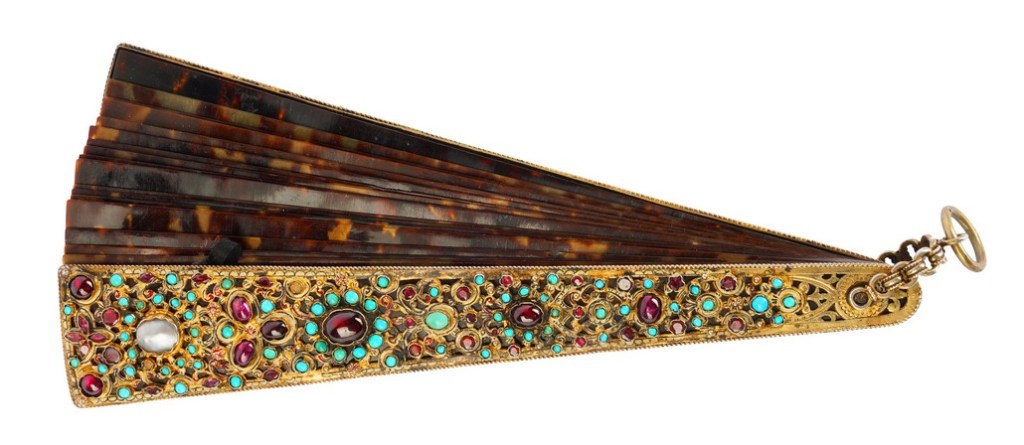
    Tortoiseshell fan, Hungary, Ottoman provinces, or Russia, 19th c. Chiswick lot 366, £2,000 – £3,000

    Moving the Borders

    Qur’an, Roseberys 316

    This spring, the inclusion of several artefacts gives an impression that the field of Islamic and Indian art history is expending, shedding light on productions usually considered to be at the edges of the Islamic world. Sotheby’s presents two fragments of Qur’an in bihari script produced in pre-Mughal India: 35 illuminated folios which would have deserved a longer notice for their connexion with folios from other collections such as the Khalili (QUR602) and the Louvre (MAO937), valued at £26,000-35,000, and 5 folios from a different manuscript, decorated with very particular polychrome vegetal illuminations, offered for £15,000-20,000. Christie’s presents two illustrated folios from a Khusro nameh of ‘Attar, attributed to 15th century India (previously attributed to Southern Iran), “Imam ‘Ali fighting a Lion” for £7,000-10,000, “Hurmuz healing Jahan-Afruz” for £5,000-7,000. Rosebery’s shows three manuscript fragments: a juz, three folios, two folios, all for very small prices. Sultanate manuscripts never achieve incredible prices, but the presence of this many in the sales might be the beginning of something.

    Collection of prayers, 19th c. Nigeria, Sotheby’s, lot 7, £4,000-6,000


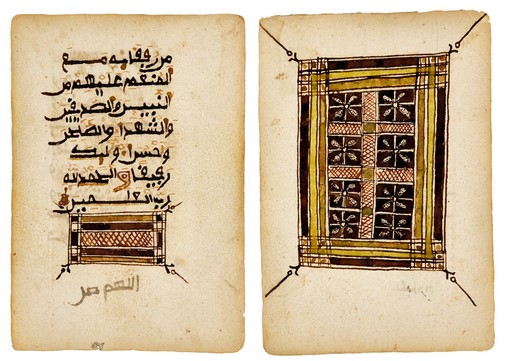
    Sub-Saharan manuscripts are also given the spotlight by Sotheby’s and Roseberys. These are usually reserved to mid-range auctions, and it is rare to see them included in top-end catalogues. Islamic art in Sub-Saharan Africa is a fairly new field that is expending slowly, so it is good to see it being given some well-deserved attention. Two beautiful Qur’anic manuscripts with their carry case from Nigeria or Chad are offered at Sotheby’s for £8,000-12,000 (lot 14 and 16), and an illuminated collection of prayers from 19th century Sudan is valued at £4,000-6,000. Additionally, an unusual wooden Qur’an board from Somalia is given at £3,000-6,000. Roseberys offers two Ethiopian Qur’an manuscripts with lavish decoration, as well as compilations of prayers likely copied in 19th century Horn of Africa.

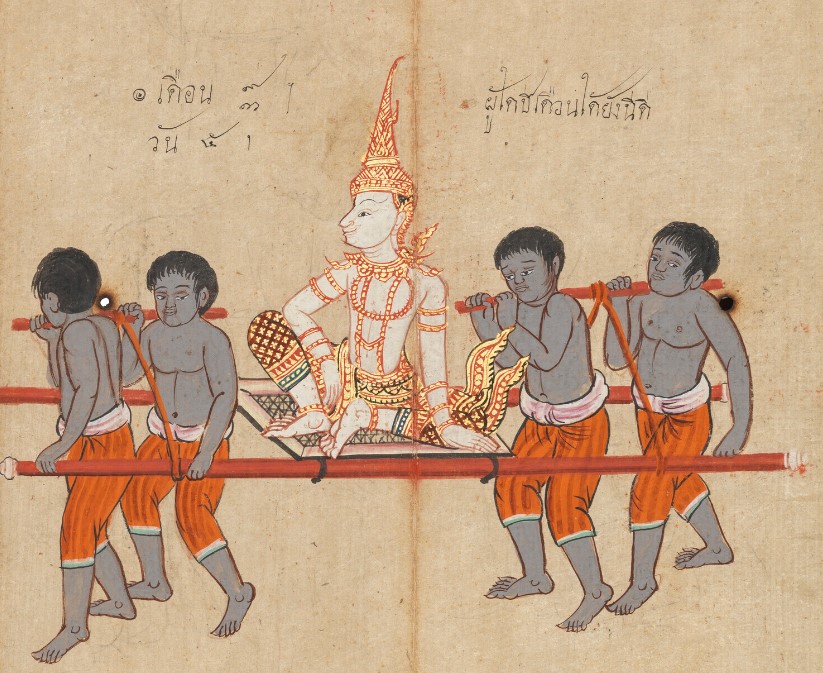
    Christie’s is offering a wonderful concertina manuscript from 19th century Burma (today Myanmar) with a rich and intriguing iconography for £1,000-1,500, which would have deserved more explanations, as well as a “Siirt” silver-inlaid bronze candlestick from 14th century Anatolia with Armenian inscriptions that illustrate perfectly the movements of artefacts in and out the borders of the Islamic world. Two Armenian artefacts are also offered at Chiswick, a Qajar brass tray and two crucifixes, and a complete Armenian gospel at Roseberys. 18th century Greek-Ottoman, Syriac, Coptic and Hebrew productions are also represented, all being parts of the large and undefinable Islamic world. Finally, Roseberys will present juz‘ of Chinese Qur’an manuscripts, as they have done for several seasons.

    With the increasing difficulty to source new objects for a developing market, expanding the field appears a necessity. The progress of academic research also give light on previously unknown productions, highlighting their aesthetic and historical value. This is a win-win for both parties, and potentially a good investment for buyers, as these objects will most likely gain value in the next years.

    A concertina of iconographic motifs, Burma, 19th c. Christie’s, lot 103, £1,000-1,500

    Pushing the Chronology

    Geographical boundaries are not the only one being pushed this season, it also feels like the chronology is expending. Persian paintings illustrate this well, with a qualitative selection of a large range of historical productions, starting with the 14th century until the 2000s. Two folios of the same Shah Nameh produced in Persia in 741/ 1341 (under the Inju dynasty) are presented, “Faramarz lifts Surkha, son of Afrasiya, from the saddle” offered by Christie’s for £8,000-12,0000, “The fight between Nowzar and Afrasiyab” offered by Roseberys for £6,000-8,000.

    For the 15th century, Chiswick is offering an illustrated Shah Nameh page from Western Persia (£300-500), as well as Roseberys, presenting a restored page from an unidentified manuscript (£1,000-1,500), Christie’s an extraordinary full-page painting from Timurid Herat (150,000-200,000). 15th century Persian painting for every budget! The 16th century is represented by a painting from a manuscript Akhlaq-i Muhsini of Husayn Va’iz al-Kashifi (Sotheby’s, £10,000-15,000) and of course, a new page from the Shah nameh of Shah Tahmasp, a folio illustrated by a nocturne combat scene, offered at Sotheby’s for £4,000,000 – 6,000,000, the top lot of the season. In its centre, Bizhan slaying the Turanian leader Nastihan, surrounded by the Iranian army chasing the rest of the raid. As always, the level of details on the painting is astonishing and there is no doubt people will queue to see the page. The previous page sold at Sotheby’s last season achieved £8,061,700, the year before one sold at Christie’s for £4,842,000, I am therefore very curious to see if prices will continue to increase. Usually, fight scenes sell for less than other types of illustrations, but this is the most sumptuous Persian manuscript ever created, so the rule might not apply. If you want to learn more about this extraordinary manuscript, you can listen to the episode of the ART Informant podcast with Dr Firuza Melville.

    Signed Mu’in Musavvir 1087/1676 (detail), Christie’s 52, £40-60,000

    Two pages signed by Mu’in Musavvir are offered by Christie’s. He’s not the most famous painting of the second half of the 17th century, but his work has been well studied, in particular by Dr Massumeh Farhad, so the pages should sell well (here and there). A beautiful oil painting signed by Muhammad Baqir, one of the stars of the 18th century, who notoriously collaborated to the decoration of the St Petersburg album, and dated 1173/ 1659-60 is also at Christie’s for £150,000-250,000. Zand productions are not the most studied, but this painting seems like a safe bet. Lots of Qajar gol o bolbol and beautiful ladies are offered everywhere (as well as couples in compromising positions and a puzzling “ring of 10 intertwine youths” at Chiswick!), and interestingly, late 19th and early 20th century paintings, such as the portrait of Zahir al-Daula, son-in-law of Nadir al-Din Shah Qajar, dated 1301/ 1884 (Christie’s, £120,000-180,000), and another portrait from the same time, this time of an unknown dignitary (Chiswick, £2,000-3,000). Several Iranian artists are represented at Roseberys, including Maryam Shirinlou (b. 1966) who has been doing solo exhibitions since the 1990s.

    The inclusion of Persian painting from different eras is not new on the market, but the offering is particularly consistent and will most hopefully show what will be the trends going forward, especially for later periods.

    Shah nameh of Shah Tahmasp, fol. 328r. Sotheby’s lot 41, £4,000,000 – 6,000,000

    Trendy Blades

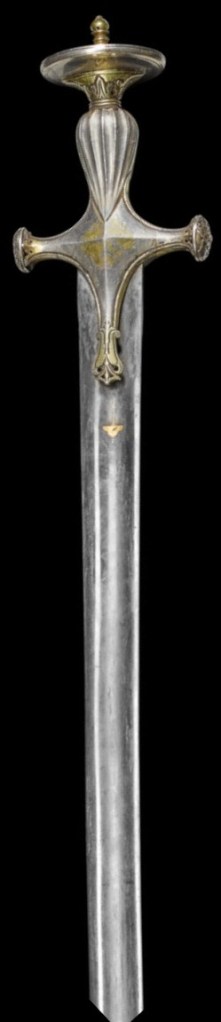
    The Army’s Conquest, Sotheby’s lot 94

    Arms are clearly having a moment in the sun this spring. They already shone bright last year in Paris, with category white-glove sales at Artcurial and Millon, so we can expect high success in London as well. Christie’s top lot is a 17th century Mughal gem-set dagger with impeccable provenance: it was first in the hands of Lord Robert Clive of Plassey (or his son), and last in the al-Thani collection (Qatar reigning family), which is partly exhibited in the Hotel de la Marine in Paris1; an impressive pedigree! Value at £300,000-500,000, it is remarkable for its atypical proportions and the uniquely large stones that ornate the hilt. To be noted that other Indian lots come from the al-Thani collections (67 to 76), all the highest quality. I am particularly excited to see the 18th century silver and gilded durbar set (£250,000-350,000)

    Speaking of pedigree, Sotheby’s present two historical swords: one gilt-mounted sword with ruby eyes and scabbard from Tipu Sultan’s armoury (£200,000-300,000), and the beautifully simple personal sword of Mughal Emperor Aurangzeb (r.1658-1707): ‘The Army’s Conquest’ (£150,000-200,000), Chiswick also includes two Indian blades among the top lots, a 19th c. “Sosun Pattah” ceremonial sword (£4,000-6,000) and an 18th-19th c. jade-hilted “khanjar” with garnet beads (£4,000-6,000). Several other swords and blades are presented by the four houses, so it’ll be interesting to see if the success encountered in Paris in winter 2022 will be duplicated here. Maybe swords are the new manuscripts?

    My Top 5

    To finish, someone asked me on Instagram what are my 5 favourite items this season, and I thought it would be a fun way to end this article. Here they are, with little explanation and in no particular order:

    • The page of Shah Tahmasp’s Shah Nameh. Obviously (Sotheby’s, lot 41)
    • Five pages from a Qur’an produced in Sultanate India. I posted about it on Instagram, they really caught my eye. Only one other page of this manuscript has surfaced so far, presented at Rim Encheres earlier this year [efn_note]Thank you to Rim Mezghani for the reminder[/efn_note]. The illumination design and colours are simply exquisite (Sotheby’s, lot 4)
    • “Solomon with the Queen of Sheba”, Timurid Herat, mid-15th c. I adore Timurid painted productions (illustrations and illuminations), and this scene, with its profusion of figures, elements and gold, simply makes me happy. Look in particular at the Queen’s expression looking at Solomon, we all deserve someone who looks at us like that (Christie’s, lot 25)
    • An illustrated Tarikh-i Dilgusha-yi Shamshir Khani, Lahore or Kashmir, 19th century. This text, which is basically an abridged version of Firdosi Shah Nama, was written by Tavakkul Beg in 1063H/ 1653 and encountered a certain popularity in India.2 Kashmiri 19th century paintings are a hit or miss, to say the least, but the 24 illustrations in this manuscript are really nice. (Chiswick, lot 434)
    • “A lady writer with hookah”, Pahari school, Kanrga or Guler, North India, mid-19th c. Powerful feelings emanate from this scene, art resonates. (Rosebery’s, lot 94).
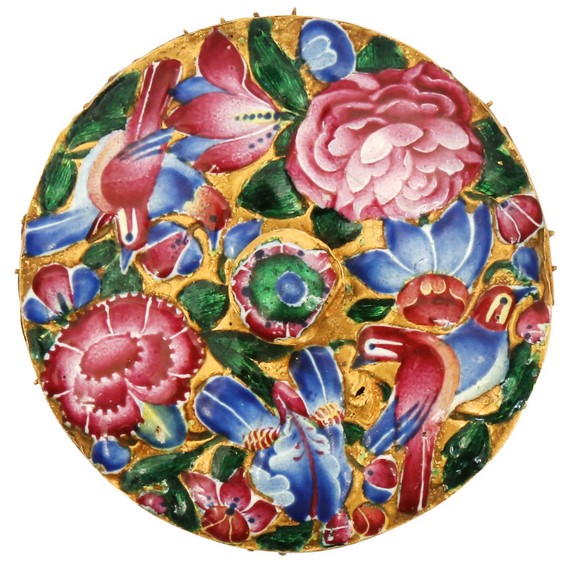
    Enamelled gold lid, Persia, 19th c. Chiswick, lot 42, £500-700
    1. Parts of the collection were sold at Christie’s New York in 2019.
    2. Pr Charles Melville dedicated a paper to the topic, available on Academia.
  • Islamic Week, Autumn 2022 – Part 2 and Other Things (blog)

    Islamic Week, Autumn 2022 – Part 2 and Other Things (blog)

    I finally have a spare minute to do a part 2 of my Islamic week review, but because it was already three weeks ago, I’m going to share only a few additional thoughts, including on “current affairs”. With these 2-part posts, I’m trying a new, shorter format, that’ll allow me to publish more often, and that is hopefully nice to read. Let me know what you think of it!

    To restore or not to restore, here is the (undisclosed) question

    Some are going to say that I am on a personal crusade against big auction houses, which is completely false, but we need to talk about restoration practices. They are inherently not a bad thing, but as always, I find the lack of transparency problematic.

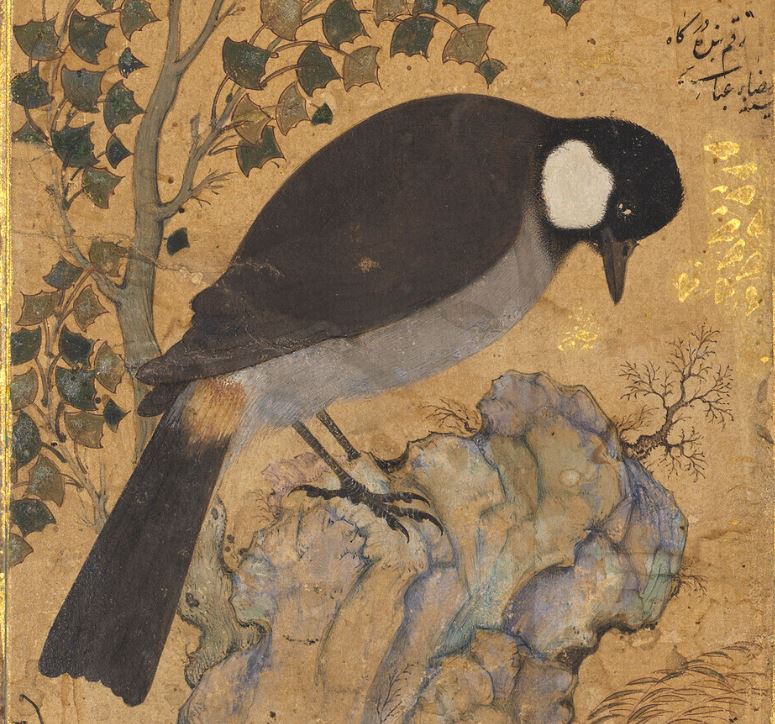
    Christie’s sold a painting of a bird signed by the famous Safavid painter Riza ‘Abbasi for £163,800, against an estimate of £100,000-150,000. It was an event to see this painting on the art market again, as the catalogue noted that it was previously sold in 1961 as part of the sale of the Sevadijan collection. Unfortunately, this is not exactly true. As I mentioned in my initial review of the Islamic week, the painting was sold last June in Versailles by Chevau-Leger Encheres for €36,000, against a laughable estimate of €100-150 (talk to specialists, people).1 This auction is not mentioned as part of the provenance in Christie’s auction catalogue. Legally, all bases were covered with the 1961auction, and there was no need to add any information on more recent movements. The problem this omission raises is ethical, and it is misleading to imply that the page had been in a single collection since 1961, when it is, in fact, not the case. The other issue is that between June and October 2022, the painting was restored.

    It is a common practice for auction houses to send prestigious pieces such as this one to the restorer. It is particularly common for metalworks, where silver or gold get injected to revive the inlays. Now, I am not against restorations, on the contrary. Restorations are part of the history of individual artworks, and it is great to see a beautiful piece getting back to its former glory. It also makes sense economically, everybody prefers buying pieces in good state rather than completely decrepit. However, restorations should be documented, and in the case of the art market, they should be disclosed. In Western museums, restorations are carefully analysed, weighted and documented. As well, the restoration in case of compensation or loss: “should be detectable by common examination methods.”2 There is no such guideline for auction houses.

    The restorations were not mentioned in Christie’s condition report available on the website and laid below, which probably indicates they were conducted by the vendor, as the auction house has an obligation to mention them in condition reports (but not in the catalogue):

    This painting is in good and stable condition overall. There are small areas of discoloration on the cream and illuminated background. The gilded areas bear faint discoloration in some areas and some surface craquelure. The pigments used on the bird eye bear light craquelure, as seen from the catalogue image. The multicoloured rock and part of the bird bears small and faint water stains which are only visible upon close inspection. Small area of crease along the left and middle of the painting. The ink of the signature is very slightly flaked, but remains fully legible. The illuminated outer margins include light areas of rubbing and slight discoloration as a result of light exposure. The painting has been pasted down on a blue card as part of the album page it once belonged to.

    I will not assume anything regarding Christie’s knowledge, but this shows, once again, the importance of thorough and documented provenance. Collectors should be made aware of potential restorations carried out on their newly acquired piece, as, again, it is part of the history. It is also an element buyers take into account when purchasing a piece, and it is an important piece of information for future restorations. I hope the person or organisation responsible for the repaints on Riza Abbasi’s painting gave all the documentation to the buyer.

    The stars shine bright in Paris…

    Lustre Lantern,Syria,12th/13th c. Artcurial 15/11/22, lot 66, 111520 €

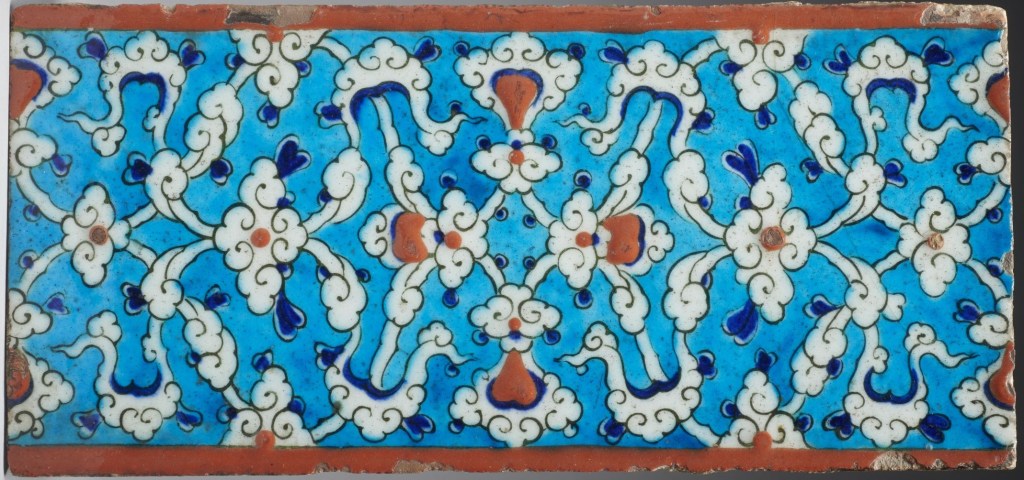
    The auction season has started in Paris, and the first results deserve their dramatic title. The auction house Artcurial held their Islamic art auction on the 15th November, under the expertise of Pingannaud-David. They achieved a whooping 813,735€ total (including premium, as for all prices thereafter), an impressive result given that Pingannaud-David expertise was only created a year ago, and that their first auction at Artcurial this summer made only 211,336€. This massive progression is due to a combination of factors, starting with a better selection. Indian painting, which has proven to be quite unpopular in French auctions, was almost completely absent from the catalogue, replaced by a large amount of manuscripts and arms, which are more in favour. Estimates were also scaled down, with very affordable pieces of good quality. Finally, most of the objects had excellent provenances (yes, I’m going to write about provenance again). Objects from R. Froment’s collection were presented, acquired by between the 1950s and 1980s, as well as a selection of manuscripts from the collection of Princess Roxane Qajar (written Kadjar), descendant of Muhammad ‘Ali Shah Qajar (r. 1907-1909). It doesn’t get any better than that. Some of these manuscripts achieved expected high prices, such as the incredibly rare album of illumination motifs from the end of the 19th century, sold 65,600€ against an estimate of 8,000-12,000€. Some prices came as a surprise, such as the 36,736€ paid for a 19th century copy of Khosrow va Shirin value 1,500-2,000€ (dated and signed, admittedly). Among the other success, a rare lustre lantern from 12thor 13th century Ayyubid Syria, sold by Jean Soustiel to R. Froment in 1970, valued 15,000-20,000€ and sold for 111,520€, proving that Medieval ceramics require good provenance to sell well, and an Iznik panel of 3 tiles, proved circa 1570-80, from the same collection, sold at €81,344 against 20,000-30,000€. The craze for Iznik ceramics continues!

    Iznik border, Ottoman Turkey, c. 1560-80, Artcurial 15/11/22, lot 80, 20992€

    …But not on Medieval metalworks

    What also continues is the funk in which Medieval metalworks seem to have fallen. Only one was offered, a 12th-13th c. Seljuk silver and copper-inlaid bronze inkwell, which looked nice on pictures (I wasn’t in Paris for the exhibition), but had no provenance other than Sotheby’s 2008. Medieval metalworks didn’t sell in London last month neither, apart at Chiswick which sold everything anyway. Two Egyptian pieces valued at £40,000-60,000 remained unsold at Christie’s, despite the hanging lamp having a provenance line; Sotheby’s kept more than half of their items, etc. I wonder why these artworks fell out of fashion so fast. I mentioned above undisclosed restorations, and of course the question of provenance that is now an important argument, but that’s not all. Rumour has it that many fakes were sold over the years, which would explain the disdain, but I haven’t seen any major public scandal that would have notoriously tainted the medium. This needs further investigation, so I’ll keep my eyes peeled!

    The rest of the season will be quite busy: On the 23rd November, Millon will have their third “Orient classique, Trendy, Arty” auction with a large selection at various prices; the 2nd December, Collin du Boccage will present lots from the library of an Orientalist (expertised by Pingannaud-David), Millon will have their main auction on the 13th December, and the 14th December will hold a single-owner numismatic auction, which genuinely excites me. We will have to wait until the beginning of 2023 for Ader (expert Camille Cellier) and Rim Encheres (expert Rim Mezghani), which haven’t announced the dates yet. Stay tuned!

    Detail of a Qur’an, Oriental Europe, 1290/ 1872, Millon 23/11/2022, lot 219, 5,000-6,000€
    1. I am grateful to the person behind the account @completement.marteau for posting first about it in June.
    2. American Institute for Conservation, Conservation Code of Ethics and Guidelines, art. 23.
  • Islamic Week, Autumn 2022: Results Highs and Lows – Part 1 (blog)

    Islamic Week, Autumn 2022: Results Highs and Lows – Part 1 (blog)

    The Islamic week just finished in London, and what a week it has been. Starting on a personal note, it’s been a busy one for me, and I am so grateful to have been able to see so many amazing experts, scholars, collectors and enthusiasts, who make the field of Islamic arts genuinely exciting. And of course, having the opportunity to see so many artworks is a privilege I never take for granted.

    This blog article will be in two parts. I will give my thoughts on the main topics here, and will deep-dive more on certain items in the next one, keeping both articles easy to read and quick to write.

    All prices include premium.

    Now, there is a lot to say about the auctions. Bonhams opened the week with a catalogue of 157 lots and sold only 41% for a total of £471,697.50, while the online auction sold 46% of their 249 for £268,605.75. The next day, Sotheby’s sold 56% of their catalogue of 195 lots for a total of £14,224,727. On the Thursday, Christie’s sold 90% of their 264 lots for £15,989,353, a record for Christie’s London in the past 15 years, only surpassed in May 2019 when three lots were sold for more than £3 million each. On the Friday, Chiswick won the whole week by achieving a white-glove sale in their single-owner morning auction, selling 100% of the 89 lots for £141,361. The afternoon auction also did well with 63% sold of their 360 lots for £327,401. Finally, Roseberys sold 66% of their 418 lots (excluding archaeology) for a total of £736,918, an impressive total.

    Pitchwai celebrating Nandi, India, 20th c, Roseberys 28/10/22, lot 468, £2,470

    The downfall of Bonhams

    We need to talk about Bonhams first. I am usually quite critical of auction houses and catalogues that are not up to the standard that we should expect, but this is heartbreaking. Bonhams’ Islamic and Indian art department has been in decline for the past 10 years, and this is their worse Islamic week sale so far (excluding secondary and online auctions).

    Bonhams Islamic week results over the last 10 years.

    This can be explained by past mistakes, but mainly by a catalogue that felt rushed and incomplete, and lots presented with a number of issues more or less disclosed. I am not going to repeat here what I previously wrote about the importance of providing provenance for the top lots (and ideally not a previous auction catalogue as sole provenance, but that’s beside the point for now), however I’ll add that condition reports should be as precise and thorough as provenance. I will only give one example, as it feels like beating a dead horse, the Mamluk pen-case, the auction top lot valued £90,000-120,000 and remained unsold. Upon close examination, it appears that the silver incrustations were most likely later restorations, the same with the engravings at the bottom of the box. This was not described in the catalogue, and the inlay restorations were barely mentioned in the condition report, while the addition of the engravings at the bottom were omitted. The object looked good in picture and from the far, but the semi-lack of transparency (some later additions were described) and the not so great details up-close discouraged buyers. Now, I am of course not saying that objects should be pristine, obviously, damages and restorations are part of their history, but they should not be concealed shamefully, on the contrary. This is not a problem exclusive to Bonhams, I’ll talk about it more in part 2 of this review.

    In contrast, Bonhams’ top sale is a small portrait of a Persian dignitary signed by the famous painter Abu’l-Hasan Ghaffari Kashani (d. 1282/1865-6), who worked at the court of Qajar rulers Muhammad Shah and Nasir al-Din Shah period, and signed this piece in 1262 H./ 1845-46. It also came with stellar provenance and a good catalogue entry full of references. Valued at £15,000-20,000, it sold for £40,620.

    I think Bonhams is currently struggling to find its place in a complex and rapidly evolving market. It cannot compete with Christie’s and Sotheby’s as it did in the past, and it’s not in the same market division as Chiswick and Roseberys, so it sits oddly in the middle. The effort of the Islamic and Indian art department to expend their selection, notably by adding a Sikh art section, is truly commendable, but they might need to revamp further, while pushing on provenance and transparency to repair their reputation.

    Panel of three Safavid Kubachi tiles, Iran, 17th c., Chiswick 28/10/22, lot 14, £1,125

    Expected results, good surprises…

    Of course, everybody was waiting to see how much would achieve the page from Shah Tahmasp’s Shahnama, offered by Sotheby’s for £4,000,000-6,000,000. Well, it did not disappoint, reaching £8,061,700, beating the record set with another page sold in 2011 for £7.4 millions as part of the collection of Stuart Cary Welch. Two main biders were competing on the phones, so we’ll have to wait until the buyer reveals themselves, if they do. If you want to learn more about this page, you can still listen to the ART Informant podcast episode with Dr Firuza Melville.

    A big surprise was the 11th c. Andalusia oil lamp offered with an estimate of £300,000 – 400,000 and sold for £1,608,000. Maybe because I was captivated by so many gorgeous pieces, I didn’t notice this lamp during the exhibition, I completely walked past it! I regret it now, especially because this type of telescopic lamps are incredibly rare.

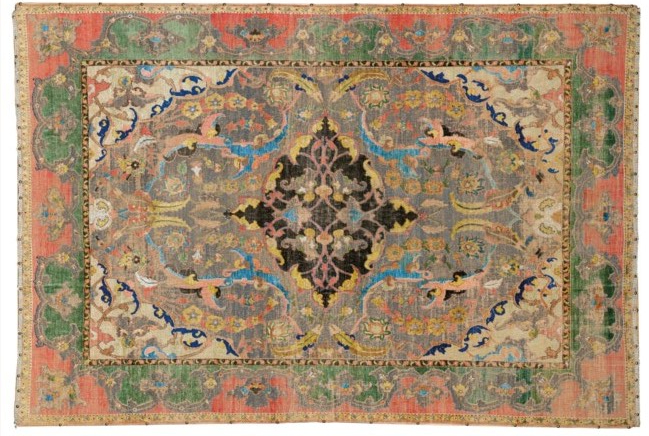
    I wrote in my previous blog that I would wait to see what the market decide regarding the Mughal pashmina carpet valued £2,500,000-3,500,000. It was sold for £5,442,000, also breaking the record on carpet auctions.

    Mughal pashmina carpet, India, c. 1650, Christie’s 27/10/22, lot 200, £5,442,000


    More surprisingly were the £1,002,000 achieved by an 8th c. Kufic Qur’an section of 162 folios, sold against an estimate of £350,000-450,000. I wrote a few years ago that Kufic Qur’ans popularity was decreasing, and I admit that I was wrong. I don’t understand why this manuscript did so well, I can only hope the new owner will not disbound it to sell the pages separately. Sotheby’s also did well, selling the monumental Qur’an page for £819,000 (£650,000 hammer, same as Millon’s page sold last June).

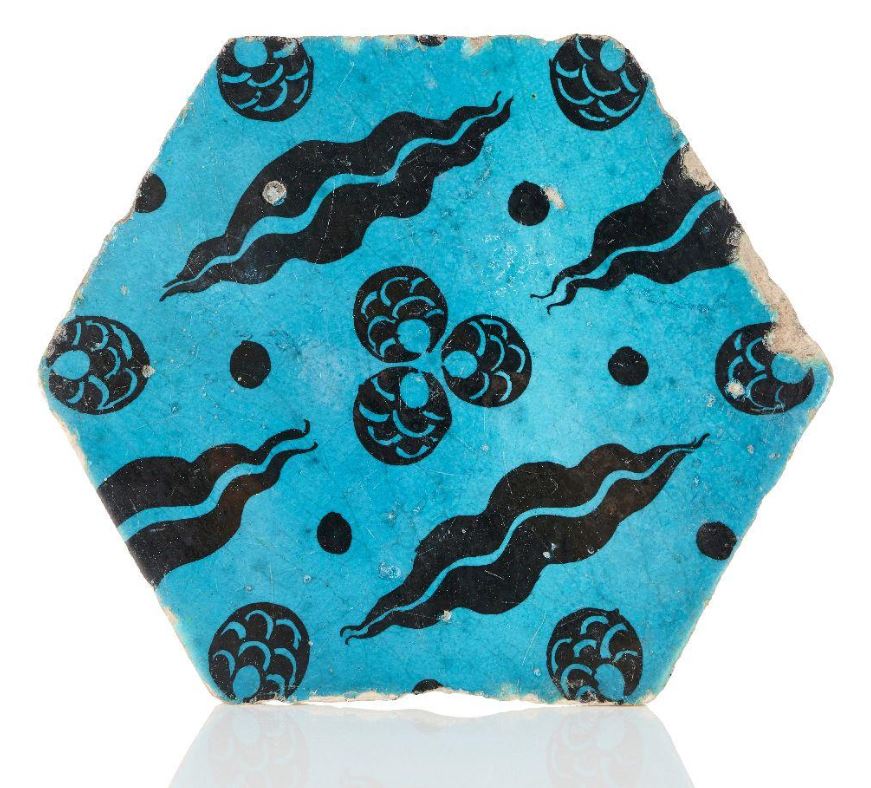
    Unsurprisingly, Turkish Iznik ceramics did very well. Christie’s sold a delightful 16th century jug with the most amazing lavender colour for £906,000, against an estimate of £120,000-180,000. Roseberys exploded the percentage value of their hexagonal Cintimani tile from 16th c. Ottoman Syria, selling it £114,400, 186.5% from the high estimate of £4,000.

    Finally, let’s mention Chiswick, which also had an excellent day on Friday, starting with the very first lot, a lovely cast openwork bronze incense burner in the shape of a lion from 12th c. Khorassan, sold for £11,250. This was included in the fourth part of their single-owner sale, this one achieving a rare 100% of lots sold. In the afternoon, a portrait of a prince from 18th c. Deccan reached £17,500.

    Cintimani tile, Syria, 16th century, Roseberys 28/10/22, lot 85, £114,000

    … And bad news

    After the scandal of Timurid Qur’an, sold in 2020 for £7.016.250, that turned out to have been stolen from Afghanistan in 2019, another huge controversy is coming to Christie’s. The extraordinary 14th century Il-khanid Qur’an scroll, offered for £250,000-350,000 and sold for £1,602,000, has started to make some noise in Turkey, where some write that it was allegedly stolen. It was apparently offered for sale in 2010, but was withdrawn and removed from the online and print catalogue after it was discovered as allegedly stolen. Christie’s put it back for auction this October, 12 years later, most likely because the legal status of the piece changed (supposedly), but Turkish authorities are currently investigating. You can read about this on halk.com.tr and on karar.com.

    The catalogue entry only mentions “Djafar Ghazi, Munich” as a provenance, which is thin. Jafar Ghazi was a famous Iranian collector and businessman who acquired a large amount of manuscripts. His collection was dispersed after his passing in 2007. To my knowledge, there is no record on how he acquired this Qur’an, and we can only assume it came to the UK as part of the dispersion, but I imagine it moved legally between Germany and the UK. This case could potentially be bad for Christie’s reputation, which was already not at its highest, but we’ll have to wait for the investigation to finish. More to come, I’m afraid.

    Qur’an scroll, 754H/ 1353-54 (detail), Christie’s 27/10/22, lot 28, £1,602,000