
Unprecedented times, unprecedented auctions. The covid-19 pandemic has forced major houses to either move their auctions online, like Millon and Chiswick that successfully rose to the challenge, or push back to a later date, a choice made by Christie’s, Sotheby’s, Bonhams and Dreweatts. The slightly smaller Islamic week was finally held from the 9th to the 25th June and despite the many restrictions, among others on exhibitions and international travels, the results reflect the continuous support from collectors.1
All the prices indicated below include Premium.
Christie’s was supposed to open the week but moved their auction more or less last minute to the 25th June. From the relatively small catalogue of 205 lots, 133 lots were sold for a total of £13.361.000, a huge 123% increase compared to the last Islamic week in October 2019 and the second best result for the Islamic department of Christie’s London in the last 10 years.

The star of the auction was of course an extraordinary Qur’an on Chinese paper2, given to the Timurid or Aqquyunlu dynasties in Iran during the 15th century, sold for £7.016.250 (so more than half of the total results). Beside its aesthetic qualities and formidable state of preservation, this manuscript raised more than one eyebrow for the opacity of its provenance. It seems difficult to believe that a manuscript that exceptional had never been published, nor even seen before. For this reason, the single information given by the auction house that the manuscript was “bought by the current vendor’s father in London in the 1980s” was problematic in more ways than one. This type of “non-provenance provenance”3 is used by auction houses as a work-around of the UNESCO 1970 convention, stating that the sale of objects illegally removed from their country of origin after 1970 is prohibited (this doesn’t apply to artefacts removed before 1970).4 Auction houses use the date as a loophole through the vague mention that the object was bought in Europe or in the US after 1970, or came from “the collection of a gentleman”. In the case of this manuscript, nothing is said on how it reached London and it could have very much be stolen from the library in which it was initially preserved, but legally, Christie’s is covered. The manuscript seems legitimate but the complete absence of ownership marks, such as seals, led some to question its authenticity. Beside that, we can question the fact that the catalogue entry rapidly brushed aside the fact that a few folios were replaced at a later date, though it has a considerable importance to understand the provenance of the manuscript – a topic that was definitely not at the centre of Christie’s preoccupations. The later incipit could be Indian, the illuminations showing a Deccani influence (reading “from the region of the Deccan”). If confirmed, this could have helped greatly in tracing the history of the manuscript.
The house hasn’t yet communicated the identity of the buyer, and with that price, we can easily assume it was bought by a collector or an institution in the Gulf, but we can only hope this Qur’an will be landed for exhibitions and further research.
Beside the Qur’an, a few lots were expected to reach high prices, including the Portrait of Sultan Mehmet II with a dignitary, probably produced in Venice in Gentile Bellini workshop. Because Bellini is the most famous Italian painter making the travel to Istanbul in the 15th century, every painting that can be related to him is always put forward in auctions. Initially given at £400.000-600.000, it was sold £935.250.
Other mentions, a Tuhfat al-ahrar copied by the calligraph Sultan Muhammad Nur at the beginning of the 16th century. Valued at £200.000-300.000, the manuscript, decorated with gorgeous borders, went for £923.250.

I was particularly waiting for the 12th and 13th centuries Kashan ceramics making a reappearance on the market after years of absence.5 Without surprise, the small moulded jug largely exceeded its valuation of £50.000-70.000 and reached £401.250, but surprisingly, the turquoise glazed reticulated cockerel-head pottery ewer, valued at £100.000-150.000 remained unsold. Given the price of the previous piece, it is hard to explain why this one didn’t find a buyer.

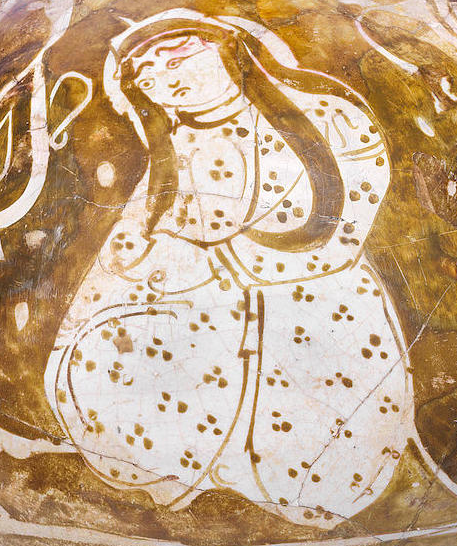
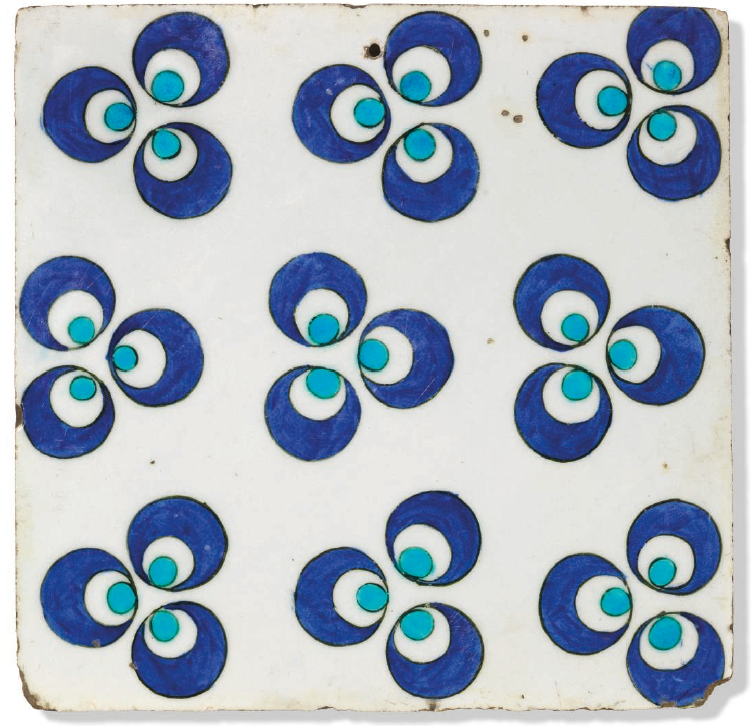
Also unsold was the Kashan turquoise glazed pottery pitcher presented by Sotheby’s on the 10th June. Valued £120.000-160.000, this ewer was one of the auction star items, and had a clear recent provenance, having been in Edward Binney III’s collection. Bonhams had two Kashan pieces, a classic brown, white and blue star tile with calligraphic borders sold for £3.812, and a nice lustre pottery bottle with figurative decoration, damaged but nicely restored, valued £2.000-4.000 and sold £2.805 (so just above the low estimate without the 25% Premium).
These results are particularly interesting. While I was waiting for Kashan ceramic to come back with a bang, it seems that buyers were not particularly ready for it. The small moulded jug created interest for its aesthetic qualities and significance in the history of arts, the decoration announcing Iznik productions, centuries later, in several ways. Bonhams jug was inexpensive but clearly the cockerel-head ewer and Binney pitcher were too risky to invest in, especially after the several controversies of falsifications from a few years ago.
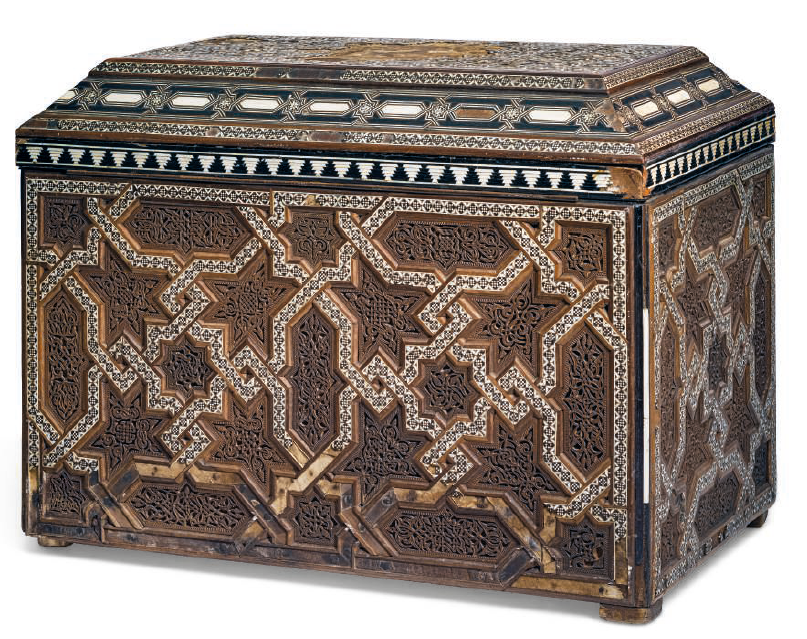
Sotheby’s had a larger catalogue of 321 lots, of which 173 were sold for £3.656.000, a 33% decrease compared to the almost £5.5 millions made last October. Only a handful of items went above six figures, the 12th/ 13th c. Nasrid pyxis reaching £519.000. I was personally not convinced by the very early date given by Sotheby’s with the support Julian Raby, director of the Freer| Sackler Gallery in the Smithsonian, just because most of the known pieces of this production are attributed to the 15th century. The wood was dated with radiocarbon C-14 between 970 and 1032 with 95% confidence, but I am always a bit dubious when it comes to C-14 tests. Indeed, wood, like stone, can be reused generations later if preserved in the right conditions, and if it is a known fact for architecture (never date a building by its beams!), it can also be true for small items made of several pieces of wood joint together. That being said, 12th or 15th century, this pyxis is in remarkable conditions and its decor particularly rich.

The second star item of Sotheby’s auction was a Diwan of Hafiz copied by the calligraph Shaykh Mahmud Pir Budaqi in 867/ 1462 and dedicated to the library of the prince and keen collector Pir Budaq (d. 1466). This manuscript is of great significance for the history of Islamic arts so the selling price, £375.000, didn’t really come as a surprise. The narcissus, previously discussed on this blog, went for £10.000.
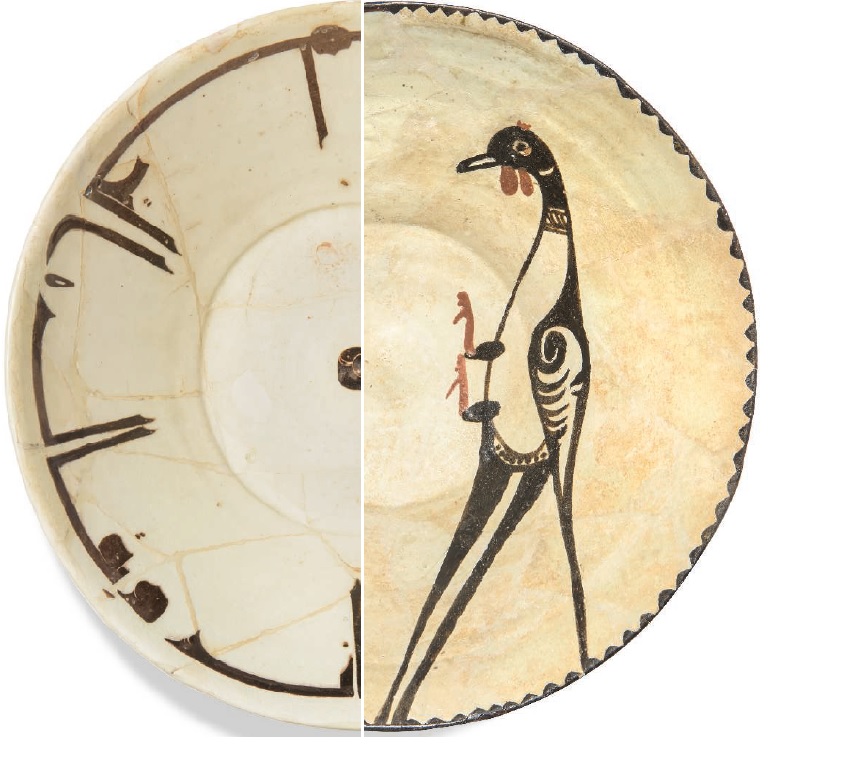
Sotheby’s also presented three Abbasid potteries, two of which were sold within their range, and one Samanid dish unsold. Like Kashan ceramics from the 12th and 13th centuries. Abbasi Iraqi pieces from the 9th/ 10th c. and Samanid Central Asian from the 10th c. represent a gamble, as well as gold dinars and silver dirhams, such the 18 lots presented by Bonhams on the 11th June. Their second biggest lot was an Umayyad gold dinar from the reign of the caliph ‘Abd al-Malik, fifth caliph of the dynasty, (685-705) dated 77/ 696-97. I personally love numismatic, though it is one of the most driest fields of study, for coins truly constitute prints of history. This one is particularly significant, having been minted less than 10 years after the foundation of the Dome of the Rock in Jerusalem. Unfortunately, the estimation £100.000-150.000 was too high for collectors, and overall only six of the eighteen lots of coins were sold.
Bonhams sold 100 of the 247 lots presented, for a total of £1,368,681.25, a small 4.42% decrease compared to last October. As previously, the auction house focused on Indian and Sikh arts, an orientation demonstrated by their main lot, a gem-set gold forehead pendant (chand-tikka) from the collection of Maharani Jindan Kaur (1817-63), wife of Maharajah Ranjit Singh (1780-1839). What a lady she was! The short biography given by Bonhams gives a glimpse into the complexity of her life and the immense strength she held.6 The forehead from her collection, quite simple but refined, and of historical importance, was sold £187.562.
It has been particularly interesting to follow these spring/ summer auctions, whether moved online or postponed. In both cases, collectors have responded well to the changes, though Sotheby’s results were lower than expected. We can hope that autumn auctions will go ahead without too much trouble, but so far 2020 has been full of (really bad) surprises. In the meantime, stay safe and please wear a mask in public!

- For a presentation of the auctions, see my article for lot-art.com.
- Edit June 2021: The catalogue entry for this Qur’an has been removed from Christie’s website.
- Term coined by Dr. Stephennie Mulder on Twitter.
- You can read the full text here. You can also read my article on recent illegal looting in Syria and the impact on the market here.
- Named after the city of Kashan in Iran, located south of Tehran, in which a very large centre of production was particularly active during the Seldjuk dynasty rule, roughly 11th- 12th centuries. It continued to be very active until the end of the Safavid dynasty rule in the 18th century.
- You can also go read this article on The Guardian about her.



 Isabelle Imbert