Tag: history

  • Islamic Week, Autumn 2022: Prices and Attributions Oddities (blog)

    Islamic Week, Autumn 2022: Prices and Attributions Oddities (blog)

    The Islamic Art market is like some mystical creature living in a deep forest. Everybody has heard about it, and many will tell you they have seen it, but everybody gives different descriptions, apart that it has eyes and a tail. What I’m trying to say, with this unnecessarily convoluted metaphor, is that the art market keeps surprising me. Items surprise me, but also the ability of experts to unearth forgotten treasures and to slap completely random prices on them, that keeps surprising me.

    Bonhams opens the week on the Tuesday 25th with a catalogue of 157 lots, but is also holding an online auction between the 20th and the 28th October with a catalogue of 249 lots. Sotheby’s, follows on the 26th with 195 lots. Christie’s offers a larger catalogue of 265 lots on the 27th, including 102 carpets. Finally, a probable organisational mishmash makes Chiswick and Roseberys share the Friday 28th, Chiswick with two catalogues of 89 and 360 lots, Roseberys with a catalogue of 497 lots, including 79 lots of antiquities and 30 lots of contemporary art.

    The selection is large and include wonderful pieces for every budget, as well as intriguing items, such as a small Qajar painting in an extraordinary wooden frame, offered by Rosebery’s at £200-300, and a very amusing page showing Maharana Jagat Singh in the most lively margin of elephants and animals, offered at £500-700.

    A enamelled saucer, Awadh 18th c. Chiswick 28.10.22, lot 371

    Manuscripts and Paintings, stars of the show

    Bonhams seems to be shifting its strategy slightly by holding two auctions simultaneously, one in the auction room on the 25th, and another online, over 8 days starting on the 20th. The physical sale includes pieces between £200-300 and £90,000-120,000 and will appeal to the most fortunate collectors, while the online auction include more items, all between £200-300 and £5,000-7,000, with some lots sold without reserve, and some as low as £5. Both auctions include paintings and isolated pages, but only 3 manuscripts. Supply chain issue or deliberate choice to focus on other media, I cannot tell, but the absence is definitely intriguing given the popularity of manuscripts in past UK and French auctions, and the sheer volume of manuscripts presented by the other auction houses this autumn.

    Chiswick offers several interesting manuscripts in both auctions, including a Mughal Qur’an signed and dated 1145 H./1732 valued at £6,000-8,000, and a Safavid poetic anthology from the 17th c., incomplete but interesting for it contains the full page drawing of a standing man, in a format usually reserved for album pages. The manuscript could probably be use as a case study on provenance: it bears seals, dedications, modern collection stickers and even comes with a letter from George Anavian on behalf of the late professor Ehsan Yarshater to Dr. Marilyn Jenkins Madina, one of the curators of the Islamic Art department at the Metropolitan Museum of Art, dated 27 September 1983. Offered at £800-1,200, it is a bargain for anyone interested in book history.

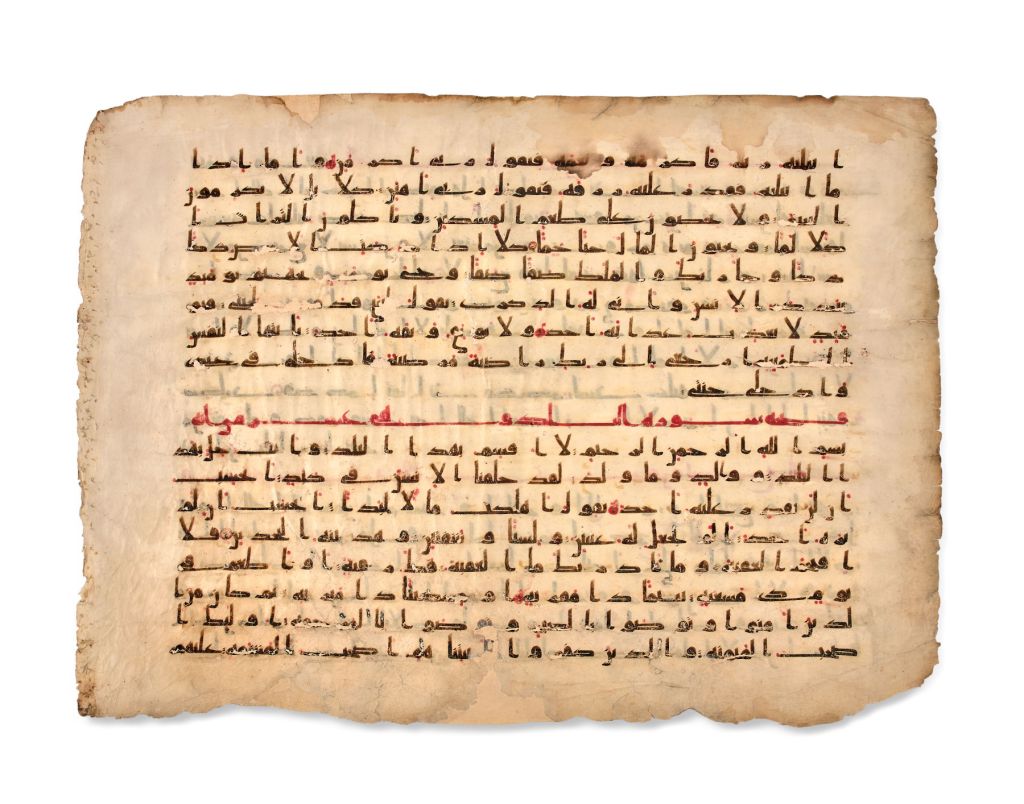
    40% of Sotheby’s auction is composed of manuscripts, isolated pages and paintings, including 9 volumes from the Shakerine collection which was dispersed by Sotheby’s in October 2019. The sale had done well, but not all lots were sold. On the nine manuscripts offered this fall, only an illuminated Qur’an juz from Ottoman Turkey was previously sold £5,000 (incl. premium), and all the lots are now offered with estimations slashed by 25% or more. It will be interesting to see if they sell, this time around. Sotheby’s is clearly riding trends in this auction. A monumental Qur’an page from the 8th c. is offered for £250,000-350,000, from the same volume as the page sold by Millon Paris for €600,000 in June. The page was last sold by Sotheby’s in 2016 for £85,000, so given the result of the French auction earlier this year, we can understand the rush to resell.
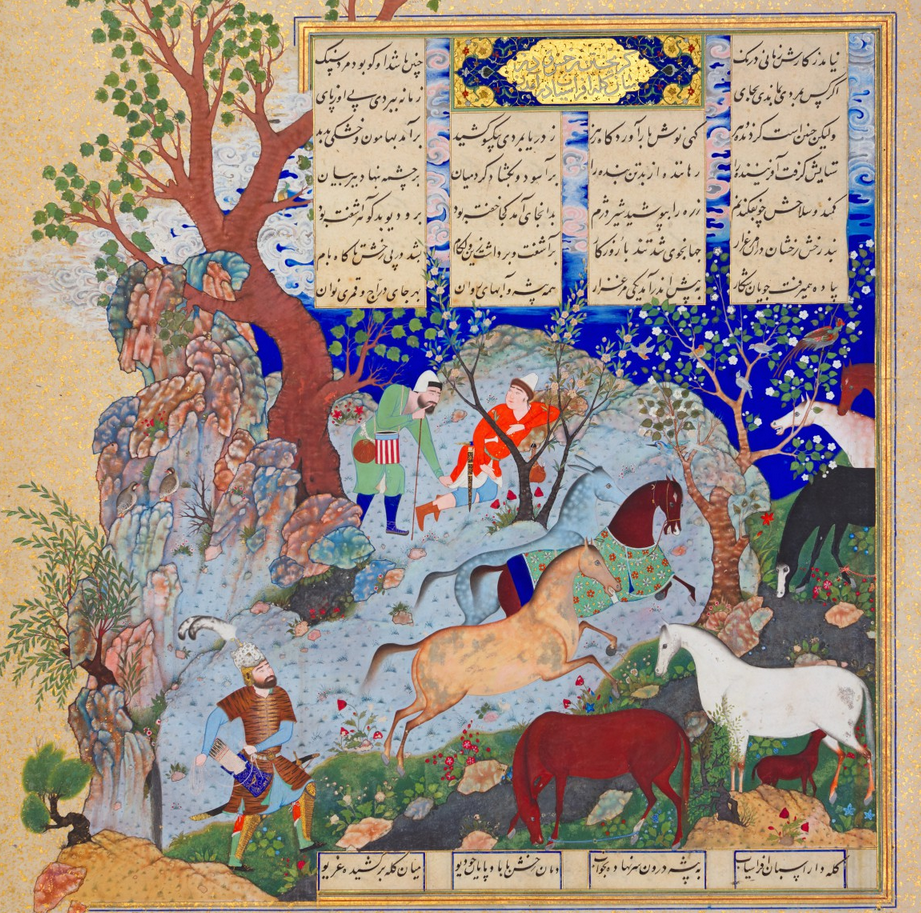
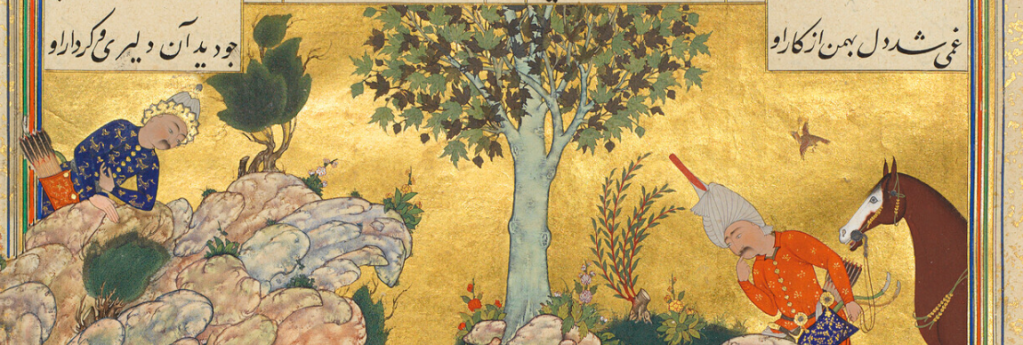
    Page from the Shahname of Shah Tahmasp (detail), Safavid Persia, c. 1530, Sotheby’s 26.10.22, lot 49

    The star of the show is of course the page of Shah Tahmasp’s Shahnama, offered for £4,000,000- 6,000,000, following the page of the same manuscript sold at Christie’s in March this year for £4,842,000. This high price has encouraged Sotheby’s to push the estimation even higher. Every single one of this page is an event on its own, and the painting on this one is particularly glorious. William Dalrymple wrote about the page in the sale catalogue, which baffles me. Mr Dalrymple is a great historian and a fantastic author, but he is not a specialist of Safavid Persia, nor of the Shahnama, nor of the arts of the book. Why not ask one of the many experts of the field for their informed opinion? For this reason, I have invited Dr Firuza Melville, director of the Cambridge Shahnama Centre for Persian Studies, to speak about the manuscript on the ART Informant podcast. The episode will be out on the 17th October, so stay tuned!

    Rosebery’s is also coming in strong with Shahnama pages, including one page of the so-called Freer Small Shahnama, produced in Iran c. 1300-1340 and bearing the illustration of “Sawa Shah slain in battle by Bahram Chubina” (£3,000-4,000), and an illustrated page of one of the so-called Small Mongol Shahnama, made around the same time as the Freer Shahnama (£3,000-5,000), as well as other, Deccani and Qajar.

    Let’s mention here the painting of a black and white bird signed by the famous Persian painter Riza ‘Abbasi, offered by Christie’s for £100,000-120,000. This particular page hadn’t been seen since its first appearance on the market in 1961, until last summer when it was sold in France for €36,000 on an estimate of… €100-150. The snarky comments write themselves.

    Finally, it is interesting to note the prominence of Indian painting. I mentioned this summer that Indian painting didn’t sell well in Paris, so I am particularly interested to see what it will do here in London, though previous auctions have showed that the medium usually encounters success. I never counted the Indian paintings in London auctions before, but because I found the catalogues particularly submerged in Indian paintings this time around, I decided to count. Christie’s catalogue includes 13,2% of Indian paintings, Roseberys 15%, Sotheby’s 15.3%, Bonhams live 17,8%, Bonhams online 25.3%, and Chiswick 30,2%, with a rough total of 310 isolated pages produced in India, excluding illustrated manuscripts, more than 17% of all lots combined. There are some really wonderful treasures among all this mass, but I don’t know where to start, I feel genuinely overwhelmed. As for manuscripts, I wonder when Indian paintings became so prominent, but more importantly I wonder if such volumes are sustainable in the mid to long term. Am I the only one feeling this “Indian painting fatigue”?

    Detail of a folio of the Tarikh al-Alfi, Imperial Mughal India, c. 1590. Sotheby’s 26.10.22, lot 51

    Provenance, prices … All these random things

    In this day and age, it becomes risky to present a star lot without provenance. Of course, the interested buyer can contact the expert and ask, but it seems like good practice to put it directly in the catalogue, both ethically and commercially. The stakes are high to sell the most expensive lot, because even if auction houses often achieve better results with smaller items selling above their range, an unsold star lot represents a significant loss of investment (in terms of research and cataloguing time and resource, advertisement, freelance experts, etc.), as well as bad publicity. One will remember the two pairs of glasses presented by Sotheby’s last Autumn, which I had questioned on this blog; Sotheby’s had contracted William Dalrymple and an independent consulting firm, with additional support (paid or not) from Dr Usha R Balakrishnan and Pr Ebba Koch. These glasses had a number of issues, including the complete absence of provenance in the catalogue, and remained unsold.

    Bonhams has a tendency to omit provenance, but it is never systematic. Their most expensive item is a late 13th century Mamluk silver-inlaid brass penbox offered for £90,000-120,000. At this price, potential buyers should not have to work to find out where it comes from. Oddly, the second star object, a group of Safavid niello and gem-set gold jewellery offered at £80,000-120,000, has a provenance line. Go figure.

    A Mamluk silver-inlaid brass penbox, Egypt, late 13th c. Bonhams, 25.10.22, lot 36

    Christie’s is changing gear with their top lot, presenting a Mughal pashmina carpet from the mid-17th century for £2,500,000-3,500,000. I imagine that this piece might be acquired by a museum, as the infrastructures required for conserving textiles are particularly complex. I am not a carpet specialist, so I couldn’t say if the very high price is justified or not. Let me know your opinion in the comments, and let’s see what the market decides.

    For £15,000-20,000, Sotheby’s offers an 18th c. Ottoman Qur’an of 573 folios, 10 lines by page, measuring 26.6 x 16.4 cm, with no date, signature nor provenance. Christie’s offers for £2,000-3,000 an Ottoman Qur’an of 228 folios (no mention whether it is complete or not), 15 lines per page, 16.9 x 10.7 cm, signed Muhammad, known as Ferayazi, dated 1172 H./ 1758, from the collection of Michel Abemayor (1912-1975). The writing is of better quality in Sotheby’s manuscript, but it doesn’t fully justify the immense price gap between the two, and I struggle to understand how these prices were attributed. Sotheby’s Qur’an is too expensive and Christie’s Qur’an is too low-priced. Someone, somewhere, has some explaining to do.

    Bold Attributions or Misleading Captions?

    Signature and date in beautiful Qajar margins. Christie’s 26.10.22, lot 95 (detail)

    Christies’ second-highest lot gave me pause, and raises the issue of attributions on the art market. A beautiful album page bearing, on one side, a painting of a night hunt scene produced in India circa 1691, and a calligraphy signed ‘Imad al-Hasani on the other side. The page is presented as coming from the famous St Petersburg muraqqa’, an album produced in Persia after the sack of Delhi in 1739 by the army of Nadir Shah Afshar. Most of the album is kept in the Institute of Oriental Studies in St Petersburg, but some of the pages were dispersed before it arrived in Russia and sometimes appear on the market. One page was sold at Millon Paris in 2019, for instance. Other times, pages resembling to those of the album are wrongly attributed to the volume, such as one offered by Sotheby’s in 2018. The present page could be linked to the album for its size (47.8 x 32.5 cm, the St Petersburg album is 47.5 x 33 cm), and the fact it bears a calligraphy of the Persian master ‘Imad al-Hasani, predominant in the original volume, however (yes, in bold) the margins are signed Muhammad Yazdi and dated 1247 H./ 1831-32, some 80 years after the latest date in the album, 1172 H./1756-57. The catalogue entry deals with this crucial information like an afterthought, mentioning it in the very last paragraph and adding that: “The St. Petersburg Muraqqa’ was however never completed and we know that many of the margins and borders were not finished in the 1750s. This might be a later attempt to complete it.” The keyword is in the last sentence, “might”. There is no evidence whatsoever that the album decoration was continued after 1757, and we don’t even know what the complete album even looked like. This lack of nuance is extremely misleading.

    Another jump to conclusions is the attribution of a Safavid papier-mâché mirror case to Muhammad Zaman, valued at £50,000-70,000. With the amount of scientific literature widely available on the topic, I simply do not understand that we can still give every random piece under the sun to the painter Muhammad Zaman, on the base that they look Safavid, and that they bear the inscription “ya saheb al-Zaman“. Many legitimate signatures are known for this painter, some in the aforementioned St Petersburg muraqqa‘, but the attribution of this inscription to him has been questioned many times, and the fact is that nothing tangibly links this “crypto-signature” to him. The scenes on the mirror case are indeed close to his style and can be compared with signed works such as the Khamsa of the British Library, but an attribution is not a signature.

    Bonhams also drops Muhammad Zaman’s name for a page of the album made in 1888 for Nasir al-din Shah Qajar (£15,000-20,000), recognisable by its margins covered in decoupage motifs, but states that the painting is “in the manner of”, which is a lot better.
    This album is problematic and needs to be briefly mentioned here. Pages have been frequently appearing on the market for the past few years, with little to no provenance. Also appearing on the market are empty margins from the same album: Chiswick is offering 6 in one lot as part of their morning, single-owner sale. The margin of Bonhams’ painting resembles very closely another margin offered by Chiswick last year (but is not identical), and because the complete album has never been seen, I think we need to keep an eye on the isolated margins being sold and potentially reappearing not empty. That or I’m being paranoid. In the same auction, Chiswick is also presenting two loose calligraphic panels from the same album, this time without their margins (except for a small band bearing the characteristic decoupaged motifs).

    A lot more can be said about these catalogues, but this article is already too long. I am genuinely excited to go to London and see the exhibitions, but also to see what the market will decide. Bonhams is taking risks by focusing on metals in their live auction, Medieval ceramics are as strong as they have ever been, Iznik are full of promises, I could go on forever. Let’s meet on this blog after the auction to debrief!
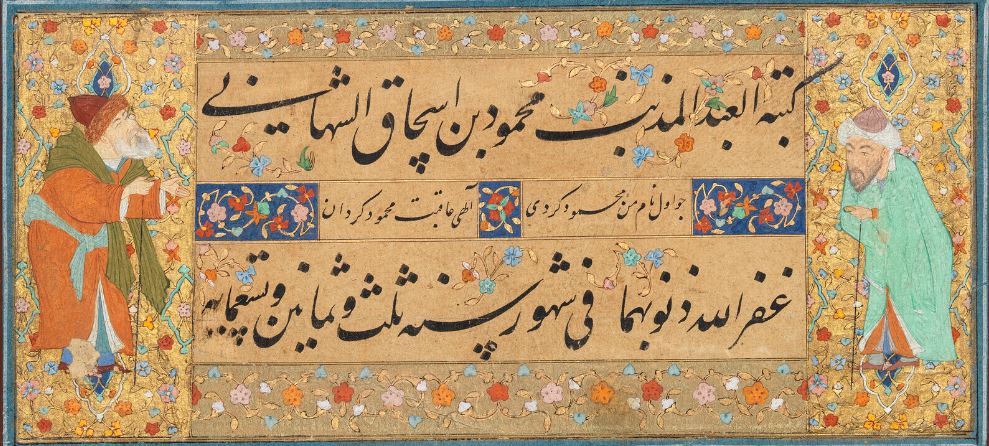
    A calligraphic panel with 2 figures (detail of the page), Shaybanid Balkh or Bukhara, 983/1575. Christie’s 27.10.22 lot 54
    1. The catalogue can be downloaded in PDF here. Thank you to Benedict Carter for providing me with the link that I couldn’t find.
    2. Most recently by Dr Amy Landau in her doctoral dissertation “Farangī-Sāzī at Isfahan : The Court Painter Muhammad Zamān, the Armenians of New Julfa and Shāh Sulaymān (1666-1694)” and by Dr Mélisande Bizoirre in her doctoral dissertation: “a Hache et Le Rossignol: Productions Artistiques En Iran Après La Chute d’Esfahān (1135/1722-1163/1750)”.
    3. See Amy Landau’s article in Muqarnas 28 (2011).
  • Parisian Art Market Debrief and Other News (blog)

    Parisian Art Market Debrief and Other News (blog)

    As I am about to enter a studious summer, let’s take a look at the Parisian art market most recent months, which were packed with action. I also want to share with you some of my ongoing and upcoming projects and plans. If this article interests you, please comment below and share on social medias!

    Moulded bowl with hunting scenes, Seldjuk Persia, 12th/13th c.. Artcurial, sold €20,992
    Moulded bowl with hunting scenes, Seldjuk Persia, 12th/13th c.. Artcurial, sold €20,992

    The Islamic Art Market in Paris: New Players, New Scores

    This spring, excitement was palpable around Drouot, the Parisian main marketplace. No less than four large auctions were scheduled in May and June, as well as individual lots passed in non-specialist auctions, and that ended being major surprises.

    Result summary

    All prices include premium.

    On the 16th May, Pingannaud-David expertise opened the season with their first solo auction and new collaboration with Artcurial. They chose to focus on a small catalogue of 118 lots (excluding archaeology), with low estimates ranging from €300 to €25,000.

    As for the results, Artcurial arrives in fourth position with 52% of lots sold for €211,336, a halftone result for the bold selection offered to the public. The biggest success was achieved by a late 19th century Ottoman karlik, a silver cooling vessel from a French collection, bearing the tughra of either Sultan ‘Abd al-‘Aziz (r.1861-76) or Sultan ‘Abd al-Hamid II (r.1876-1909). Valued €6,000-8,000, it was sold for €26,240, 437% of its low estimate. The second record, a beautiful moulded pottery bowl with hunting scenes, from 12th or 13th century Seldjuk Persia, was sold within its estimate of €15,000/20,000, for €20,992.

    Silver cooling vessel (karlik), Ottoman Egypt or Turkey, late 19th century. Artcurial, 15.05.22, sold €26,240
    Silver cooling vessel (karlik), Ottoman Egypt or Turkey, late 19th century. Artcurial, 15.05.22, sold €26,240

    The next day, Rim Encheres, with Rim Mezghani supported by the expertise of Laure Soustiel, was also taking its first steps inside the hotel Drouot. After an inaugural sale in November, the challenge was to show a clear progression margin for the newly created auction house. Were presented 154 lots divided in two thematic groups, “shades of blue” and “empires and artisans”, with estimates from €80 to €30,000.

    Rim Encheres achieved a total of €279,253 with 56% lots sold, which is not extraordinary, given the estimate of some unsold lots, but still shows a clear progression compared to their inaugural sale, which had made €220,580 for 50% sold. Challenge succeeded for the Parisian latest comer. The most successful lot sold within its estimate of €30,000/50,000: A rare Qur’an from the second half of the 15th century, probably produced under the Aq-Qoyunlu dynasty in Iran, with a 16th century Safavid binding, sold for  €41,600. The second-biggest lot came as a surprised: A nice Iznik dish from circa 1590, with a charming decor of sailing ships, and an impeccable provenance, was valued at €4,000/6,000, and sold for €29,900, 748% of its low estimate.

    A month later, on the 15th and 16th June, Millon and Anne-Sophie Joncoux-Pilorget, Parisian market almost veterans in this context, were offered over two days a large catalogue of 441 lots from €50 to €200,000, risking daring estimates and a two-day sale to assert its place on the market.

    I was contracted by Millon, with whom I worked in the past, to support with marketing and communication surrounding the sale, bringing more awareness to the event (with more or less success given the current climate in France, following the scandal in the Louvre).

    Page from a monumental Qur’an on vellum, Mesopotamia, second half of the 8th century, Millon, 15.06.22, sold €650,000 €
    Page from a monumental Qur’an on vellum, Mesopotamia, second half of the 8th century, Millon, 15.06.22, sold €650,000 €

    Millon broke records with €2,014,727 achieved in total, and €650,000 for a monumental Qur’an page on vellum from the second half of the 8th century, beating all French sale records for single Qur’an pages. Overall, Millon was in the average with 56% of lots sold, but managed to sell well above estimate in many cases. The second-biggest lot, a Qur’an juz’ from 12th century Baghdad, also sold for 200% of its low estimate (without premium): €200,000 against €80,000/120,000.

    Finally, Camille Célier was also taking her first solo steps with Ader-Nordmann on the 28th June, presenting a catalogue of 293 lots (including Orientalist painting, excluding archaeology) between €50 and €15,000.

    Lacquered mirror case, signed Muhammad Isma’il Isfahani, Qajar Persia 1274 H/1857-58. Ader-Nordmann 28.06.22, sold €19,840
    Lacquered mirror case (detail), signed Muhammad Isma’il Isfahani, Qajar Persia 1274 H/1857-58. Ader-Nordmann 28.06.22, sold €19,840

    Comparatively, this auction was the most successful one with 69% of lots sold for a total of €330,656. The auction house had made the choice of presenting more objects with lower estimates, around half below €1,000, and it clearly paid off since buyers from all backgrounds gathered. Both top lots were sold within their estimate: A lacquer mirror case with historical scenes and a crucifixion from Qajar Iran, dated and signed Muhammad Isma’il Isfahani (1814-1892,) sold €19,840; and a large Orientalist oil painting by Rigolot (1862-1932) sold €19,200. Here again the surprise came for an Iznik dish (that looks like Kutahya), valued €3,000/5,000 and sold €16,640.

    Success and Deceptions

    Iznik dish, Ottoman Turkey, c. 1590. Rim Encheres, 16.05.22, sold €29,900
    Iznik dish, Ottoman Turkey, c. 1590. Rim Encheres, 16.05.22, sold €29,900

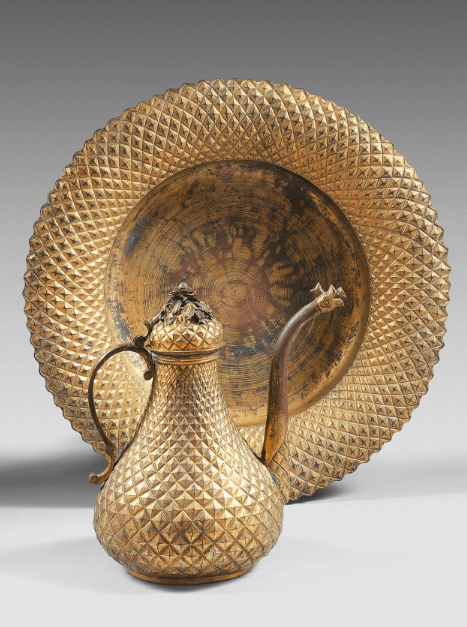
    Ottoman productions encountered a massive success for most. Beside Artcurial’s karlik sold €26,240, Alexis Renard and Beaussant-Lefevre sold a magnificent tombak ewer and basin dedicated to the princess Mihrimah Sultan (1812-1838), daughter of Sultan Mahmud II (r. 1808-1839), dated 1236 H./1820 for €130 560 against an estimate of €20,000/30,000, pre-empted by the Louvre. Millon presented Ottoman arms, especially a curious 18th century yatagan sword with hidden mechanisms that sold €24,000, a price within its estimate of €25,000/35,000.
    Iznik and Kutahya potteries also broke records, confirming the cravings for these productions, especially Iznik’s, that had already been seen in London last Autumn. Rim Encheres, in particular, sold the 11 Ottoman ceramics – dishes and architectural, as well as Ader which achieved high prices with 5 of the 7 lots presented.

    Ewer and Basin in tombak, Ottoman Turkey, 1236 H./1820. Beaussant-Lefevre, sold €130,560
    Ewer and Basin in tombak, Ottoman Turkey, 1236 H./1820. Beaussant-Lefevre, sold €130,560

    The biggest deception was probably Indian paintings. Artcurial presented 23 lots of Indian paintings, 18 being in temporary importation (which incurs an additional 5.5% premium on hammer price, for the buyer), but only managed to sell 8, most within or below estimate. Most likely, Pingannaud-David imported lots from London in a daring effort to hype up Indian painting on the Parisian art market. This could have worked, given the reputation and legacy of late Marie-Christine David in the field, but it might have been too early for the newly created expertise, or estimates might have been too high (some definitely made me raise an eyebrow), and buyers did not respond.
    The same goes for Millon which offered 13 paintings, only 4 were sold, including one more than 300% above estimate.

    However, and because there is always an exception to the rule coming to contradict my shiny theories, a 19th century Awadh painting was offered at Coutau-Begarie on the 3rd June, expertised by Anne-Sophie Joncoux-Pilorget, which clearly unleashed all passions. Valued €3,000/4,000, it was sold for more than 10 times its value.

    Finally, manuscripts made sellers and buyers very happy, confirming here again the importance of the media on the market. Apart from the extraordinary result achieved on the monumental Qur’an page, Millon confimed its leadership on the market by selling the vast majority of manuscripts, including a copy of the Book of Conduct for Sufi Aspirants, written by the great Persian philosopher Sohravardi and copied in 717 H./1317 by his indirect descendant, Ahmad ibn al-Sohravardi al- Bakri (1256-1340), sold for €152,000. Ader managed to sell a 19th century Ottoman miniature Qur’an for €16,640 against an estimate of €3,000/5,000, and Artcurial sold most of their manuscripts (not the biggest ones unfortunately), including an illuminated frontispiece from a 16th century Layla wa Majnun probably made in Herat, gone at €2,099, that is 350% of its low estimate.

    Qur'an juz, Baghdad, 588H./1192-3. Millon, 15.06.22, sold: €160,000
    Qur’an juz, Baghdad, 588H./1192-3. Millon, 15.06.22, sold: €160,000

    It seems that the Parisian art market is entering a new phase of its history. Experts are younger (but highly experienced), with new ideas and new ways of working. Provenances were put under a shining light in the catalogues, which is, as we know, particularly appreciable. We can look forward the Winter auctions to see how Paris will find its new balance.


    Art Informant Update

    The ART Informant podcast, started in November 2021, is now taking a short break after an eventful first season full of amazing guests. It will be back for a second season in September 2022. I also hope to expand on the concept with additional content, but it will depend on external factors I will hopefully be able to talk about in a few months.

    The podcast has been received very positively, and I am really grateful to the community that has helped share the episodes, grow the audience, and gave me very constructive feedback.

    Stay tuned for more info on season 2 very soon, relayed on the ART Informant’s Instagram and Twitter accounts. Don’t forget to follow!

    1. To learn more about Drouot, listen to the ART Informant episode with Rim Mezghani.
    2. France24, “Louvre ex-director charged in art trafficking case”; The Art Newspaper, “Antiquities trafficking case escalates as Louvre Abu Dhabi joins civil action and Swiss collector files criminal complaint”; 247 News Agency, “Accusations against former Louvre director uncover global art smuggling scandal”.
    3. You can check some of the press releases I wrote here and there.
  • Islamic Week Spring 2022: A Broken Balance? (blog)

    Islamic Week Spring 2022: A Broken Balance? (blog)

    This spring, London Islamic Week will be focused on four auctions: Bonhams opens on the 29th March with a catalogue of 248 lots; the 30th March, Sotheby’s presents a catalogue of 169 lots; Christie’s on the 31st March offers 209 lots; Rosebery’s closes the week on the 1st April with a large catalogue of 456 lots including 104 antiquities. To learn more about Rosebery’s auction, you can listen to the ART Informant podcast episode with Alice Bailey, Head of the Islamic and Indian Arts department.

    Chiswick will hold their Spring auction later in April, while Dreawatts Islamic department is on hold since the expert left.

    I hesitated a while to write this short article, as I was unsure how to approach it. However, it seems interesting to take a look at the current status of London art market and try to make sense of it.

    “Rustam kicking away the boulder pushed by Bahman”, Shah Tahmasp’s Shahnama, fol. 451 (detail). Christie’s, 31.03.22, £2,5,000,000-4,000,000

    The highlight of the show is indubitably the page from Shah Tahmap’s Shahnama, offered by Christie’s for £2,5 to 4 millions. The valuation is justified given the fact that the last page from the same manuscript sold in public auction went for more than £8 millions.1 This copy of the Shahnama, the book of kings, was started for Shah Isma’il, first king of the Safavid dynasty in Persia (1501-1722), and was finished by his successor Shah Tahmasp. The paintings are the apotheosis of Persian painting for their refinement, iconography, technique… In short, seeing one of the manuscript’s pages is always an event, and I am particularly excited for it. Not many will be able to bid on the lot and I would not be surprised if it ended in Qatar or the U.A.E. Beside the beauty of the page, we can also applaud the neatly documented provenance.

    For the specialists and aficionados of Persian carpet – which I am not, so I’ll keep this brief – Christie’s is offering a so-called Polonaise carpet for £1 million, which should also do quite well, as carpets seem to be of stable value.

    Battle of Pollilur (detail), Sotheby’s 30.03.22, lot 70, £500,000-800,000

    These are the only two items over the million. Sotheby’s biggest lot is a massive painting from early 19th century India, depicting the battle of Pollilur, which opposed Mysore armies led by Haidar Ali and the British troops of the East India Company. The whole composition is 978.5 by 219 cm and was most likely intended as an advanced preparative study for a mural. Offered at £500,000 to 800,000, the sale constitutes a peak for later Indian painting other than Company School2, and is definitely on trend with the current interest of buyers for 17th to 19th century Indian painting.

    The huge gap between Christie’s and Sotheby’s create an imbalance echoed in the entire catalogue. The important size reduction of auction catalogues, almost automatically triggers an increase of prices, but some in Sotheby’s catalogue are very difficult to justify. A 13th century silver-inlaid qalamdan is offered for £200,000-300,000. The state of preservation is nice, and some silver incrustations have been restored, but the box isn’t signed nor dedicated, while the shape or decor are not particularly rare, so I fail to understand the valuation rationale. More debatable is the so-called Abbasid rock-crystal bowl, valued at £100,000-150,000. In a nutshell, I do not think this piece is Abbasid given the fact that all comparison pieces are either older or unjustifiably attributed to the Abbasid dynasty. The shape and decor of the bowl are a lot closer to late Sassanian dynasty productions than 9th century Basra, which leave me to question the valuation even further, given the fact that Sassanian pieces rarely sell well.
    Some other prices are simply bananas (this is the technical terminology). How is a 16th century Safavid Qur’an with 19th century additions and lacquer binding given at £50,000-80,000? Same question with a non dated and unsigned 19th century Qajar copy of Sa’adi’s Kulliyat valued at £30,000-50,000. In comparison, Christie’s presents a similar but slightly bigger copy of the same text, with signed and dated illuminations and calligraphy, but valued at £5,000-7,000.

    I am extremely curious to see if this artificial price inflation will convince buyers, or if they will give more attention to the less expensive but still quite interesting pieces that Sotheby’s is offering, such as a rare miniature Qur’an from Sultanate India (pre-Mughal), complete but in the wrong order, valued £10,000-15,000; the Indian Qur’an on green paper dated 1311/1893-4, valued £20,000-30,000, or the Abbasid dish with Kufic inscriptions, offered £20,000-30,000 but with no published provenance.

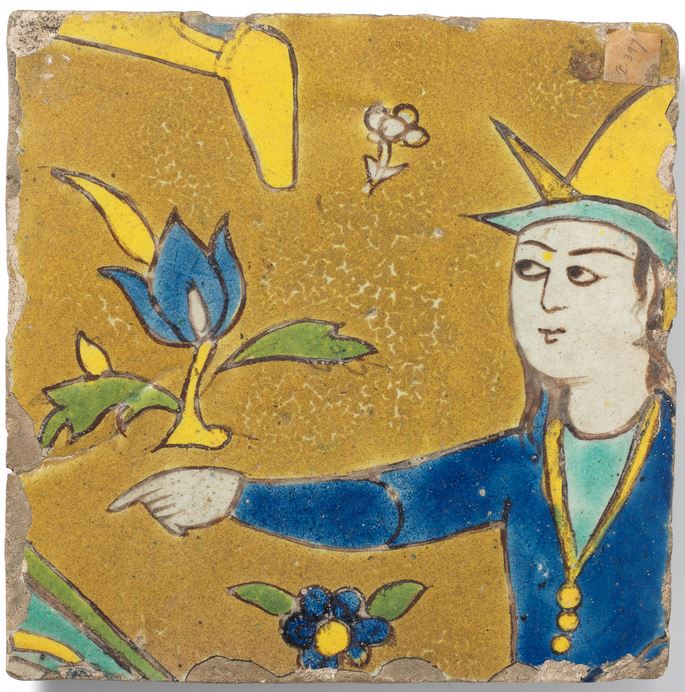
    Safavid tile, Bonhams 29.30.22, lot 75, £2,000-3,000

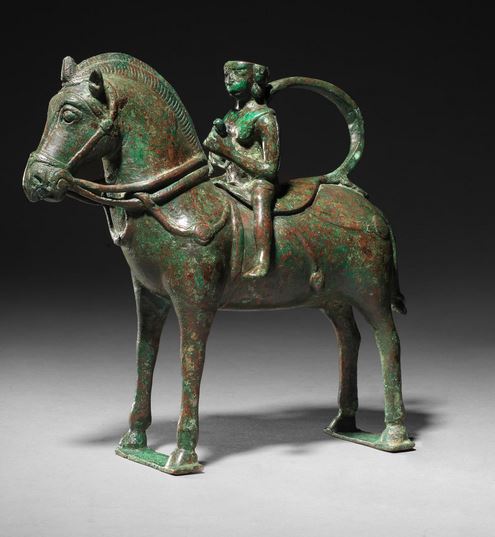
    While late Indian paintings are getting some well deserved attention at Sotheby’s, Bonhams seems to be swimming against the current by focusing more than usual on Persian art, especially Medieval ceramics. Their top three lots are from Iran, starting with a silver-inlaid 13th century candlestick offered at £150,000-200,000. The second lot raises the same questions of dating and attribution as Sotheby’s so-called Abbasid rock crystal bowl discussed earlier. The beautiful bronze horse and rider valued £100,000-150,000 is given “early Islamic, Persia 7th/8th centuries”, which could be a possibility, apart from the fact that all comparisons given are either Sassanian, pre-Islamic, or Seljuk, 13th century. This doesn’t take from the inherent aesthetic quality of the piece, but Bonhams also has an annoying tendency to leave out provenance from their catalogue, which is risky with this type of already problematic pieces. The market will decide.

    Bronze horse and rider, Bonhams, 29.03.22 lot 18, £120,000-150,000

    That being said, it wouldn’t be a Bonhams auction without late Indian art, especially Sikh, that plays in a very specific demographic and have been doing well in previous sales. A particularly interesting lot is the album of 60 paintings depicting Sikh rulers, monuments and people, most likely produced in Lahore in the 1840’s. The patron of this volume is not known (probably a British official given the English annotations on some pages), but its preservation state is quite rare and valuable.
    The main item of this section is a lovely emerald and diamond-set gold pendant from the collection of Maharani Jindan Kaur (1817-63), wife of Maharajah Ranjit Singh (1780-1839), valued £60,000-80,000. Here lies the strength of Bonhams, its capacity to source exciting pieces with clear historical background and clear provenance.

    An imperial Mughal spinel, Rosebery’s 01.04.22, lot 126 – £60,000-80.000

    For the same estimate, Rosebery’s is offering an imperial Mughal spinel, inscribed with the title of Shah Jahan and dated 1[0]39AH (1629-30AD), as well as other prestigious Indian jewellery from the late 18th and 19th century. Here as well, Indian painting is in the spotlight, as well as Chinese Qur’an with a selection of 14 ajzaʼ from different manuscripts. Alice Bailey, head of department, will speak about her auction better than I can, so go check the latest ART Informant episode!

    After two years of pandemic, I am very excited for this Spring Islamic week, and look forward seeing all the incredible selections. If you’re in London between the 28th and the 30th March, get in touch and come say hi!

    A large annotated drawing showing the currents of energy in a horse, Rajasthan, 19th c. Bonhams 29.03.22, lot 235, £2,000-3,000
    1. Sotheby’s 31st May 2011.
    2. For reminder, the Great Indian Fruit Bat from the Impey Album sold last year at Sotheby’s for £644,200 incl. premium.
  • Cartier et les Arts de l’Islam, between Darkness and Sparkles (blog)

    Cartier et les Arts de l’Islam, between Darkness and Sparkles (blog)

    This January, for the first time in three years, I was able to fly back to Paris. I lived in the city for nine years before moving to the UK, so coming back is always a moment I treasure. I get to see old friends, walk through the lane of my 20’s memories, and catch up on current affair, namely, this time, getting to the Musee des Arts Decoratifs to see the exhibition Cartier et les Arts de l’Islam.

    I initially intended to do an Instagram live through the exhibition but I had too many conflicting feelings about its content, and promptly decided to write them down in a more structured fashion.

    Two remarks between jumping in: First, I only saw the exhibition and haven’t read the catalogue (hard-cover sold for 62€ in the museum store, I almost chocked), so my opinion is solely based on the exhibition rooms. Secondly, the pictures below have not been edited or altered in any way. The reader will excuse the absence of information on the objects depicted such as accession numbers, my intend here is merely to give an opinion, not redraw the exhibition.

    The fine line between intimate and hazardous

    Two years ago, I wrote on this blog an article about the way Islamic arts are displayed in museums, with a section titled “The literal darkness of Islamic arts” in which I was questioning the common choice to install displays in particularly dark rooms. The Louvre and the British Museum, with their newly refurbished Islamic arts departments, are particularly relevant examples of this trend.

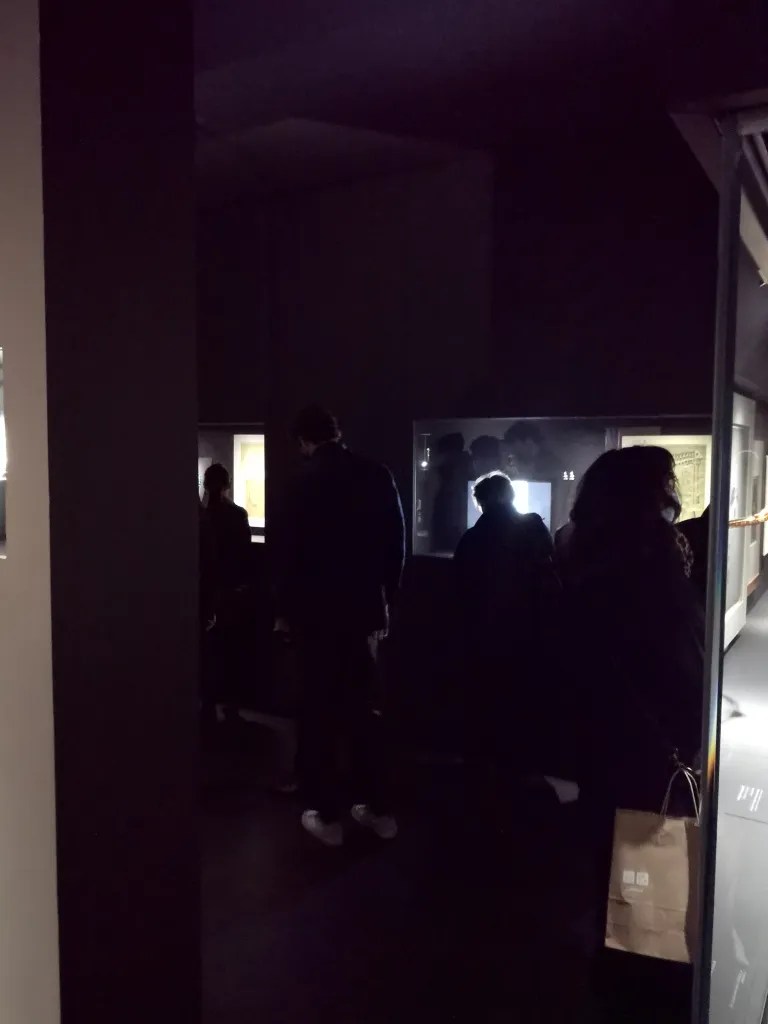
    The Cartier exhibition follows the fashion, but takes it a step further by plunging the rooms in pitch black, to the point where I saw people bump into each other.

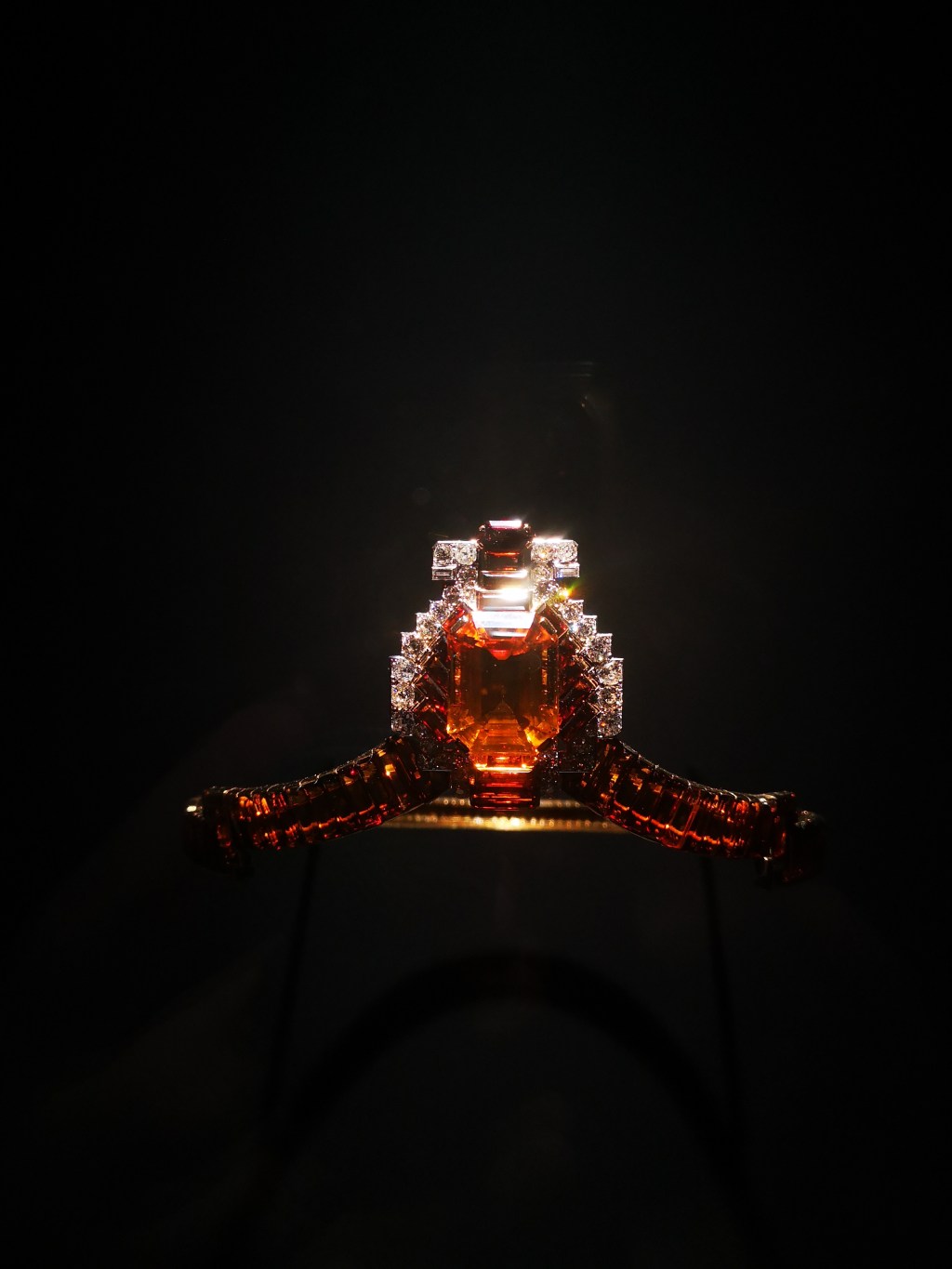
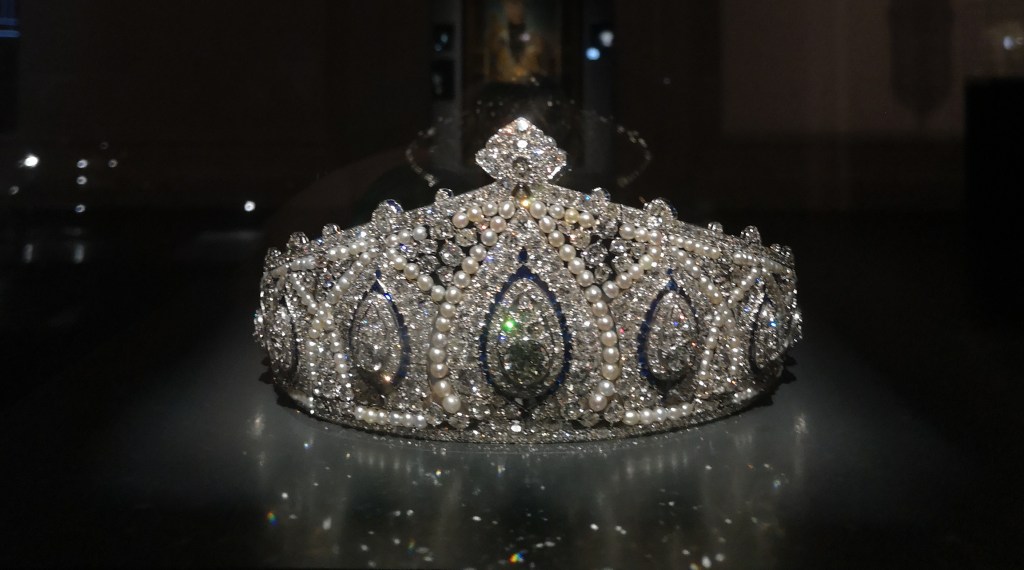
    The benefit of such a display is the contrast with the exposed pieces, in particular the jewellery that was very cleverly lighted. Now, I am not particularly familiar with jewellery exhibitions, and maybe this kind of “non-lighting lighting” is common practice, but I struggle to understand this trend with Islamic art display. It seems to me that Islamic arts are purposely kept into dark rooms to signify a sort of mystery, somehow linked to the notion of Orient as seen by 19th century orientalists, fascinated by harems forbidden to men, and palace intrigues hidden behind musharabieh. Delicate Persian paintings and princely cups made of semi-previous stone were, after all, not intended to be seen by a large public, and current trends might be trying to emulate that idea of privacy. My interpretation might completely be off, it might just be a particularly annoying museography trend that will eventually be replaced by another, I just cannot help but wonder.

    The contrast with the dark rooms make the jewels sparkle even more

    A point not completely made

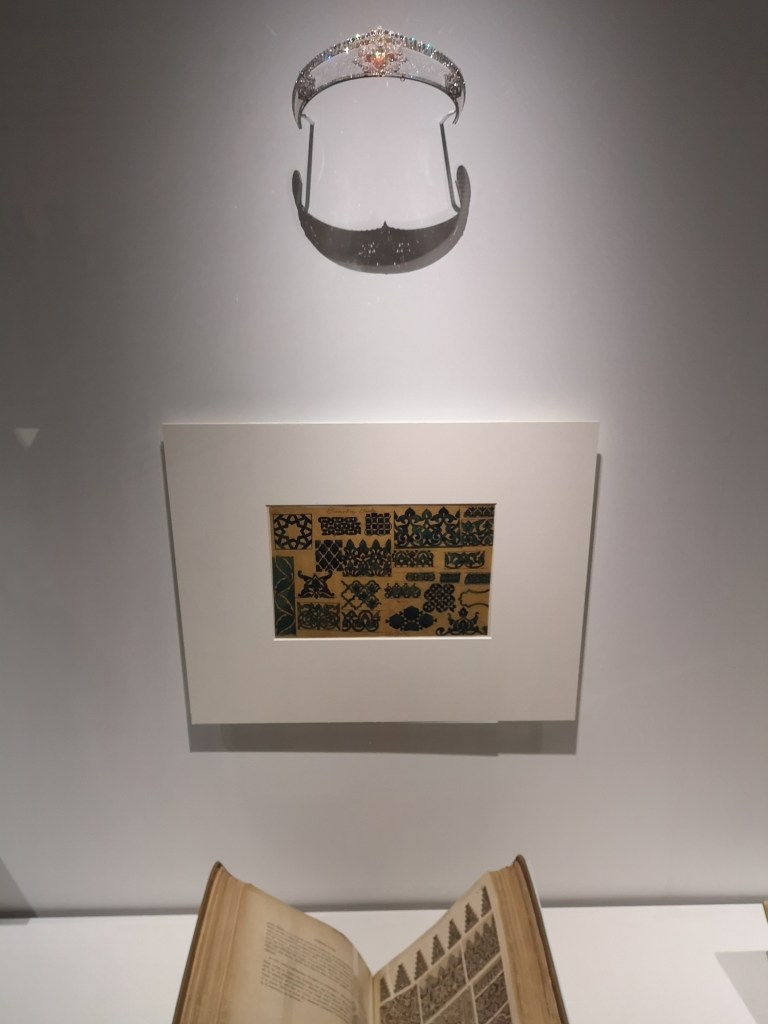
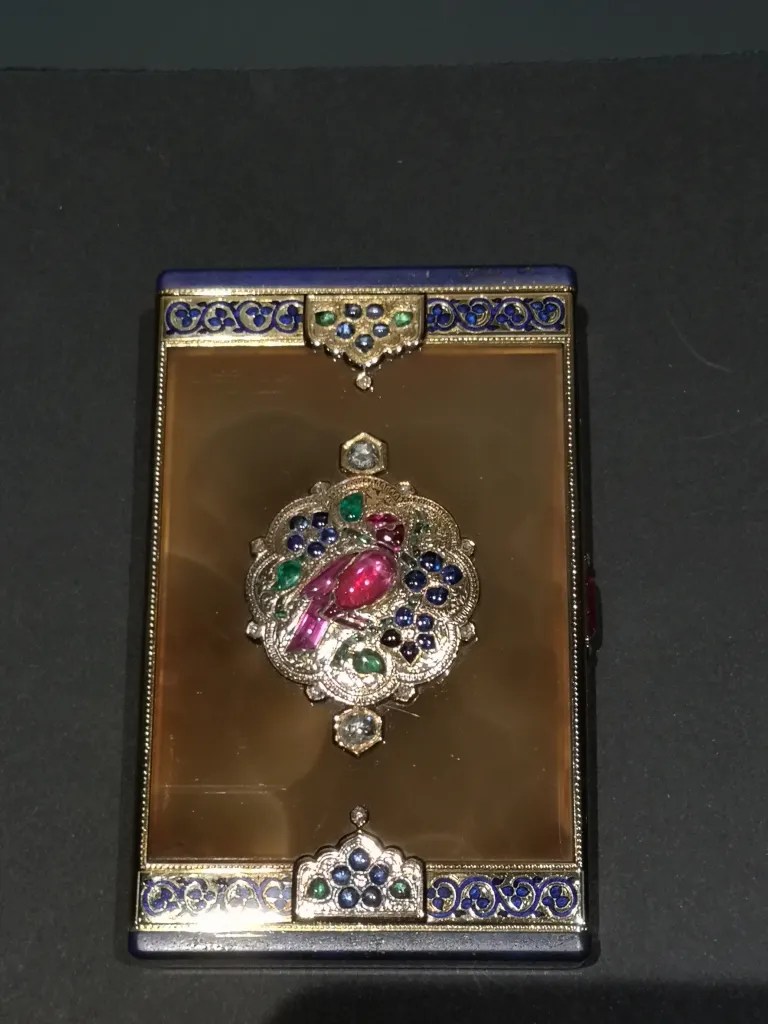
    The ambition of the exhibition is to show the close connection between the Maison Cartier and Islamic arts. For this, it is divided in two halves. The first one treats of different thematics, for instance the Persian taste in French decorative arts at the end of the 19th century, the diffusion of non-European decorative patterns through ornament books such as The Grammar of Ornament of Owen Jones, etc. The second half of the exhibition is more centred on iconography, juxtaposing Islamic or Indian artefacts bearing particular patterns (such as botteh, mandorla, cintamani etc.), with Cartier pieces ornamented with the same patterns.

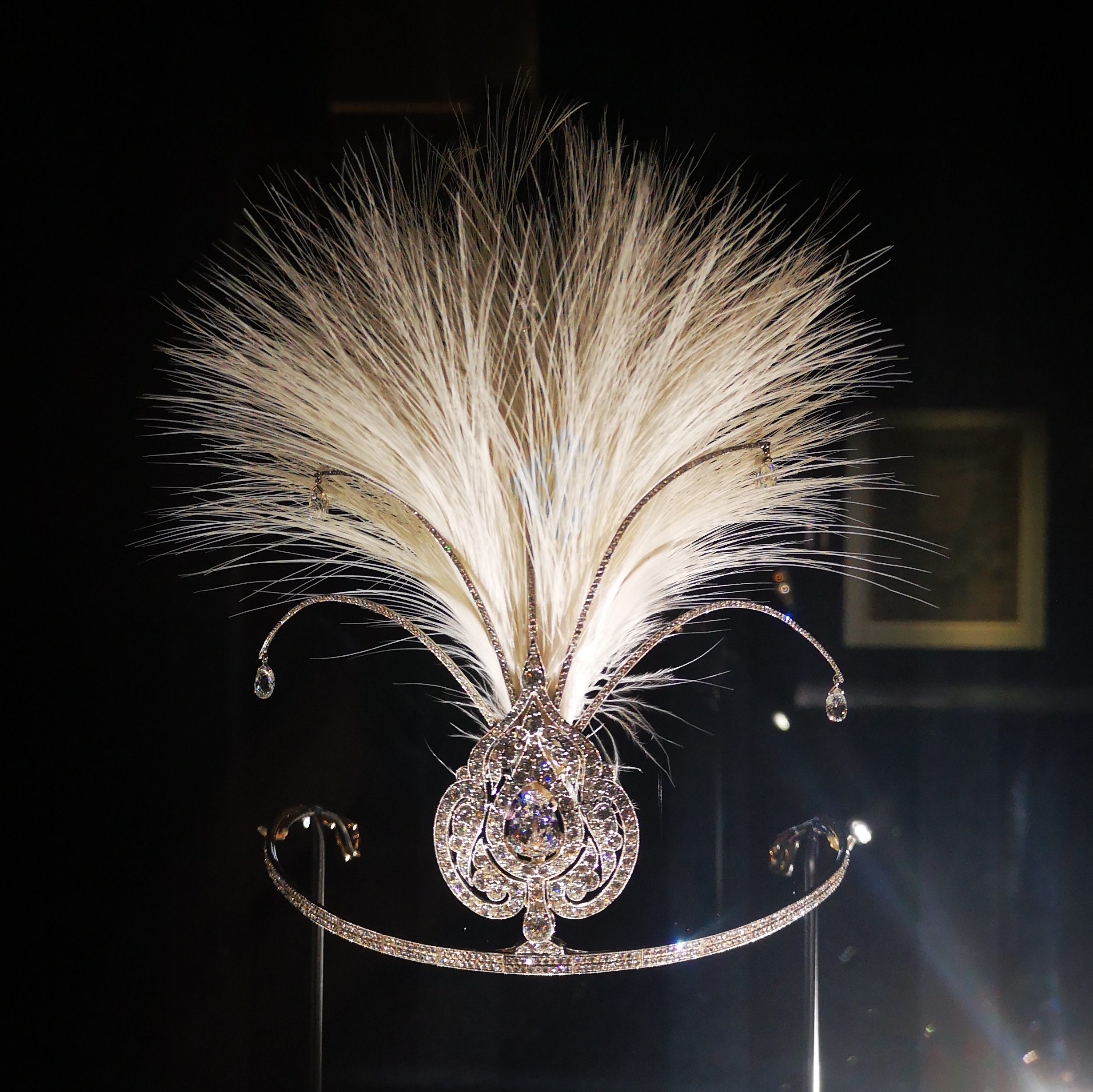
    In the first place, it is important to note the disproportion of Cartier jewels and Islamic pieces. I fully appreciate the fact that this is a Cartier exhibition, with many pieces coming from the private Cartier collection, but I do believe more Islamic pieces would have brought more clarity. Showing only one Mamluk wood panel carved with 8 pointed stars seems like a missed opportunity. Some choices also seem odd, though commendable, mainly for the lack of justification, which left the visitor to read between the line. For instance, the life-size portrait of Fath ‘Ali Shah Qajar, Iran’s ruler from 1797 to 1834, has been landed by the Louvre for this exhibition. The painting is installed between the tiara-aigrette reproduced above and a pearl necklace. Neither piece appear on Fath ‘Ali Shah’s portrait, which was produced almost a century earlier than the two jewels, so what is the point made, beside showing that the ruler was dripping in pearls? Another example is the first room of the exhibition, titled “A Persian taste”, in which the very first object is a Mamluk glass lamp.

    Two direct inspiration sources for Cartier

    Here lies my main issue with the exhibition: the absence of nuance. The entire display seemed like a juxtaposition of pieces that share common patterns. This is fair, the ambition is clearly stated in the title, however it would have been beneficial to push the analysis further. The “Islamic” patterns presented to the viewers are just there, with no explanation on where they come from, how they were developed, what is their function and what is their meaning. All these motives are transposed to Cartier jewels without much critical analysis. The first two or three rooms attempt to contextualise the passion of aristocratic Europe for Islamic arts and the taxonomical effort of ornamentalists and travellers, but it remains unclear what those ornament books are used for, beside for Cartier creations, and what is the real impact on the knowledge of Islamic arts and cultures in Europe. The beginning of the 20th century is an important moment in Islamic arts history in Europe, which the exhibition recognises by mentioning Gaston Migeon, but the explanations are not sufficient for a non-specialist to really connect the dot. They will have to buy the catalogue to understand.

    What have I learned?

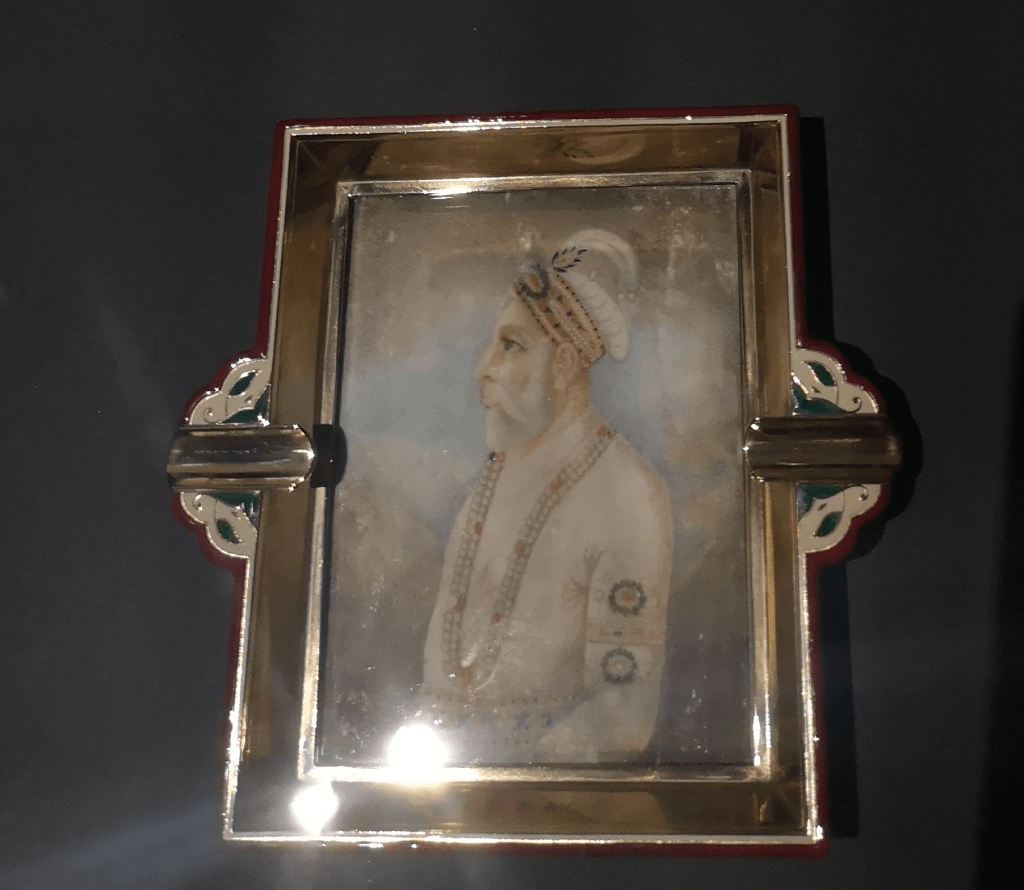
    A Mughal emperor (?) as an ashtray, refined

    At the end of each exhibition, I always ask myself this question: what have I learned that I didn’t know before? In other words, what was the point of the exhibition? With Cartier et les arts de l’Islam, I learned about the history of the maison Cartier that I didn’t know, and I learned that between the end of the 19th century and the 1940’s, the house created luxury items inspired by or copied from Islamic arts. One could say mission accomplished, but I can’t help feeling like something is missing, and I remember leaving with a slight feeling of frustration. Maybe was it the overall darkness, the too minimalistic display for the main part, or the confusing museography, or maybe am I just tired to see Islamic arts presented like a block of objects out of time and out of space, mixing together Timurid architectural tiles and Mughal paintings, minbar carved panels and Iznik beer-mugs. Cartier used bits of Islamic arts indifferently, and this is how Islamic arts are presented in the exhibition, interchangeable, anonymous and confusing.

    In conclusion, the exhibition treats Islamic arts exactly like Cartier did: a collection of pretty things that can be extracted from history and reused to make more pretty things.