Tag: London

  • London Islamic Week: results overview

    London Islamic Week: results overview

    London’s auctions are over, it is now time to debrief! Most importantly, for me at least, it is time to see if my predictions were right. Let’s avoid any unnecessary suspense, they were, for the most part.

    If you don’t know what I am talking about, go read my quick overview of Bonham’s, Sotheby’s and Christie’s auctions here.

    Bonham’s auction wasn’t particularly successful, a lot of lots were left unsold, especially the paintings. The selection was interesting and in accordance with Bonham’s lines of business, directed towards less impressive items but still of good quality. Goa 17th century saint John wasn’t sold, which is quite unexpected but could be explained by the restrictions on ivory trade in several countries like the US and France. That being said, the interdiction doesn’t apply to objects made before 1975, but it would be interesting to compare with the trade of Chinese ivory artifacts to see if the market has fluctuated since China announced its intend to forbid ivory trade.

    The book of prayers written in Ottoman Turkey by Abdul-Qadir al-Hisari with its intriguing diagrams was sold for £2800, which is not too bad considering the fact this is not a popular text.

    bo_24-04-18_143.jpg
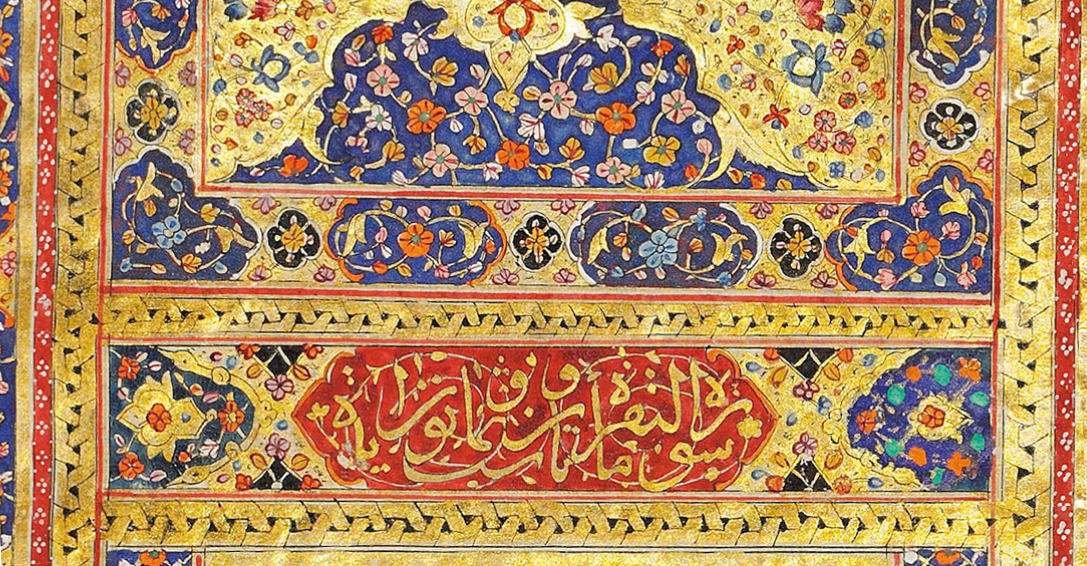
    Nizami, Khusrau va Shirin, Iran, 19th c. Bonhams 20.04.18 lot143, £1,500-2,000, sold £2,125

    As expected, late illuminated manuscripts from the 19th century did pretty well, especially those from Qajar Iran. The selection was of homogeneous quality and most of them were sold without achieving very high prices.

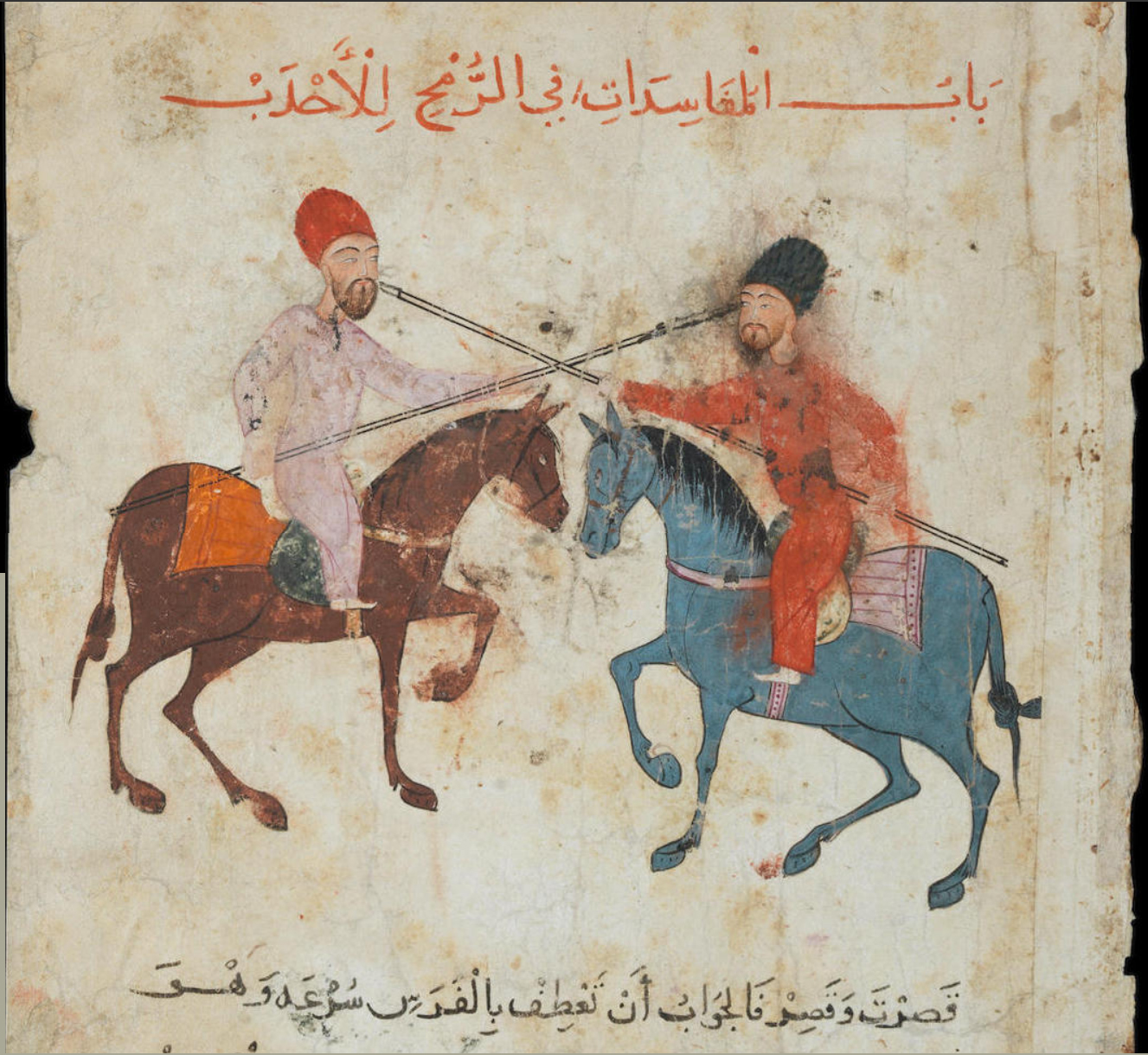
    The surprise with Bonham’s auction was the price reached by a single folio from a Mamluk manuscript on horsemanship, showing two lancers engaged in combat. Initially the item was estimated £3,000-5,000 but was sold £47,000. Unless their illuminated counterparts, Mamluk illustrated manuscripts are rare on the art market. They are not particularly common in public collections neither and are generally difficult to date and locate. Seeing so much as one isolated page bearing a painting reaching the public market is always a special occasion. The painting doesn’t seem to have suffered from any repaints and is quite elegant, while the writing is equally harmonious. That being said, I must admit that I was not expecting this much enthusiasm.
    Bo_24.04.18_7

    My favorite item presented during Sotheby’s auction, a bilingual print of the Qur’an published by Abraham Hinckelmann’s in 1694 achieved £10,000, a very honorable price in comparison to its initial estimation, £1,000-£1,500.

    Without any surprise, the Ottoman erotic manuscript dated 1817, star of the show, was sold way above its estimation price and achieved £561,000.
    So_25.04.18_126

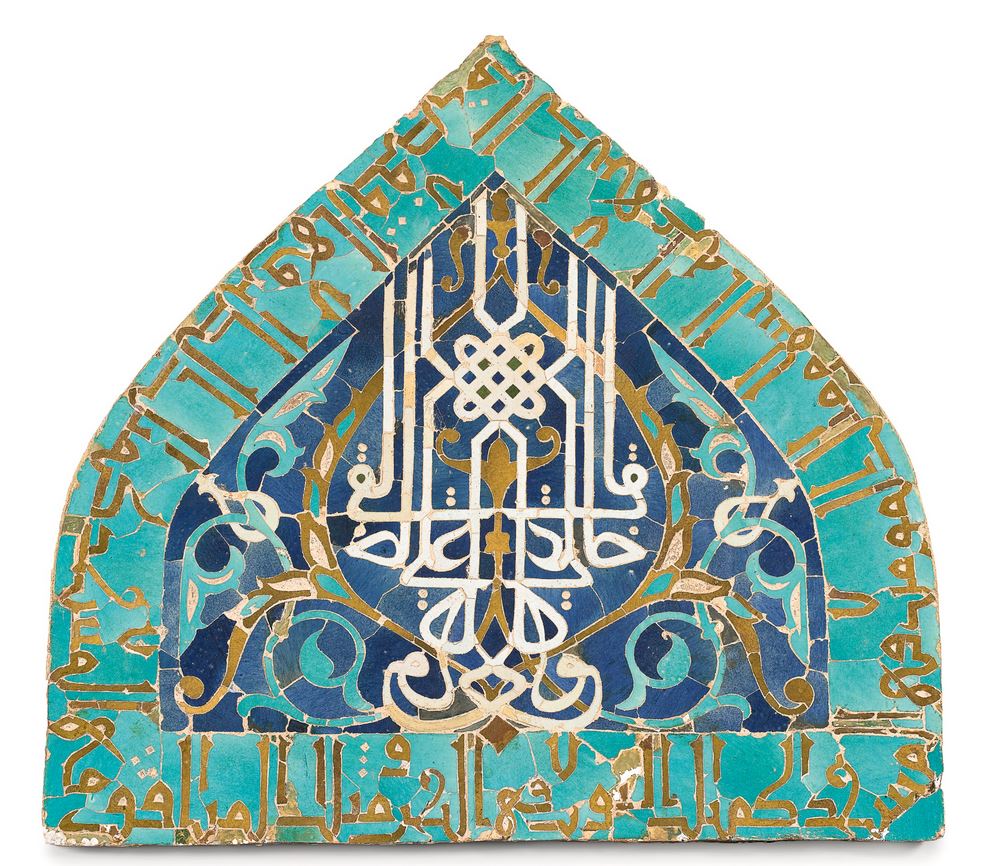
    Also not really surprising, the £333,000 achieved by this gorgeous Timurid monumental cut tile mosaic mirhab panel ensemble, composed of eight pieces. Though the story on how these fragments arrived to Europe can be debated, their overall quality and representativeness (yes, that’s a word) of Central Asiatic architectural decoration make them truly remarkable. The mirrored calligraphy in the center of the arch is simply a wonder.

    Overall, metallic items didn’t reach high prices except for a few exceptions, neither Iznik potteries from the 17th century. I am tempted to say that prices didn’t really go crazy because we have seen enough brick red tulips and black scrolls, but that might be my own perception of 17th century Iznik ware that makes me scream “enough” at every auction.

    However, it was expected that the 1545-1555 blue and white flask would do good, and it didn’t disappoint, being sold £669,000 (estimation £60,000-£80,000). This kind of flask was quite common in the Islamic world and was used during the Hajj to store water from the Zamzam river. The shape is actually way older and examples can be found during the late Antiquity and the first century of Christianity when containers like this one were used to carry water or oil from pilgrimage sites. However, never before was seen a flask in Iznik ware, and even less from the 1545-1555 production period, characterized among other things by the limited color palette imitated Chinese porcelains. This production always breaks records during auctions and this one is no exception. The charming decor of jumping animals must have helped as well!

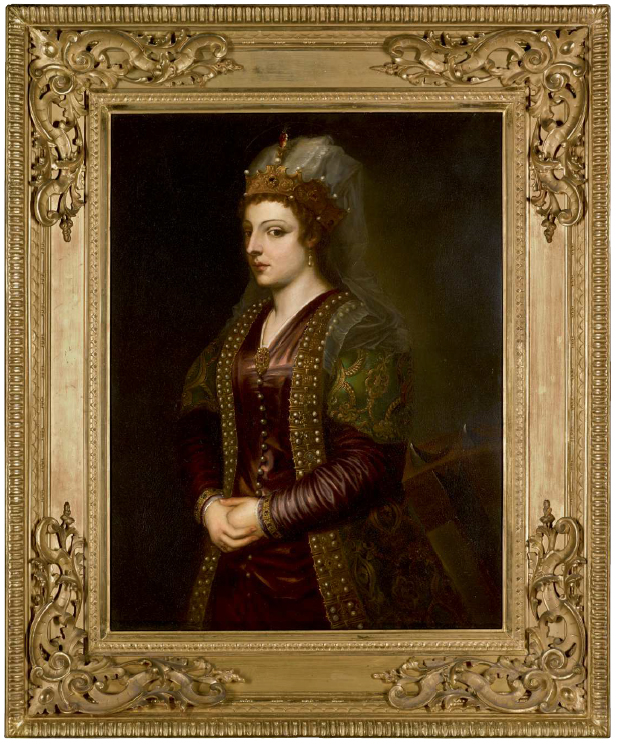
    The portrait falsely identified as Roxelana was sold £16,250, against its counterpart presented at Christie’s and rightly named after Titien’s original painting, Saint Catherine of Alexandria, sold the next day for £75,000.

    Ch_26.04.18_8

    Christie’s opening lot, an ensemble of nine unrecorded Qur’an folios made £596,750 and put all the other lots to shame but it was well deserved. The not so close second was the Fatimid golden armlet sold for £446,750. I would have loved to see it before it disappears behind a window (provided that it was preempted by a museum), and even more holding it in my hands to evaluate its weight! That’s the good thing with auction exhibitions, you can examine everything from up close.

    It seems that 19th century Ottoman illuminated manuscripts are not particularly trendy right now, compared to their Qajar counterparts, as many were left unsold. Some of them were of great quality but the fact that Turkish codicologie is still at its formative stage doesn’t help, as a lot of calligraphers and painters named in the notices are not particularly famous. This probably stopped the gorgeous Qur’an copied by the master Yahya Hilmi in 1293/1876-77 to find a new owner. Though Yahya naskhi script is a pure wonder, as well as Osman Yümni illuminations, not to mention the perfect state of conservation, it seems that the estimation, £350,000 – £500,000 was too high, even for a manuscript this quality.

    Ch_26.04.18_178

    Overall, these three auctions confirm the new trends centered on pre-modern and modern periods. Geographical focus remains on Iran, Central-Asia and Turkey, with a clear fall of African’s pieces, either North and Sub-Saharian. As well, Chinese productions are pretty much absent, while we used to see a few years back pre-modern Chinese illuminated Qur’ans in every auctions.

    It will be interesting to observe how things evolve in future auctions. Next London date in October !

  • This Spring London Islamic week is here

    This Spring London Islamic week is here

    April, what an exciting month. Spring is here, Manchester baby geese are being born (and their mother are attacking passer-by), and the Islamic week is held in London!

    Every six months, experts, specialists and Islamic Arts enthusiasts gather on King Street and New Bond Street to examine, judge and discuss the new and old wonders offered to the highest bidder. What are the stars this year? Are new trends rising? Let’s take a look!

    Bonhams open on the Tuesday with 368 lots. Most of them are manuscripts and isolated paintings from the 16th to the early 20th century, with the exception of the now classic 8th-9th centuries Qur’an pages. Bonhams pre-16th century generally lacks originality but balances it with some very interesting pre-modern and modern pieces. Among them, two in particular caught my eye:

    This book of prayers was written in Arabic in Ottoman Turkey by Abdul-Qadir al-Hisari

    in 1180 H/1766-67. It contains the names of God and the Prophet, as well as Hilyehs of the four Caliphs. The calligraphy is of good quality but the manuscript stands out by the unusual diagrams, including the sword of the Imam ‘Ali and Noah’s Ark. Estimation £2000-£3000.

    Bo_24.04.18_276

    The Goa production of Christian figures in ivory is nothing new but the St John the Baptist presented in lot 276 is particularly elegant. This production ranges from the 15th to the 19th century and its quality is uneven. However, the experts at Bonhams were not blind to this figure inherent charm and gave it a higher estimation than usual: £4000-6000.

    Sotheby’s auction is full of promises. 105 of the 206 entries are manuscripts, some of them quite amazing. Among them, it is worth mentioning a gorgeous Ottoman erotic manuscript dated 1232/1817, probably produced for a unidentified patron depicted in several paintings (lot 105, £250,000-£232,000). The study of Ottoman arts of the book is still underrepresented, mainly because it has been considered for decades as a sous genre of Safavid and post-Safavid Persian painting. Evidence is that Ottoman painting is everything but a sous genre and for everything who still has doubts about the inherent quality of it, just take a look at this manuscript.

    So_25.04.18_105

    My personal favorite is a bilingual print of the Qur’an made in Hamburg in 1694. This item is not particularly interesting for its aesthetic features, though the Arabic script is interesting, but its historical and historiographical value is higher than the little £1,000-£1,500 estimation it was given. This print is one of the oldest edition of the Qur’an in the Christian West. It is due to the theologian Abraham Hinckelmann (1652-95) who had already printed a monolingual edition of the Qur’an in 1693 but insured the diffusion of the text by adding a Latin translation.

    So_25.04.18_23

    Finally, Christie’s King Street opens its sale on the 26th by nine Qur’anic folios unrecorded folios. It is always exciting when a new item appears on the market, and these small and antique fragments – 11.1×12.7cm, datable 8th century – are particularly important for Qur’anic studies. It wouldn’t be a surprise that a museum jump on this occasion and preempt the lot.

    The selection of Western Islamic art offered after this is interesting and of high quality, especially the golden Fatimid gold armlet miraculously preserved.

    I am always a little bit flustered by collection of ceramics, especially architectural, from the end of the 19th century. The collection of Lockwood de Forest shines by its coherence but brings the question of this acquisition – the same way does the Timurid tiles collection of Mnavzagan Pridonoff presented at Sothebys (lots 106-110). Even tough the catalogue partly specifies the amount of money spent by de Forest, we are left to wonder if his reputation as a collector of architectural ceramic and the price he was ready to put on a tile didn’t speed the destitution of historical monuments. Bearing that in mind, what should we do with such collections? They constitute an important part of Islamic Arts historiography but, as well as so many more Western gathering of artistic artifacts, the ethic behind them is debatable.

    The focus has switched these past years from Medieval productions to Pre-modern, namely Safavid, post-Safavid and Ottoman. Indian Islamic Art is still very 17th Mughal focused but the light brought recently to post-Mughal art by academics and the increasing rarity of Mughal pieces could bring the emphasis to change.

    The taste for later pieces is demonstrated in the Christie’s catalogue by the wide range of Qajar and Ottoman items. No less than 28 entries from 18th and 19th centuries Iran, including heavily decorated Qur’ans, oil paintings, lacquered boxes and enameled jewelry.

    Lot 86, 1200/1786, £8000-£12,000

    Fun fact, both Sotheby’s and Christie’s are presenting a version of Titian’s portrait of Caterina Cornano, Saint Catherine of Alexandria (Galleria degli Uffizi). Both paintings are similar in size but Christie’s dated the execution from the 18th century, while Sotheby’s painting seems to be more recent. Christie’s version is more refined, especially the use of shadows and the pose of the figure. One has been given an estimation from £8,000 to £12,000, the other only £5,000-£7,000, the message is clear. As well, it seems that Sotheby’s mistakenly identified the portrait as one of Roxelana, wife of Sultan Süleyman, also depicted by Titian around 1550 and given the name of La Sultana Rossa (Ringling Museum). Someone didn’t do their homework !

    It will be interesting to read the results of these tree auctions and see what has been the rising stars or complete flops of the Spring Islamic week. Stay tuned !