Tag: paris

  • Carnets de Voyage IV on the 6th July with Millon et Associés

    Carnets de Voyage IV on the 6th July with Millon et Associés

    While I didn’t find the time to write about last week Ader-Nordman Islamic art auction, I figured I had to right my wrong by presenting the next one, at least briefly. It is the last auction before summer break and I find its focus particularly interesting.

    Islamic art can be a scary thing for the new comer. After all, we are talking about forms of expression on all imaginable medium, since the 6th century to this day, from Spain to the Philippines. The aesthetic value of objects, paintings and manuscripts produced in Islamic lands can attract new buyers but hight estimations, especially in London auctions, can also cool down a lot bourgeoning passions.

    For this reason, the next Millon et Associés auction constitutes a tremendous opportunity for new collectors to get involved. Lots rarely exceed 1500€ and show a variety that allow everybody to find their affordable treasure. I will just present a few lots here but feel free to contact me for more information on others.

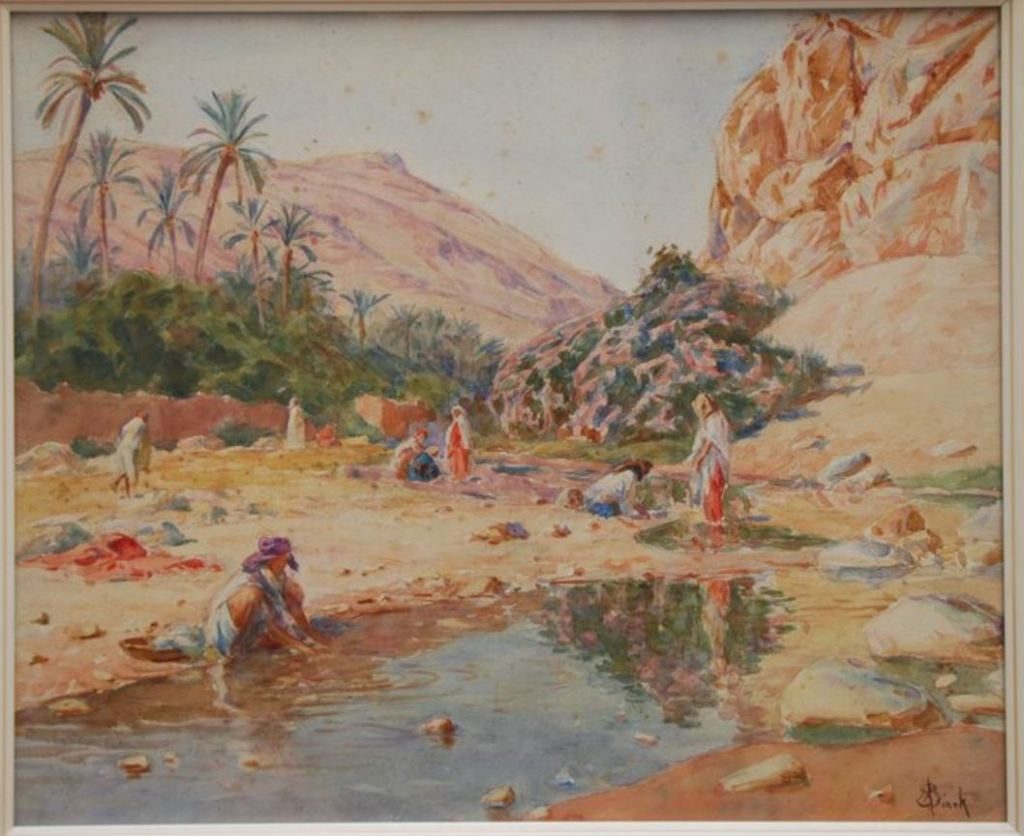
    I always have a weakness for Orientalist landscapes and outside scenes, maybe because of my Southern origins, but I’m always impress with the painters’ ability to capture the Mediterranean bright light blue sky depth. For this reason, a few paintings caught my eyes, including a view of the Oued of el-Kantara signed Alphonse Brick (1859-1942) for 500-700€, a view of Constantine dated 1902 by Alexis-Auguste Delahogue (1857-1963) for 500-700€ and a very peaceful landscape at sunset by Hasam Saim estimated 300-400€.
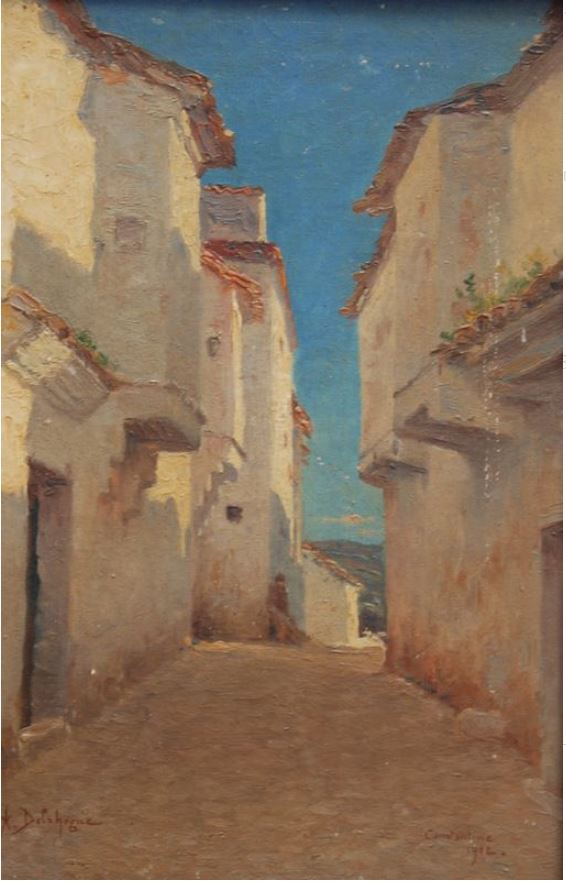
    Reading through the catalogue, I was really impressed by the quality of several of the items presented. Temptation is high to talk about all of them but I am simply going to encourage you to go on Millon et Associés’s website. My eyes stopped on a few in particular and if I were in Paris on Friday, you would definitely find me with at Drouot raising my hand to bid !
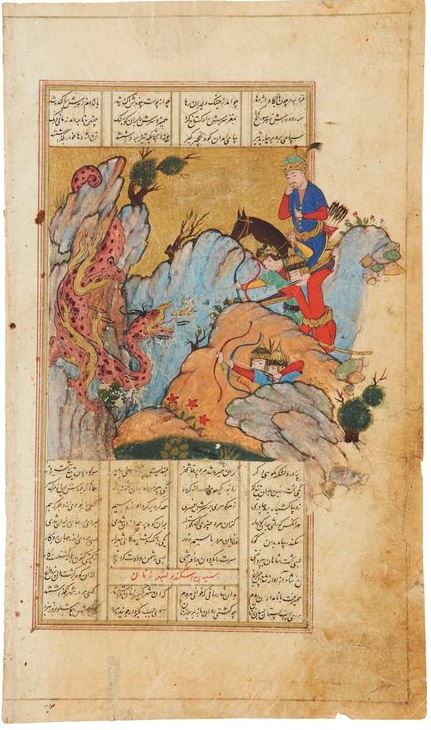
    lot_109
    Lot 109 – 30 x 17.5cm – 500/700€

    I mean, look at this attractive depiction of Iskandar fighting the Dragon from Nezami Khamsa (500/700€). This isolated page was most probably produced in Shiraz as what we call the “commercial production”. This terminology doesn’t really mean anything but refers to a range of anonymous illustrated manuscripts, mostly datable from the 16th century (this page is slightly later) and displaying a range of quality from “not good” to “okay”. These are not scientific terms, please do not reproduce this at home! This painting is “pretty nice” despite being slightly damaged. The scene is depicted in a common way,  with Iskandar bitting his index to signify his surprise while the archers do all the work fighting the dragon.

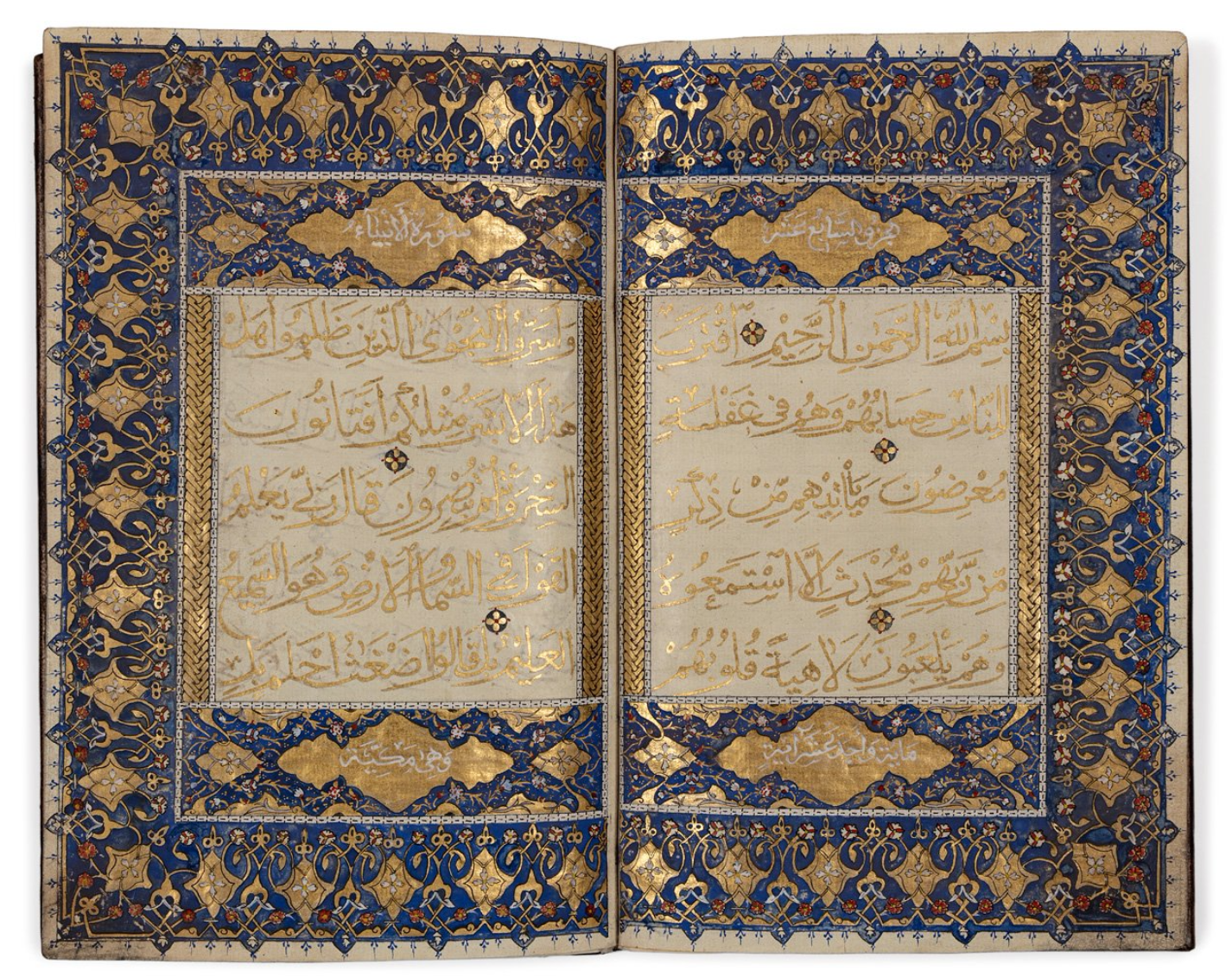
    Also produced under Safavid rule, this attractive Qur’an of 19 x 11.5cm, copied in 1105 H./1693 by Reza b. Kasem al-Husseini al-Djilani (1500/2000€). The naskh script is harmonious, as well as the golden sura heads in ruqqa’. The manuscript has been slightly damaged but most of the illuminated double frontispiece and the rest of the pages are still in good condition.
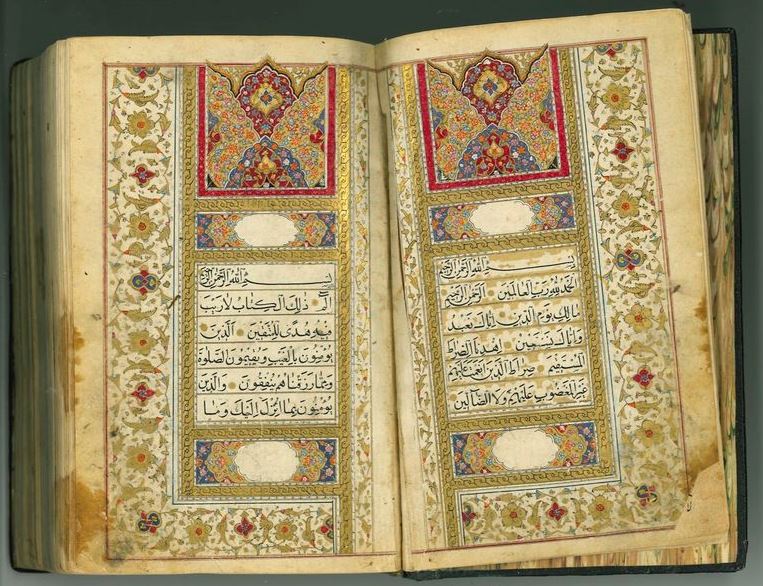
    lot_136
    Lot 136 – 19 x 11,5 cm – 1500/2000€

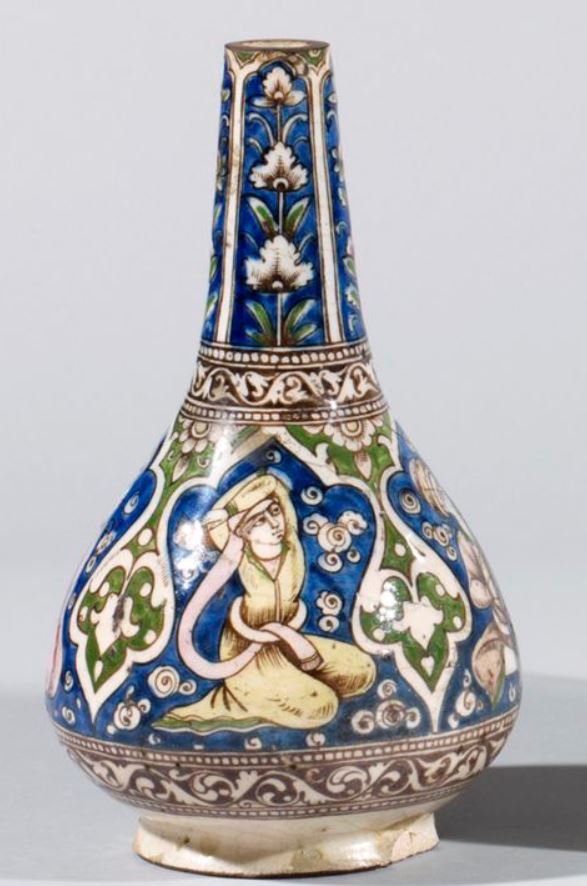
    I always find Qajar ceramic a bit risky. There are, of course, many beautiful examples of this late production, but we also see in auctions mediocre pieces that are nothing more than a failed imitation of Safavid figurative representation. What a nice surprise then to see in this auction nice Qajar lots: first, a vase of 22cm figuring two musicians and a decor of vegetal motives. The design is regular and the colors have held the firing, including the interesting shadow work on the neck. This vase is estimated 200/300€. The second lot is a pair of Qajar vases, one decorated with a wine-bearer figure, the other one animals, both covered in floral designs. The overall decoration imitates Safavid ceramics and figurative representation, nevertheless the line is harmonious despite the pigments having ran during baking. Estimation is 400/600€ for the two.
    This short selection doesn’t completely reflect the variety of the catalogue but gives you a brief overview of its quality. It will be interesting to see what is being sold and for how much. I expect a few surprises, for example with this carved lintel from North Africa, reading Al-yumn wal-iqbâl wa boulough al amâl wa jami’ al-ahwâ in an elegant Maghribi script, only estimated 120/150€. Absolutely perfect to decorate an interior!

    lot_314
    Lot 314 – 23 x 119cm – 120/150€
  • Islamic Arts and Orientalism at Millon

    Islamic Arts and Orientalism at Millon

    This spring is definitely a busy time for Islamic arts, the auction catalogues flow in the mail box!

    On the 3rd of May will be presented at Drouot Paris the Millon & Associés auction. I had the opportunity to work on one of the biggest item, a 17th century Mughal Shah Name linked to Jahangir’s reign and decorated with very interesting paintings and drawings. The full notice in English is available here.

    The rest of the catalogue is equally rich, with a full first half dedicated to Orientalist paintings, as it is the tradition in Millon’s auctions. European paintings from the 19th and early 20th centuries depicting North Africa and the Middle East are not my field of expertise and I generally base my appreciation on their aesthetic appeal more than the overall production context. My three favorite among the 94 Orientalist lots are not the most expensive, far from it, but would compliment each other very well in a collector’s interior (not mine unfortunately!).

    12

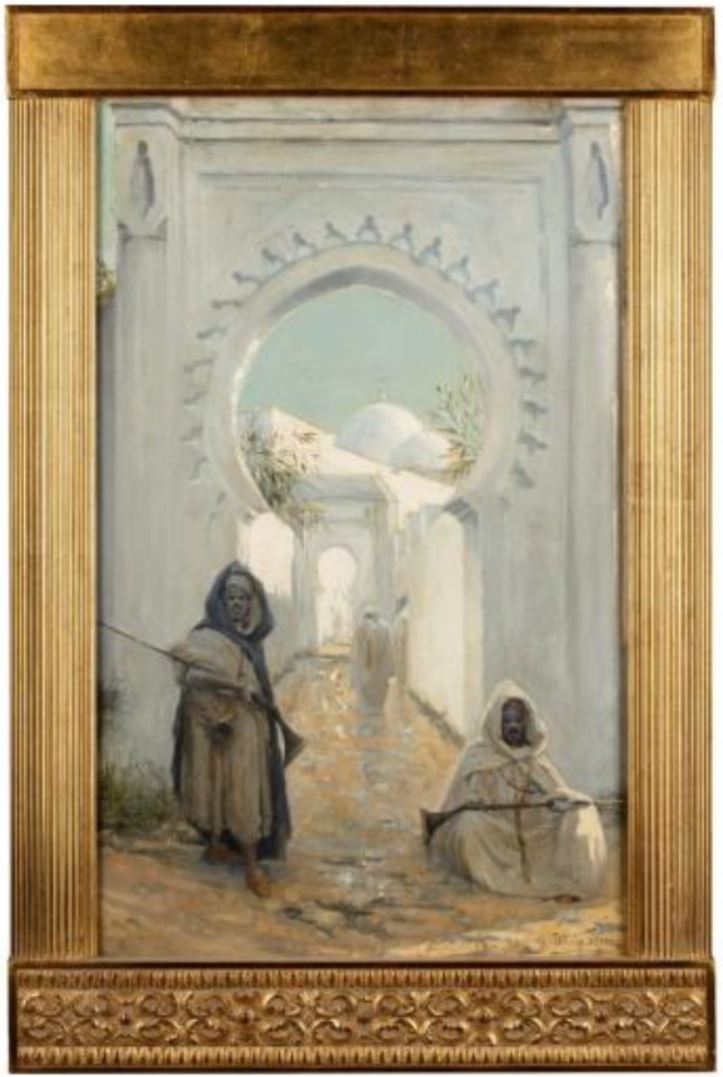
    The Guardians of Henri Van Melle (1859-1930) are particularly interesting for their use of white and blue shades. The foreground show two men with darker clothes and dark skin on which shine the traditional Berber tattooed marks, both highlighted by the white and luminous architecture. Even though the pictorial technique of Van Melle is not particularly innovative, his understanding of light, shades and coloring gives a real interest to this painting, estimated 2500/3000€.

    My second Orientalist favorite is a Moroccan night scene by Lucien Levy-Dhurner (1565-1953). I found the opposition of this painting and The Guardians fascinating, even though they are separated in the catalogue by more than 20 pages. While Van Melle worked on light, Levy-Dhurner worked on shadow but both being composed of different medium on blue shades. As well, both painters chose to depict a characteristic Moroccan architecture and a reduced number of figures. This is a common feature in Orientalist painting, that artists attached themselves to represent more of an idea than a specific subject, and these two paintings compliment each other perfectly in that sense. Levy-Dhurner painting is estimated 4000-6000€.

    56

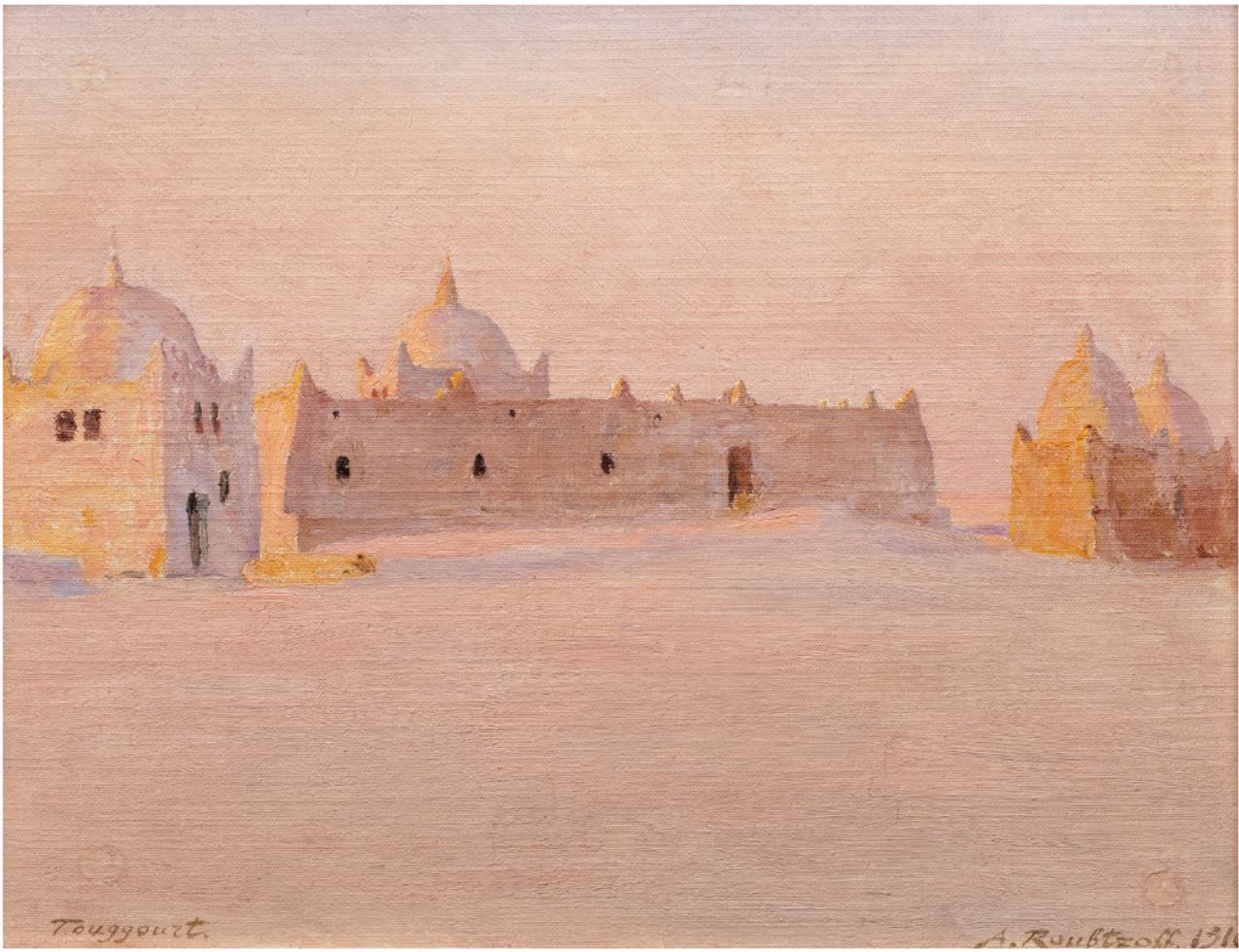
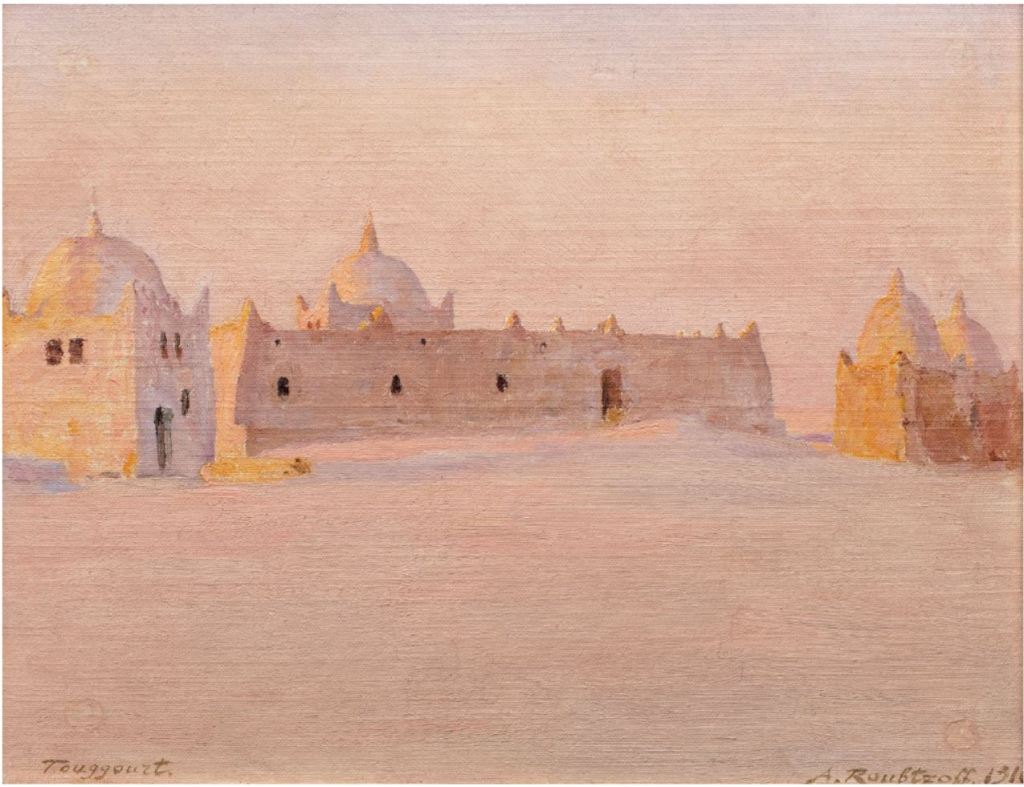
    Finally, and in the same spirit, my last Orientalist coup de coeur is a view of the Beni Djellab tomb in Algeria by Alexandre Roubtzoff (1884- 1949), dated 1916. This elegant oil painting on cardboard depicts beautifully the desert architecture and shows an harmonious play on pink and orange shades. No human figure necessary here, just the calm poetry of the sunrise reflection on the sand dunes. This last painting is the most expensive of my tiny selection with an estimation of 5000/7000€, it is also the most appealing one.

    81

    The other half of the auction catalogue offers a diversity of items, ceramics, weapons, manuscripts, jewelry and textiles, with many interesting pieces. One of them in particular intrigued me. The shape of this powder-blue ewer is similar to Persian and Deccani (India) tableware. However, it was not produced in the Islamic world but in China, around 1720-1730, probably for the Middle-Eastern market.

    Beside its aesthetic qualities embodied by the vibrant blue color and the original decoration of flowers and spider webs (a must on Chinese ceramics!), which earned it the estimation of 3000/5000€, I find this piece, and generally this production, particularly interesting for its historical value and the methodological questions it raises.

    This particular ewer was produced in China for the Islamic market so, is it Islamic art or Chinese art? Is it even either, knowing that its shape was probably given to Chinese potters by European trade companies, already trading on a global level during the 18th century?

    The search of authenticity by collectors of Islamic arts is legitimate and they could question the “truth” of this kind of items. After all, Islamic ceramics are not limited to shapes and uses, they encompass techniques, decorations and meanings. For instance, we can easily assume that the composition of this ewer differs from Islamic potteries, as Chinese potters have the ability to produce porcelain by adding kaolin to the paste, a material absent from the Islamic lands which mostly use siliceous pastes (80% of silicium in opposition to clay based paste mostly used in the Christian west before the 17th century).

    In my opinion, the value of this kind of items lies precisely in their complexity. This ewer represents a very particular point in time, the moment when trade companies took control of the global market, both in Asia by setting up production workshops and in Europe by introducing on the art market fake Indian and Chinese productions coming from these workshops and presented as authentic products of exotic interest. In fact, shapes and decorative repertoire were created by the companies for these specific markets and were a mix of different artistic traditions, like this ewer showing a Persian shape and a Chinese decoration. This item is a pure product of artistic exchanges during the pre-modern era and a nice one with that!

    I posted my last favorite item on Instagram, it is a real beauty and again, with great historical interest. Go check it out!

    Capture

    I look forward seeing the results of this auction, first to see if my work payed off but also because the prices achieved on this sale will certainly have an impact of the Parisian auctions for the rest of the year. Again, stay tuned!